
Opening your dashboard
Class 12 Biology Chapter 15 Biotechnology: Principles and Processes: Previous Year Questions
29 questions on Chapter 15, each solved step by step. Class 12 Biology, ICSE 2026-27.
29 questions with solutions
1–5 marks · Mixed difficulty
- 11 mark
Question 1
Expand the following abbreviations:
rDT
Solve with AIWritten solution
Solution:
Key idea: Biotechnology techniques that join DNA from different sources are grouped under one name, usually shortened to three letters.
Step 1 — Expand the abbreviation.
The letters rDT stand for recombinant DNA technology.
Step 2 — Say what it means.
It is the set of methods used to cut a gene out of one organism's DNA, join it to a vector (such as a plasmid) and put this recombinant DNA into a host cell, where the gene is copied and expressed.
Therefore, rDT = Recombinant DNA Technology.
- 21 mark
Question 2
Expand the following abbreviations:
BAC
Solve with AIWritten solution
Solution:
Key idea: Artificial chromosomes are cloning vectors that can carry very large pieces of DNA.
Step 1 — Expand the abbreviation.
BAC stands for bacterial artificial chromosome.
Step 2 — Say what it is.
A BAC is a vector built from the F plasmid of E. coli. It can carry DNA inserts of about 100–300 kb and is copied in E. coli.
Therefore, BAC = Bacterial Artificial Chromosome.
- 34 marks
Question 3
Give an account of artificial chromosomes in transfer of genetic material.
Solve with AIWritten solution
Solution:
Key idea: Plasmid vectors can carry only small pieces of DNA (up to about 10 kb). Artificial chromosomes are vectors made from the working parts of natural chromosomes or plasmids, so that very large pieces of DNA can be cloned and transferred into host cells.
Step 1 — Describe the bacterial artificial chromosome (BAC).
A BAC is built from the F (fertility) plasmid of E. coli. It has the F plasmid's origin of replication and genes that keep one or two copies per cell, a selectable marker (an antibiotic-resistance gene) and cloning sites. It can carry DNA inserts of about 100–300 kb, which are copied faithfully in E. coli.
Step 2 — Describe the yeast artificial chromosome (YAC).
A YAC is made from the parts a yeast chromosome needs: a centromere (for proper separation at cell division), two telomeres (to protect the ends) and an autonomously replicating sequence (ARS, the origin of replication), together with selectable marker genes. It behaves like a small extra chromosome in yeast cells and can carry very large inserts, from about 100 kb up to about 1,000 kb (1 Mb).
Step 3 — Explain their use in transferring genetic material.
A large piece of foreign DNA, such as a whole gene with its control regions, is joined into the BAC or YAC, which is then put into the host cell (E. coli or yeast). There it is copied along with the cell's own DNA and passed on to the daughter cells. Artificial chromosomes were used to build gene libraries and to map and sequence large genomes, including the human genome, and they can carry large genes into eukaryotic cells.
Step 4 — Mention other artificial chromosomes.
Other kinds include P1-derived artificial chromosomes (PACs) and human artificial chromosomes (HACs), which are being developed to carry genes into human cells.
Therefore, artificial chromosomes such as BACs (about 100–300 kb inserts, copied in E. coli) and YACs (centromere, telomeres and ARS; up to about 1 Mb inserts, copied in yeast) are vectors that carry and maintain very large pieces of DNA in host cells.
- 42 marks
Question 4
Give one significant difference between:
(i) Electroporation and Gene Gun.
(ii) ECG and EEG
Solve with AIWritten solution
Solution:
Key idea: Each pair is told apart by one key feature: how DNA is pushed into a cell in (i), and which organ's electrical activity is recorded in (ii).
Step 1 — Differentiate electroporation and gene gun, (i).
In electroporation, cells are given short pulses of high-voltage electricity, which open temporary pores in the cell membrane through which DNA enters. In a gene gun (biolistics), tiny particles of gold or tungsten coated with DNA are shot at high speed into the cells; it is used mainly for plant cells.
Step 2 — Differentiate ECG and EEG, (ii).
An ECG (electrocardiogram) is a record of the electrical activity of the heart. An EEG (electroencephalogram) is a record of the electrical activity of the brain.
Therefore, (i) electroporation uses electric pulses to make pores for DNA, while a gene gun shoots DNA-coated metal particles into cells; (ii) an ECG records the heart's electrical activity, while an EEG records the brain's.
- 51 mark
Question 5
Give one significant contribution of each of the following scientists :
H. Boyer
Solve with AIWritten solution
Solution:
Key idea: Recombinant DNA technology began in the early 1970s with the work of Stanley Cohen and Herbert Boyer.
Step 1 — State the contribution.
In 1972–73, Herbert Boyer, working with Stanley Cohen, made the first recombinant DNA: an antibiotic-resistance gene was cut out with a restriction enzyme and joined into a plasmid, which was then copied in E. coli.
Step 2 — Add why it mattered.
This showed that a gene from one source can be cloned in another organism. Boyer later co-founded one of the first biotechnology companies, which made human insulin in bacteria.
Therefore, H. Boyer (with S. Cohen) constructed the first recombinant DNA molecule.
- 65 marks
Question 6
What does PCR stand for ? Describe the different steps of PCR.
Solve with AIWritten solution
Solution:
Key idea: PCR copies a chosen stretch of DNA again and again in a test tube. Each cycle doubles the number of copies, so many millions of copies are made in a few hours.
Step 1 — Expand PCR.
PCR stands for polymerase chain reaction. It was developed by Kary Mullis in the 1980s.
Step 2 — List what the reaction needs.
The tube holds the template DNA, two short single-stranded DNA primers (each complementary to one end of the target region), the four deoxynucleotides (dATP, dGTP, dCTP, dTTP), the heat-stable enzyme Taq polymerase (from the bacterium Thermus aquaticus) and a buffer with magnesium ions.
Step 3 — Denaturation.
The mixture is heated to about 94 °C. The hydrogen bonds between the two strands break, so the double-stranded DNA separates into two single strands.
Step 4 — Annealing.
The mixture is cooled to about 50–60 °C. The two primers pair (anneal) with their complementary sequences at the 3′ end of the target region on each strand.
Step 5 — Extension.
The temperature is raised to about 72 °C. Taq polymerase adds nucleotides to the 3′ end of each primer, building a new strand complementary to the template in the 5′ → 3′ direction. Taq polymerase is used because it is not destroyed at the high temperature of the denaturation step.

Step 6 — Repeat the cycle.
These three steps form one cycle, which takes a few minutes in a machine called a thermal cycler. The cycle is repeated about 25–35 times. Since each cycle doubles the target DNA, cycles give up to copies; for example, 30 cycles give about a billion () copies.
Therefore, PCR (polymerase chain reaction) amplifies DNA through repeated cycles of denaturation (about 94 °C), primer annealing (about 50–60 °C) and extension by Taq polymerase (about 72 °C).
- 75 marks
Question 7
Give an account of the Blue-White Method of selection of recombinants.
Solve with AIWritten solution
Solution:
Key idea: After transformation, most host cells either take up no plasmid or take up a plasmid without the foreign gene. Blue-white selection picks out the cells that carry the recombinant plasmid by a simple colour test, based on insertional inactivation of the gene for the enzyme β-galactosidase.
Step 1 — Describe the vector.
The vector (for example a pUC plasmid) carries an antibiotic-resistance gene (such as ) and part of the lacZ gene, which codes for β-galactosidase. The cloning sites lie inside the lacZ gene.
Step 2 — Insert the gene of interest.
The foreign DNA is inserted into a cloning site within lacZ. This breaks up the gene, so a recombinant plasmid can no longer make β-galactosidase. This loss of a gene's activity by inserting DNA into it is called insertional inactivation.
Step 3 — Plate the cells on the selection medium.
The cells are spread on an agar medium containing the antibiotic (ampicillin), a colourless chromogenic substrate called X-gal, and IPTG to switch on the lacZ gene. Only cells that have taken up a plasmid can grow on ampicillin.
Step 4 — Read the colours.
In cells with a non-recombinant plasmid, lacZ is intact, so β-galactosidase splits X-gal into a blue product and the colonies are blue. In cells with a recombinant plasmid, lacZ is inactivated, X-gal is not split and the colonies stay white.
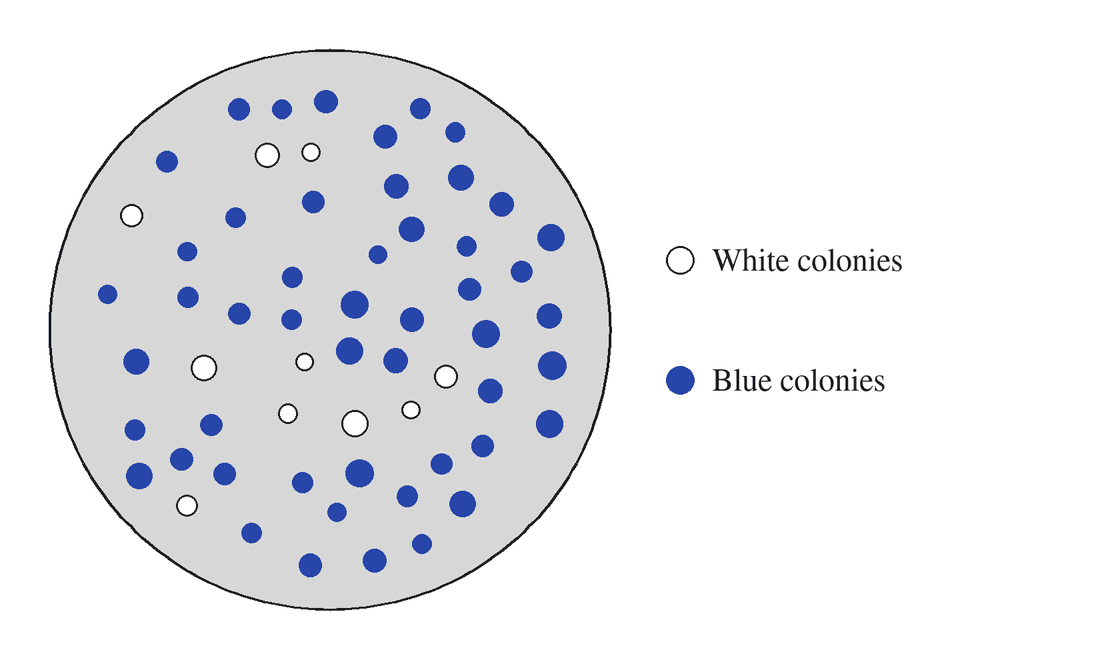
Step 5 — Pick the recombinants.
The white colonies are picked out and grown, because they carry the gene of interest. This method is quicker than replica plating on two antibiotics, which needs two plates and a comparison of colonies.
Therefore, in the blue-white method, the insert inactivates the vector's β-galactosidase gene, so on X-gal medium recombinant colonies stay white while non-recombinant colonies turn blue.
- 81 mark
Question 8
Answer the following questions briefly to the point.
Give the full form of EFB.
Solve with AIWritten solution
Solution:
Key idea: EFB is a European body that gave a widely used definition of biotechnology.
Step 1 — Give the full form.
EFB stands for the European Federation of Biotechnology.
Step 2 — Recall its definition of biotechnology.
The EFB defines biotechnology as the integration of natural science and organisms, cells, parts thereof and molecular analogues for products and services.
Therefore, EFB = European Federation of Biotechnology.
- 92 marks
Question 9
Write short notes on Electrophoresis.
Solve with AIWritten solution
Solution:
Key idea: Electrophoresis separates charged molecules, such as DNA fragments, by making them move through a gel under an electric field.
Step 1 — Describe the set-up.
The DNA fragments (for example those produced by restriction enzymes) are loaded into wells at one end of a slab of agarose gel, a natural polymer obtained from seaweed. The gel lies in a buffer, and an electric current is passed with the wells at the cathode (negative) end.
Step 2 — Explain why the fragments separate.
DNA is negatively charged because of its phosphate groups, so the fragments move towards the anode (positive electrode). The gel acts like a sieve: smaller fragments slip through it faster and move farther, while larger ones move less. So the fragments are separated according to their size.

Step 3 — Explain how the bands are seen and used.
The gel is stained with ethidium bromide and exposed to ultraviolet light, which makes the DNA bands glow bright orange. A band of the required size can be cut out of the gel and the DNA extracted from it (elution); the purified fragment is then used to make recombinant DNA. Electrophoresis is also used in DNA fingerprinting.
Note: Ethidium bromide is a mutagen, so many laboratories now use safer stains.
Therefore, gel electrophoresis separates negatively charged DNA fragments by size in an agarose gel, smaller fragments moving farther towards the anode; the bands are seen after staining and can be cut out for use.
- 105 marks
Question 10
(i) What is restriction endonuclease? Give the rules of their nomenclature?
(ii) Explain the mechanism of action of restriction endonuclease that makes them suitable for genetic engineering.
Solve with AIWritten solution
Solution:
Key idea: Restriction endonucleases are the "molecular scissors" of genetic engineering. Each one cuts DNA only at a particular base sequence, so DNA can be cut in exactly the same places every time.
(i) Definition and rules of naming
Step 1 — Define restriction endonuclease.
A restriction endonuclease is an enzyme that recognises a specific short base sequence in double-stranded DNA (its recognition sequence, usually 4–8 bp long) and cuts both strands at particular points within or near it. "Endo" means it cuts inside the DNA, not at its ends. Bacteria make these enzymes to destroy (restrict) the DNA of invading viruses.
Step 2 — Give the naming rules.
The name is built from the source organism:
- the first letter is the first letter of the genus, written in capitals;
- the next two letters are the first two letters of the species, in small letters (these three letters are written in italics);
- the next letter stands for the strain of the bacterium;
- the Roman numeral gives the order in which the enzyme was isolated from that strain.
For example, EcoRI comes from Escherichia coli, strain RY13, and was the first enzyme isolated from it.
(ii) Mechanism of action
Step 3 — Recognition of a palindrome.
The enzyme binds the DNA and moves along it until it finds its recognition sequence. This sequence is a palindrome: it reads the same on the two strands when both are read in the 5′ → 3′ direction. For EcoRI it is 5′-GAATTC-3′ on one strand and also 5′-GAATTC-3′ on the other.
Step 4 — Cutting the sugar-phosphate backbone.
The enzyme breaks one phosphodiester bond in each strand. EcoRI cuts each strand between G and A. Because the two cuts are a little apart on the two strands, each fragment is left with a short single-stranded overhang, 5′-AATT, called a sticky end.
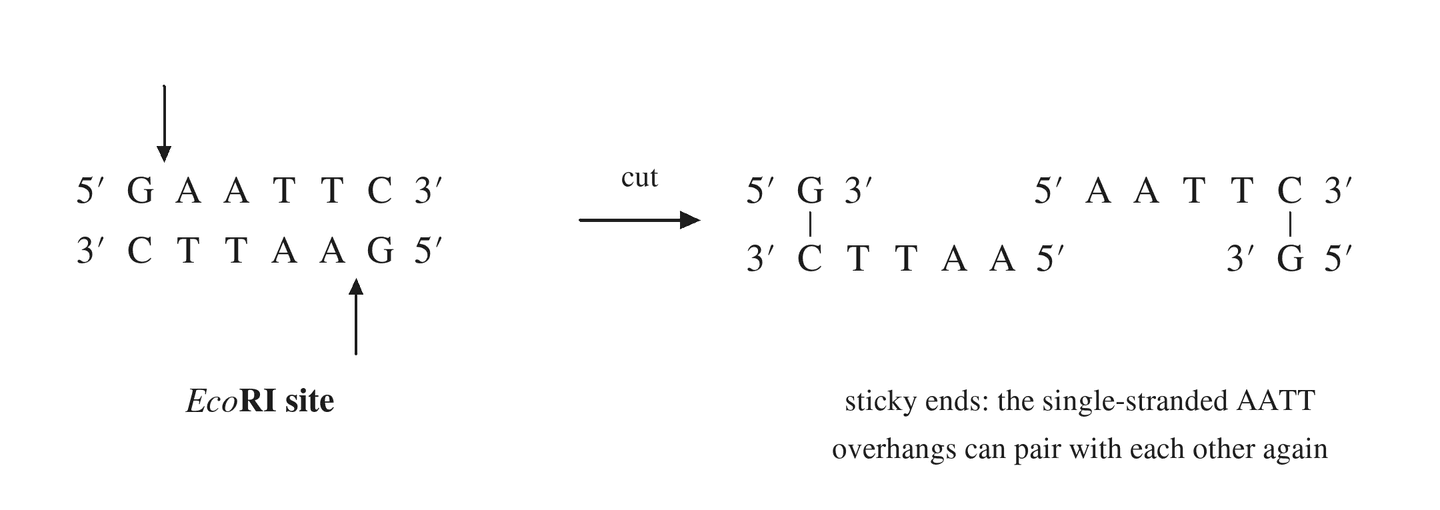
Step 5 — Why this makes them suitable for genetic engineering.
Sticky ends pair by hydrogen bonds with complementary sticky ends. If the source DNA and the vector are cut with the same enzyme, both have matching sticky ends, so the gene fits into the vector, and the enzyme DNA ligase then seals the backbone to make recombinant DNA. Because the cuts are exact and repeatable, the same fragment is obtained every time.
Therefore, (i) a restriction endonuclease cuts DNA at a specific recognition sequence and is named by genus (1 letter), species (2 letters), strain and order of isolation (e.g. EcoRI); (ii) it recognises a palindrome and makes staggered cuts that leave sticky ends, which let DNA from any source be joined to a vector cut with the same enzyme.
- 115 marks
Question 11
(i) Explain what are the desirable characteristics of an ideal cloning vector used in rDNA technology.
(ii) Describe two vector less method used in gene transfer in rDNA technology.
Solve with AIWritten solution
Solution:
Key idea: A cloning vector is a DNA molecule (such as a plasmid) that carries a foreign gene into a host cell and gets copied there. A good vector must replicate, show which cells carry it, and accept the gene at a convenient place.
(i) Desirable features of an ideal cloning vector
Step 1 — Origin of replication (ori).
The vector must have an ori, the sequence where replication starts. Any DNA joined to it is copied along with it, and the ori also controls the copy number of the vector in the cell.
Step 2 — Selectable marker.
It must carry a selectable marker, usually an antibiotic-resistance gene such as or . On a medium containing the antibiotic, only cells that have taken up the vector (transformants) survive.
Step 3 — Cloning sites.
It must have recognition sites for common restriction enzymes, each present only once, so that the vector is cut at one place only. Sites placed inside a marker gene allow recombinants to be picked out by insertional inactivation (for example by the blue-white test).
Step 4 — Other features.
It should be small, easy to isolate and purify, and easy to put into the host cell.
(ii) Two vectorless methods of gene transfer
Step 5 — Microinjection.
The recombinant DNA is injected directly into the nucleus of an animal cell (for example a fertilised egg) through a very fine glass micropipette, while the cell is held under a microscope.
Step 6 — Gene gun (biolistics).
Microscopic particles of gold or tungsten are coated with the DNA and fired at high speed into plant cells. The DNA comes off the particles inside the cell and can join the cell's DNA. This method suits plants, whose cell walls are hard to cross.
Therefore, (i) an ideal vector has an origin of replication, a selectable marker, single restriction sites (cloning sites) and a small size; (ii) two vectorless methods are microinjection into the nucleus and the gene gun (biolistics).
- 123 marks
Question 12
What is a bioreactor? Explain important features of a Stirred tank bioreactor.
Solve with AIWritten solution
Solution:
Key idea: A small flask can grow only a little product. To make a product in large amounts, cells are grown in a bioreactor, where every condition they need is controlled.
Step 1 — Define a bioreactor.
A bioreactor is a large vessel (often 100 to 1,000 litres or more) in which raw materials are converted into a specific product by microbes, plant or animal cells, or their enzymes. It provides the best growth conditions: temperature, pH, substrate, salts, vitamins and oxygen.
Step 2 — Shape and stirrer.
A stirred-tank bioreactor is usually a cylinder or has a curved base, which helps the contents mix. A motor-driven stirrer (impeller) mixes the culture evenly, so that nutrients, oxygen and heat reach all the cells.
Step 3 — Oxygen supply (sparger).
Sterile air is bubbled into the culture through a sparger. The stirrer breaks the air into small bubbles and spreads them, which gives a large area for oxygen to dissolve.
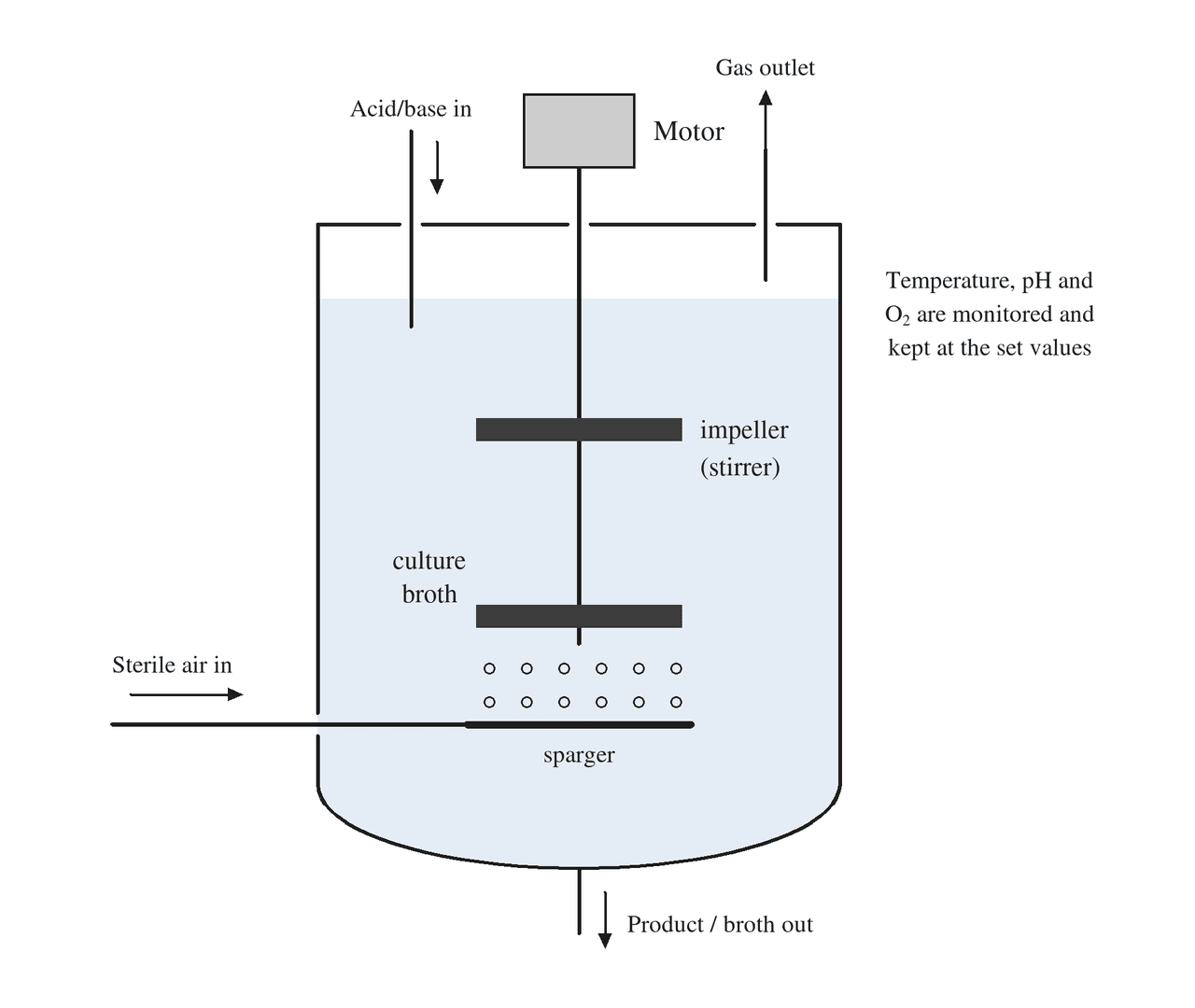
Step 4 — Control and sampling systems.
It also has a foam control system, temperature and pH control systems (with acid and base inlets) and sampling ports, through which small volumes of the culture can be taken out from time to time to check its progress.
Therefore, a bioreactor is a large vessel in which cells or enzymes convert raw materials into a product under controlled conditions; a stirred-tank bioreactor has a curved base, a stirrer for even mixing, a sparger for sterile air, foam, temperature and pH control, and sampling ports.
- 135 marks
Question 13
Explain the various steps involved in Recombinant DNA technology.
Solve with AIWritten solution
Solution:
Key idea: Recombinant DNA technology joins a gene of interest to a vector, puts it into a host and makes the host copy and express the gene. It is done as a series of steps.
Step 1 — Isolate the DNA.
The cells are broken open with enzymes: lysozyme for bacteria, cellulase for plant cells, chitinase for fungi. RNA is removed with ribonuclease and proteins with protease. The pure DNA is then precipitated by adding chilled ethanol and is seen as fine threads.
Step 2 — Cut the DNA at specific sites.
The DNA is cut with a restriction endonuclease. The vector is cut with the same enzyme, so that both have matching sticky ends.
Step 3 — Separate and isolate the required fragment.
The fragments are separated by agarose gel electrophoresis, and the band carrying the gene of interest is cut out and the DNA extracted (elution).
Step 4 — Amplify the gene by PCR.
The gene of interest is copied many times by the polymerase chain reaction, using a pair of primers and Taq polymerase.
Step 5 — Join the gene to the vector (ligation).
The gene and the cut vector are mixed with DNA ligase, which seals the sugar-phosphate backbone and gives recombinant DNA.
Step 6 — Insert the recombinant DNA into the host.
The host cells are first made competent to take up DNA, for example by treating bacteria with calcium ions and giving a heat shock (42 °C and then ice). Other methods are microinjection, the gene gun and electroporation.
Step 7 — Select the recombinant cells.
Transformed cells are picked out on media containing an antibiotic, and recombinants are told apart by insertional inactivation (for example white colonies in the blue-white test).
Step 8 — Grow the host on a large scale and obtain the product.
The recombinant cells are grown in large bioreactors so that the gene is expressed and the product (for example a protein) is made in bulk.
Step 9 — Downstream processing.
The product is separated and purified, mixed with preservatives into a final form, and tested for safety and quality (with clinical trials for medicines) before it is marketed.
Therefore, the steps of recombinant DNA technology are: isolation of DNA, cutting with restriction enzymes, separation of the required fragment, amplification by PCR, ligation into a vector, transfer into a competent host, selection of recombinants, large-scale culture and downstream processing.
- 141 mark
Question 14
Answer the following questions briefly.
Name the source of thermostable DNA polymerase.
Solve with AIWritten solution
Solution:
Key idea: PCR needs a DNA polymerase that is not destroyed when the mixture is heated to about 94 °C in every cycle.
Step 1 — Recall where such an enzyme comes from.
Heat-stable enzymes are found in microbes that live in very hot places, such as hot springs.
Step 2 — Name the source.
Thermostable DNA polymerase (Taq polymerase) is obtained from the bacterium Thermus aquaticus.
Therefore, the source of thermostable DNA polymerase is the bacterium Thermus aquaticus.
- 151 mark
Question 15
Answer the following questions briefly.
How many sets of primers are required in each cycle of PCR?
Solve with AIWritten solution
Solution:
Key idea: A primer is a short, chemically synthesised, single-stranded piece of DNA that gives DNA polymerase a starting point. The textbook describes PCR as using two sets of primers: each set is a very large number of identical copies of one primer, and each set pairs with one of the two strands of the target DNA.
Step 1 — See why each strand needs its own primer.
In every cycle the two strands of the DNA separate. DNA polymerase can only extend a primer that is already paired with a strand, so each strand needs a primer that pairs with it at the 3′ end of the target region.
Step 2 — Count the sets of primers.
One set (the forward primer) pairs with one strand, and the other set (the reverse primer) pairs with the other strand at the opposite end of the target region. Each set has millions of identical primer molecules, enough for every copy of its strand in every cycle. So two sets of primers are needed in each cycle.
Note: In the laboratory the two primers together are often called a "primer pair"; this is the same thing as the two sets.
Therefore, two sets of primers (a forward and a reverse primer) are required in each cycle of PCR.
- 161 mark
Question 16
Answer the following questions briefly.
Which one of the following enzymes is used to join DNA fragments?
Solve with AIAnswer
(A) DNA polymerase
- Correct
(B) Ligase
(C) Primase
(D) Endonuclease
Answer: (B) Ligase
Key idea: Joining two DNA fragments means making a phosphodiester bond between the end of one fragment and the end of the other.
Step 1 — Recall which enzyme seals DNA.
DNA ligase joins the sugar-phosphate backbones of two DNA fragments by forming phosphodiester bonds, for example when a gene is joined into a vector cut with the same restriction enzyme.
Step 2 — Match with the options.
So the enzyme used to join DNA fragments is ligase, option (B).
Why the others are wrong:
- (A) DNA polymerase adds nucleotides one by one to build a new strand on a template; it does not seal two separate fragments together.
- (C) Primase makes the short RNA primers needed to start DNA replication; it does not join fragments.
- (D) An endonuclease breaks phosphodiester bonds inside a DNA strand, so it cuts DNA rather than joining it.
Therefore, DNA fragments are joined by ligase, option (B).
- 172 marks
Question 17
Answer the following questions briefly.
Give a reason for each of the following:
a. Cattle avoid browsing on Calotropis plant
b. DNA can not enter directly into the host cell
Solve with AIWritten solution
Solution:
Key idea: Each statement is explained by the cause behind it: a chemical defence of the plant in (a), and the nature of the DNA molecule in (b).
Step 1 — Explain why cattle avoid Calotropis, part a.
Calotropis produces highly poisonous chemicals called cardiac glycosides. These can harm the heart of a grazing animal, so cattle and goats avoid browsing on this plant. This is a chemical defence of the plant against herbivores.
Step 2 — Explain why DNA cannot enter the host cell directly, part b.
DNA is a very large, water-loving (hydrophilic) molecule with many negative charges on its phosphate groups. It cannot pass through the cell membrane, whose interior is made of lipids. So host cells must first be made competent, for example by treating bacteria with calcium ions and then giving a heat shock, or the DNA must be pushed in by electroporation, microinjection or a gene gun.
Therefore, (a) cattle avoid Calotropis because it makes poisonous cardiac glycosides; (b) DNA cannot enter a cell directly because it is a large, charged, hydrophilic molecule that cannot cross the lipid cell membrane.
- 183 marks
Question 18
Name and describe the technique that helps in the separation and isolation of DNA fragments.
Solve with AIWritten solution
Solution:
Key idea: After DNA is cut by restriction enzymes, the fragments are separated by size using agarose gel electrophoresis, and the required fragment is then isolated from the gel.
Step 1 — Name the technique.
The technique is agarose gel electrophoresis.
Step 2 — Describe how the fragments are separated.
The DNA fragments are put into wells in an agarose gel (agarose is obtained from seaweed), and an electric current is passed. DNA is negatively charged, so the fragments move towards the anode. The gel acts as a sieve, so smaller fragments move farther and larger ones less, and the fragments separate according to size.
Step 3 — Describe how they are seen and isolated.
The gel is stained with ethidium bromide and placed under ultraviolet light, where the DNA shows up as bright orange bands. The band of the wanted size is cut out of the gel and the DNA is extracted from the gel piece; this is called elution. The purified DNA is used to make recombinant DNA.
Note: Ethidium bromide is a mutagen, so many laboratories now use safer stains.
Therefore, agarose gel electrophoresis separates DNA fragments by size (smaller ones move farther towards the anode); the bands are seen after staining and the required band is cut out and eluted.
- 193 marks
Question 19
Study the diagram given below and answer the questions that follow.
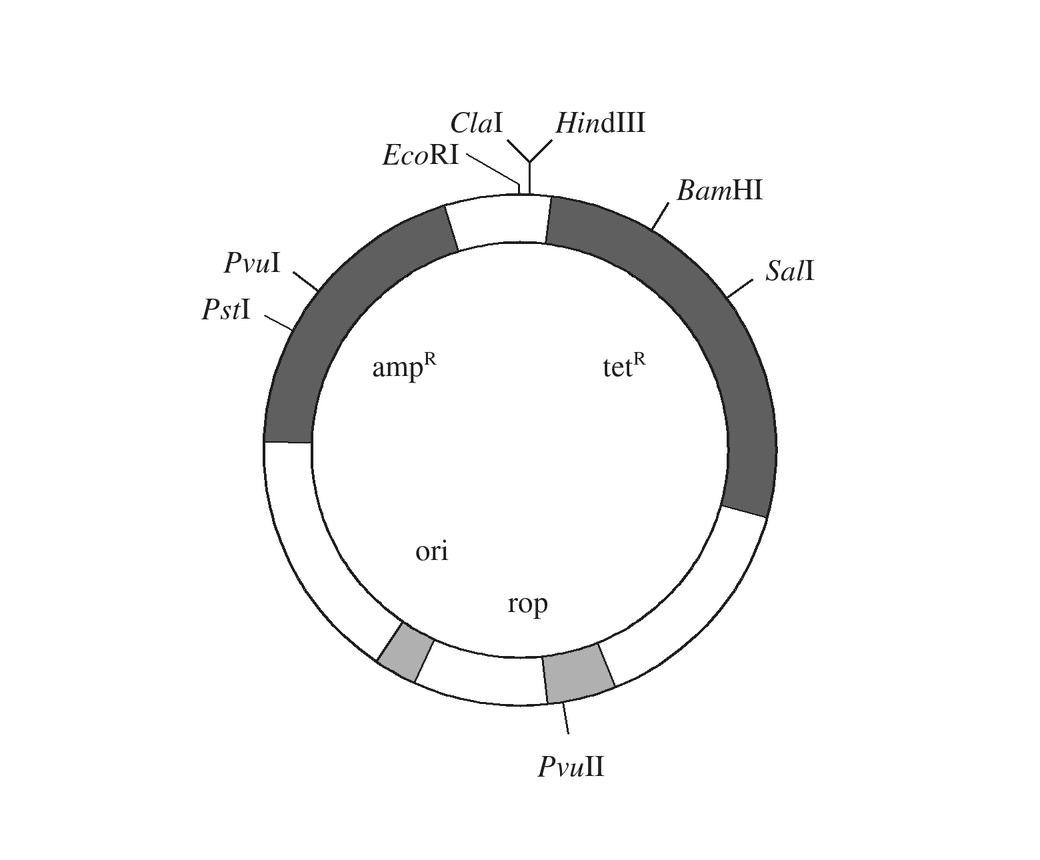
(a) Name the cloning vector shown above. In which organism is this cloning vector inserted?
(b) Mention any two restriction sites shown in the diagram.
(c) Name any two selection markers shown in the diagram.
Solve with AIWritten solution
Solution:
Key idea: The map shows a plasmid with the antibiotic-resistance genes and , an origin of replication (ori), the rop gene and single sites for several restriction enzymes; this is the well-known E. coli cloning vector pBR322.
Step 1 — Name the vector and its host, part (a).
The vector is pBR322, an artificial plasmid. It is put into the bacterium Escherichia coli, where its ori lets it replicate.
Step 2 — Name two restriction sites, part (b).
Any two of the sites shown: EcoRI, BamHI, HindIII, ClaI, SalI, PstI, PvuI and PvuII. For example, BamHI and SalI lie inside the gene, and PstI and PvuI lie inside the gene.
Step 3 — Name two selection markers, part (c).
The selectable markers are (resistance to ampicillin) and (resistance to tetracycline). They let us pick out transformed cells, and inserting a gene into one of them inactivates it, which identifies the recombinants.
Therefore, (a) the vector is pBR322, inserted in E. coli; (b) two restriction sites are EcoRI and BamHI; (c) two selection markers are and .
- 201 mark
Question 20
Answer the following questions briefly.
Assertion: In a bioreactor, it is not necessary to maintain sterile ambience.
Reason: Sterile conditions promote the growth of unwanted microbes in the culture medium.
Solve with AIAnswer
(A) Both Assertion and Reason are true, and Reason is the correct explanation for Assertion.
(B) Both Assertion and Reason are true, but Reason is not the correct explanation for Assertion.
(C) Assertion is true and Reason is false.
- Correct
(D) Both Assertion and Reason are false.
Answer: (D) Both Assertion and Reason are false.
Key idea: A bioreactor is meant to grow only the chosen organism. Any other microbe that gets in would compete with it and spoil the product.
Step 1 — Judge the Assertion.
The Assertion says a sterile ambience is not necessary. This is false: the medium, the vessel and the air supply are all sterilised, because contaminating microbes would use up the nutrients and lower or spoil the product.
Step 2 — Judge the Reason.
The Reason says sterile conditions promote the growth of unwanted microbes. This is false: sterile conditions keep unwanted microbes out, so they prevent their growth.
Step 3 — Choose the option.
Since both statements are false, the answer is option (D).
Why the others are wrong:
- (A) This needs both statements to be true and the Reason to explain the Assertion, but both are false.
- (B) This needs both statements to be true, but neither is.
- (C) This needs the Assertion to be true, but a sterile ambience is in fact essential in a bioreactor.
Therefore, both the Assertion and the Reason are false, option (D).
- 211 mark
Question 21
Answer the following questions briefly.
The equipment shown below is used for the separation of DNA fragments.
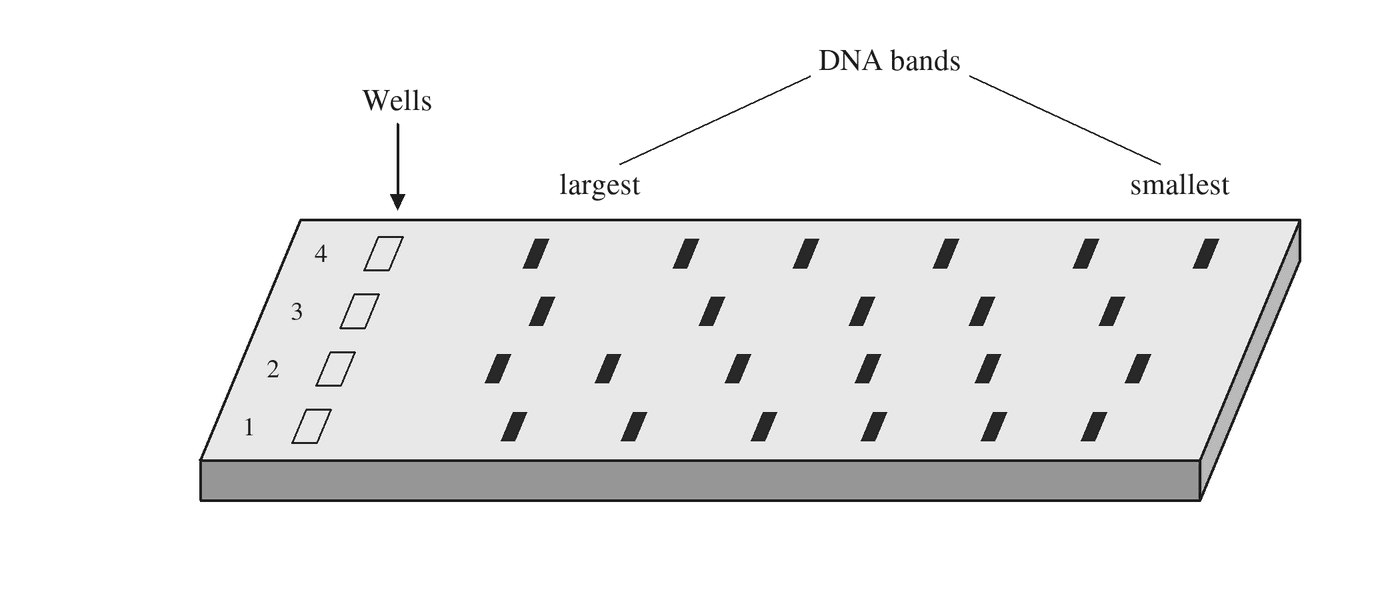
Name the chemical used to visualise the movement of DNA fragments in the gel.
Solve with AIWritten solution
Solution:
Key idea: DNA is colourless, so the fragments in the gel cannot be seen until they are stained.
Step 1 — Name the stain.
The gel is stained with ethidium bromide.
Step 2 — Say how the bands are seen.
Ethidium bromide slips between the bases of DNA. Under ultraviolet light it glows, so the DNA fragments appear as bright orange bands.
Note: Ethidium bromide is a mutagen, so many laboratories now use safer stains.
Therefore, ethidium bromide (with UV light) is used to see the DNA fragments in the gel.
- 223 marks
Question 22
Suneeta is planning an experiment to clone a gene in a vector. So, she has to choose a good cloning vector.
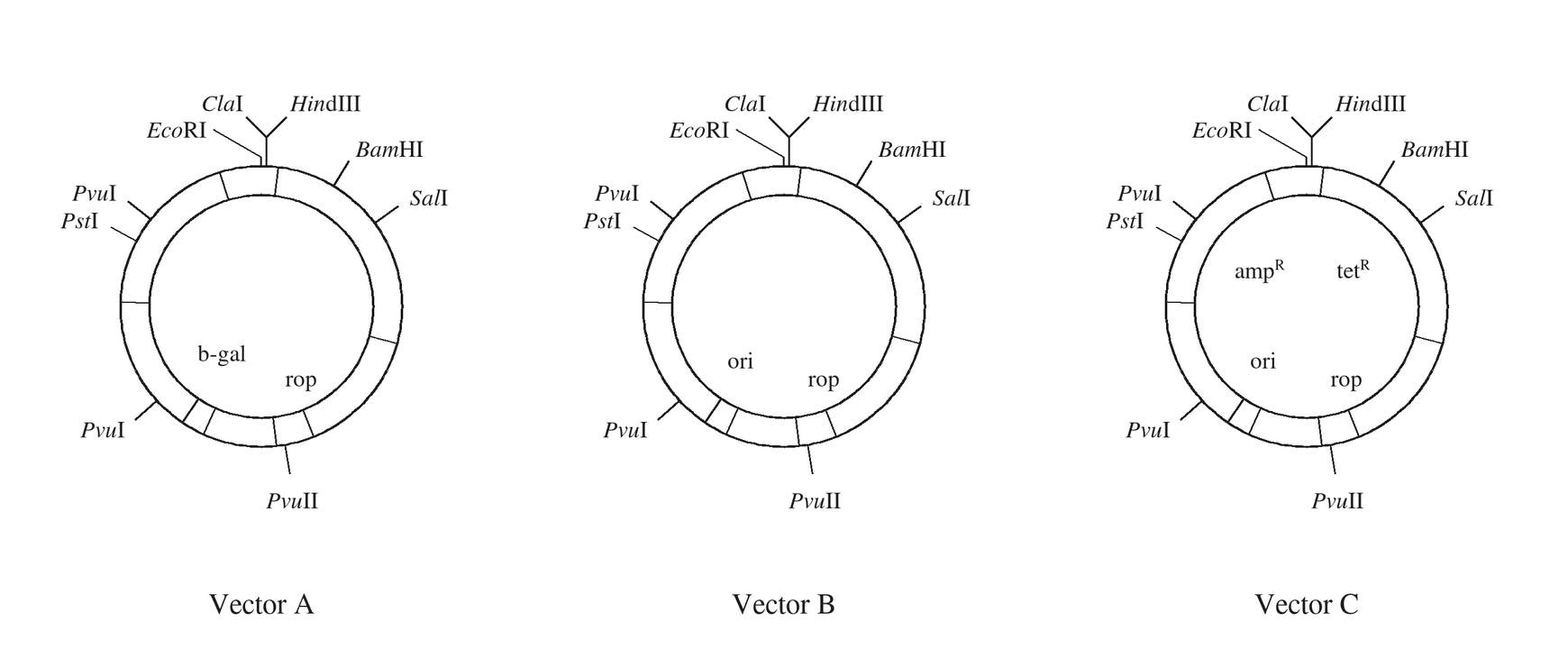
Which one of the vectors shown below should she choose? Justify your answer by giving two reasons.
 Solve with AI
Written solution
Solution:
Key idea: A good cloning vector needs an origin of replication (ori), so that it is copied in the host, and a selectable marker, so that cells carrying it can be picked out.
Step 1 — Check Vector A.
Vector A has the b-gal (β-galactosidase) gene and rop, but no ori and no antibiotic-resistance gene. Without an ori it cannot replicate in the host cell, so it would be lost as the cells divide.
Step 2 — Check Vector B.
Vector B has an ori and rop, so it can replicate, but it has no selectable marker. Since only a few cells take up a vector, there would be no way to pick out the transformed cells.
Step 3 — Check Vector C.
Vector C has an ori and two selectable markers, and . It also has single sites for several restriction enzymes, some of them (BamHI, SalI) inside and some (PstI, PvuI) inside .
Step 4 — Give the two reasons.
Suneeta should choose Vector C because:
- its ori lets it, and any gene joined to it, replicate in the host cell; and
- its selectable markers ( and ) let transformed cells be selected on antibiotic media, and inserting the gene into one marker (insertional inactivation) shows which cells are recombinant.
Note: The diagram labels PvuI twice; in the real plasmid of this kind (pBR322) there is a single PvuI site, inside . This does not change the choice.
Therefore, Suneeta should choose Vector C, because it has an origin of replication and selectable markers ( and ).
- 231 mark
Question 23
Answer the following questions briefly.
Derive a name for a restriction endonuclease which was extracted in the order from the RY13 strain of E. coli.
Solve with AIWritten solution
Solution:
Key idea: A restriction enzyme's name is built as genus (1 capital letter) + species (2 small letters) + strain (1 letter) + the order of isolation in Roman numerals.
Step 1 — Build the name piece by piece.
Escherichia gives E, coli gives co, strain RY13 gives R, and the fifth enzyme isolated gives V.
Step 2 — Put the pieces together.
The name is EcoRV, with the first three letters (from the genus and species) in italics.
Note: The real enzyme known as EcoRV was isolated from another strain of E. coli; the question tests only the naming rule.
Therefore, the enzyme would be named EcoRV.
- 241 mark
Question 24
Answer the following questions briefly.
A transformed bacterial cell contains a transgene that can produce one molecule of protein 'X' per cell. This bacterium duplicates every 20 minutes. It is cultured in a nutrient medium for 3 hours.
How many molecules of protein 'X' will be produced by the end of this culture?
Solve with AIWritten solution
Solution:
Key idea: Bacteria multiply by binary fission, so the number of cells doubles every generation. We start with the one transformed cell, and each cell holds one molecule of protein X, so the number of protein molecules equals the number of cells.
Step 1 — Count the generations.
The culture lasts 3 hours, and one generation takes 20 minutes.
Step 2 — Count the cells after 9 doublings.
One cell becomes cells after doublings.
Step 3 — Count the protein molecules.
Each of the 512 cells carries one molecule of protein X, so there are 512 molecules.
Therefore, 512 molecules of protein X will be present at the end of the 3-hour culture.
- 252 marks
Question 25
The diagram given below shows a method of screening the transformed bacterial cells.
Explain how the differently coloured colonies help in identifying the transformed cells.
Solve with AIWritten solution
Solution:
Key idea: This is the blue-white screening method. The vector carries the lacZ gene for the enzyme β-galactosidase, and the gene of interest is inserted inside lacZ.
Step 1 — Explain the blue colonies.
If a cell has taken up a vector without the inserted gene, its lacZ gene works and makes β-galactosidase. On a medium containing the colourless substrate X-gal, the enzyme splits X-gal into a blue product, so these colonies are blue.
Step 2 — Explain the white colonies.
If a cell has taken up the recombinant vector, the inserted gene has broken up lacZ (insertional inactivation). No β-galactosidase is made, X-gal is not split, and these colonies stay white.
Step 3 — State how this identifies the transformed cells.
Cells that took up no vector cannot grow at all, because the medium also contains an antibiotic and only the vector carries the resistance gene. So the white colonies are the cells transformed with the recombinant DNA, and they are picked for further use.
Therefore, white colonies contain the recombinant vector (lacZ inactivated, no blue colour from X-gal), while blue colonies contain the vector without the insert.
- 263 marks
Question 26
(i) What is the role of restriction endonucleases in rDNA technology?
(ii) A biotechnologist was given two restriction endonucleases (RE-A and RE-B) with the following restriction sites:
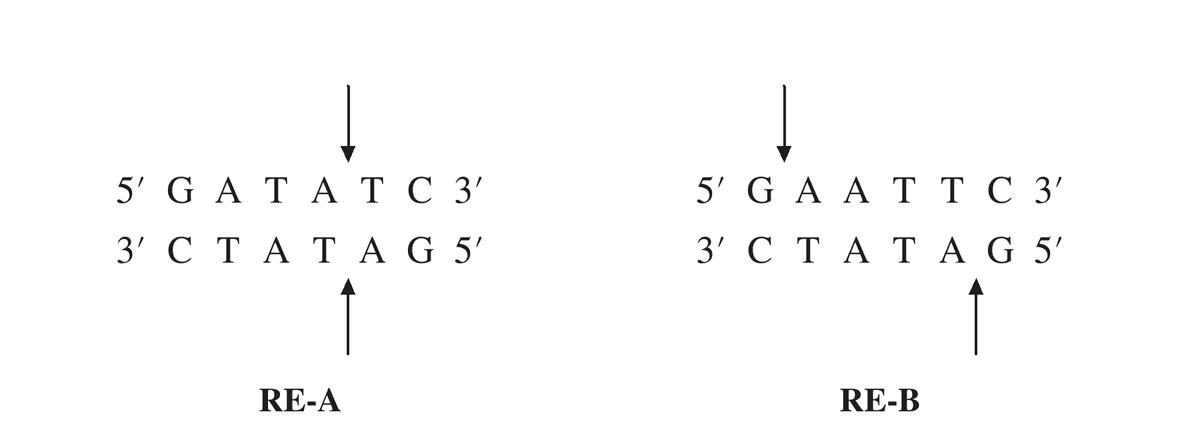
After the action of respective endonucleases, the fragments separated from the restriction sites. Draw the separated fragments on both the sites.
Solve with AIWritten solution
Solution:
Key idea: A restriction endonuclease cuts both strands of DNA at fixed points in its recognition sequence. If the two strands are cut at the same point the ends are blunt; if the cuts are staggered, each end has a short single-stranded overhang, a sticky end.
(i) Role of restriction endonucleases in rDNA technology
Step 1 — State the role.
Restriction endonucleases act as molecular scissors. They cut the DNA of the source organism to free the gene of interest, and cut the vector at one chosen site. When both are cut with the same enzyme, they have matching ends, so DNA ligase can join the gene into the vector to make recombinant DNA.
(ii) Separated fragments
Step 2 — Read the RE-A site.
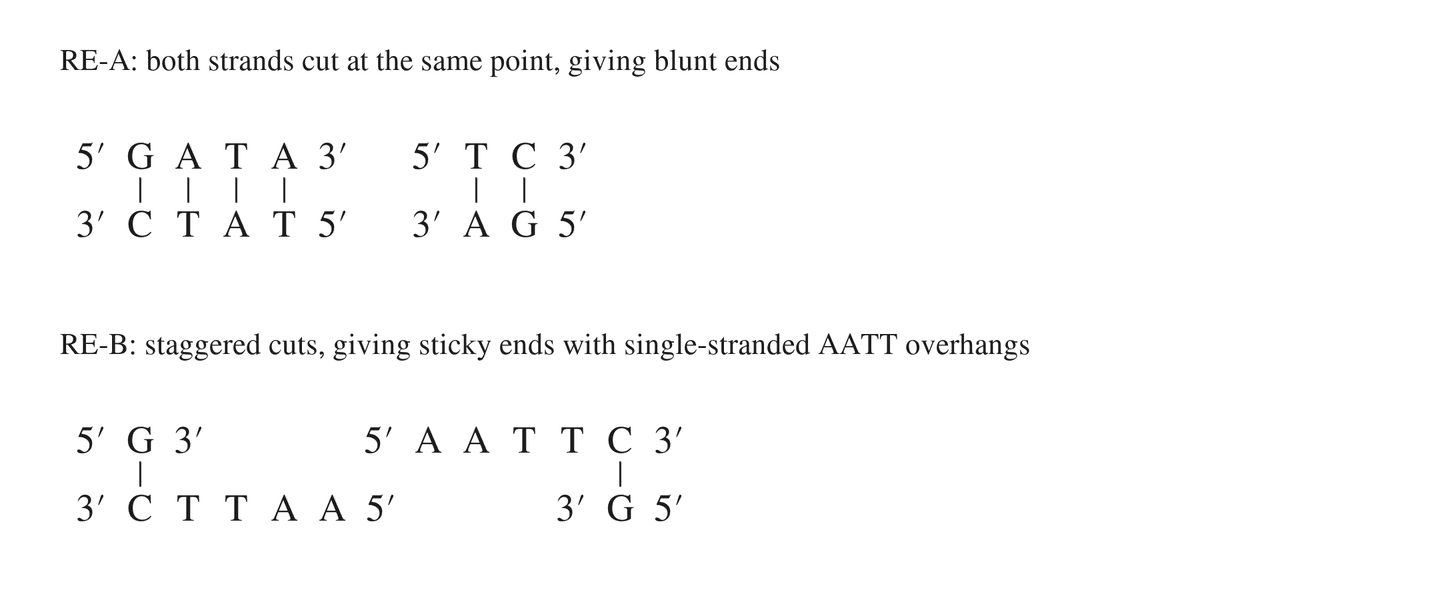
The arrows show RE-A cutting the upper strand between the 4th and 5th bases (5′ GATA | TC 3′) and the lower strand at the same point (3′ CTAT | AG 5′). Both cuts are at the same position, so the fragments have blunt ends: 5′-GATA-3′ paired with 3′-CTAT-5′, and 5′-TC-3′ paired with 3′-AG-5′.
Step 3 — Read the RE-B site.
The arrows show RE-B cutting the upper strand after the first G (5′ G | AATTC 3′) and the lower strand before its last G. The cuts are staggered, so each fragment gets a single-stranded AATT overhang (sticky end): 5′-G-3′ paired with 3′-CTTAA-5′, and 5′-AATTC-3′ paired with 3′-G-5′.
Note: The paper prints the lower strand of RE-B as 3′ CTATAG 5′, which cannot pair with 5′ GAATTC 3′ (A pairs only with T, and G with C). We take the lower strand as 3′ CTTAAG 5′, the only strand that pairs with it; the cut points shown by the arrows are unchanged.
Step 4 — Draw the fragments.
The drawing shows the two fragments from each site, with the paired bases joined.
Therefore, (i) restriction endonucleases cut DNA at specific sites so that a gene and a vector get matching ends and can be joined; (ii) RE-A gives blunt-ended fragments (GATA/CTAT and TC/AG) and RE-B gives sticky-ended fragments with AATT overhangs (G/CTTAA and AATTC/G).
- 271 mark
Question 27
A scientist isolates a second restriction endonuclease from the strain DC3 of Helicobacter pyogenes.
What would the scientist name it using the standard naming technique of restriction enzyme?
Solve with AIWritten solution
Solution:
Key idea: A restriction enzyme's name is genus (1 capital letter) + species (2 small letters) + strain (1 letter) + the order of isolation in Roman numerals.
Step 1 — Build the name piece by piece.
Helicobacter gives H, pyogenes gives py, strain DC3 gives D, and the second enzyme isolated from it gives II.
Step 2 — Put the pieces together.
The name is HpyDII, with the first three letters in italics.
Note: No species called Helicobacter pyogenes is known; the best-known species of this genus is Helicobacter pylori, whose code would also be Hpy. The question uses the name only to test the naming rule.
Therefore, the scientist would name the enzyme HpyDII.
- 282 marks
Question 28
Anthony is a scientist who has been provided with raw materials to obtain a specific biological product in large quantities. His laboratory has two large vessels for this purpose - one with a sparger and the other vessel with a stirrer.
Which vessel will be more advantageous to Anthony? Why?
Solve with AIWritten solution
Solution:
Key idea: To get a product in large amounts, cells must be grown in a large volume where every cell gets enough nutrients and oxygen. How well a vessel mixes its contents decides this.
Step 1 — Compare the two vessels.
In a sparged vessel, air is simply bubbled through the culture from below. The bubbles rise and mix it, but in a large vessel the mixing and oxygen supply are uneven. In a stirred-tank vessel, a motor-driven stirrer mixes the whole culture thoroughly.
Step 2 — Explain the advantage of the stirrer.
The stirrer spreads nutrients, oxygen and heat evenly through the vessel, so the temperature and pH stay uniform. It also breaks the incoming air into small bubbles, which gives a large area for oxygen to dissolve. So the cells grow well everywhere in the vessel.
Note: A simple sparged (bubble) vessel is gentler and is useful for cells that are easily damaged by stirring, but for large-scale production of most products the stirred-tank type is preferred.
Therefore, the vessel with the stirrer (a stirred-tank bioreactor) is more advantageous, because it mixes the culture evenly and provides better oxygen supply to all the cells.
- 292 marks
Question 29
In an experiment to produce recombinant cells, a plasmid without selectable marker was chosen as the vector for cloning a gene.
(i) Predict the outcome of this experiment.
(ii) Name an artificial chromosome that can be used as a vector to transfer the recombinant DNA in Penicillium notatum.
Solve with AIWritten solution
Solution:
Key idea: In transformation only a very small fraction of cells take up the vector. A selectable marker (such as an antibiotic-resistance gene) is what allows the few transformed cells to be picked out.
(i) Outcome of the experiment
Step 1 — Predict the result.
Without a selectable marker, the transformed and untransformed cells grow alike on the medium, so there is no way to tell which cells carry the recombinant plasmid. The few recombinant cells cannot be selected from the very large number of untransformed cells, so the experiment would fail to give identifiable recombinant cells.
(ii) Artificial chromosome for Penicillium notatum
Step 2 — Choose a vector for a fungal host.
Penicillium notatum (Fleming's penicillin mould, now classified as Penicillium rubens) is a eukaryote, a fungus like yeast. Of the two artificial chromosomes in the syllabus, the yeast artificial chromosome (YAC) is the one built from eukaryotic chromosome parts (a centromere, telomeres and an autonomously replicating sequence) and it can carry very large pieces of DNA, so it is the artificial chromosome expected for a fungal host. A bacterial artificial chromosome (BAC) is copied only in bacteria such as E. coli.
Note: The parts of a YAC come from baker's yeast and work best in yeast itself; laboratories that transfer large DNA pieces into moulds such as Penicillium use vectors designed for filamentous fungi (for example, fungal artificial chromosomes). At this level the expected answer is a YAC.
Therefore, (i) the recombinant cells could not be identified or selected; (ii) a yeast artificial chromosome (YAC) can be used.