
Opening your dashboard
Class 6 Maths Chapter 18: Symmetry Solutions
48 textbook questions with step-by-step answers, free to read, for ICSE 2026-27.
Get talked through Ch 18, not just shown the answer
Reading a finished solution is not the same as being able to do it. The AI tutor takes one question at a time and works it with you, in your own words, until you can.
- Ask it out loud, in your own words
- It gives you the next step, not the answer
- Stuck on part (ii)? Start there
48 questions with solutions
1–3 marks · Mixed difficulty
- 13 marks
Question 1
State true or false :
(i) The letter B has one line of symmetry.
Solve with AIWritten solution
Solution:
Concept: A line of symmetry (axis of symmetry) divides a figure into two parts that fit exactly on each other when the figure is folded along that line, so each part is the mirror image of the other. For a capital letter, a vertical line works when the left half is the mirror image of the right half, and a horizontal line works when the top half is the mirror image of the bottom half.
Step 1 — Test a horizontal fold.
The letter B has an upper loop and a lower loop of the same shape. Folding B along the horizontal line through its middle puts the upper loop exactly on the lower loop, so this line is a line of symmetry.

Step 2 — Test a vertical fold.
The left side of B is a straight upright and the right side is made of curved loops. A vertical fold would put a straight side on a curved one, so there is no vertical line of symmetry.
Step 3 — Compare with the statement.
B has exactly one line of symmetry (the horizontal one), which is what the statement says.
Therefore, the statement is true: B has one line of symmetry.
- 23 marks
Question 2
State true or false :
(ii) The letter F has no line of symmetry.
Solve with AIWritten solution
Solution:
Concept: A line of symmetry (axis of symmetry) divides a figure into two parts that fit exactly on each other when the figure is folded along that line, so each part is the mirror image of the other. For a capital letter, a vertical line works when the left half is the mirror image of the right half, and a horizontal line works when the top half is the mirror image of the bottom half.
Step 1 — Test a vertical fold.
The letter F has its upright on the left and both arms on the right only. A vertical fold would send the arms to the left, where there are none, so it does not work.
Step 2 — Test a horizontal fold.
The top bar of F is longer than its middle arm, and the bottom of F has no arm at all. A horizontal fold would put the top bar on empty space, so it does not work either.
Step 3 — Compare with the statement.
No fold makes the two parts of F fit, so F has no line of symmetry, as the statement says.
Therefore, the statement is true: F has no line of symmetry.
- 33 marks
Question 3
State true or false :
(iii) The letter O has only two lines of symmetry.
Solve with AIWritten solution
Solution:
Concept: A line of symmetry (axis of symmetry) divides a figure into two parts that fit exactly on each other when the figure is folded along that line, so each part is the mirror image of the other. For a capital letter, a vertical line works when the left half is the mirror image of the right half, and a horizontal line works when the top half is the mirror image of the bottom half.
Step 1 — Read O as a circle.
If the letter O is drawn as a perfect circle, then every line through its centre (every diameter) folds it exactly onto itself. A circle has unlimited lines of symmetry, so it does not have only two.
Step 2 — Read O as an oval.
If O is drawn as an oval (taller than it is wide), only two folds work: the vertical line and the horizontal line through its centre. This is how O is shown in the chapter's list of letters with two lines of symmetry.
Step 3 — Choose the expected answer.
The answer expected here is False, which takes O as a circle: then O has many more than two lines of symmetry.
Watch out: The number of lines of a letter depends on how it is drawn; say which shape you take.
Note: Both readings are defensible. Drawn as an oval, O has exactly two lines of symmetry and the statement would be true; the expected answer False takes O as a circle.
Therefore, the statement is false when O is taken as a circle, which has unlimited lines of symmetry.
- 43 marks
Question 4
State true or false :
(iv) The figure

has no line of symmetry.
Solve with AIWritten solution
Solution:
Concept: A line of symmetry (axis of symmetry) divides a figure into two parts that fit exactly on each other when the figure is folded along that line, so each part is the mirror image of the other.
Step 1 — Look at the figure.
The figure is a rectangle whose four corners are rounded off equally. It is longer than it is tall.
Step 2 — Test the folds.
Folding along the horizontal line through the middle puts the top edge on the bottom edge, and the upper rounded corners on the lower ones. Folding along the vertical line through the middle puts the left half on the right half. So the figure has two lines of symmetry.

Step 3 — Check the diagonals.
A fold along a diagonal does not work, because the figure is longer than it is tall, so its long side would land on its short side.
Step 4 — Compare with the statement.
The statement says the figure has no line of symmetry, but it has two.
Therefore, the statement is false: the figure has two lines of symmetry.
- 53 marks
Question 5
State true or false :
(v) The letter N has one line of symmetry.
Solve with AIWritten solution
Solution:
Concept: A line of symmetry (axis of symmetry) divides a figure into two parts that fit exactly on each other when the figure is folded along that line, so each part is the mirror image of the other. For a capital letter, a vertical line works when the left half is the mirror image of the right half, and a horizontal line works when the top half is the mirror image of the bottom half.
Step 1 — Test a vertical fold.
The slanting stroke of N runs from the top of the left upright down to the bottom of the right upright. A vertical fold turns this stroke the other way (top-right to bottom-left), so the halves do not fit.
Step 2 — Test a horizontal fold.
A horizontal fold also turns the slanting stroke the other way, so it does not work either.
Step 3 — Compare with the statement.
N has no line of symmetry, so the statement that it has one is wrong.
Watch out: N looks balanced because it fits onto itself after a half turn, but a half turn is not a fold; it has no line of symmetry.
Therefore, the statement is false: N has no line of symmetry.
- 63 marks
Question 6
State true or false :
(vi) The figure
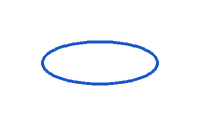
has one line of symmetry.
Solve with AIWritten solution
Solution:
Concept: A line of symmetry (axis of symmetry) divides a figure into two parts that fit exactly on each other when the figure is folded along that line, so each part is the mirror image of the other.
Step 1 — Look at the figure.
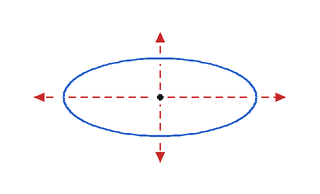
The figure is an oval (an ellipse): it is longer from left to right than from top to bottom.
Step 2 — Test the folds.
Folding along the long (horizontal) axis puts the upper half on the lower half. Folding along the short (vertical) axis puts the left half on the right half. So the oval has two lines of symmetry.
Step 3 — Compare with the statement.
The statement says the figure has one line of symmetry, but it has two.
Therefore, the statement is false: the oval has two lines of symmetry, not one.
- 73 marks
Question 7
State true or false :
(vii) The letter D has only one line of symmetry.
Solve with AIWritten solution
Solution:
Concept: A line of symmetry (axis of symmetry) divides a figure into two parts that fit exactly on each other when the figure is folded along that line, so each part is the mirror image of the other. For a capital letter, a vertical line works when the left half is the mirror image of the right half, and a horizontal line works when the top half is the mirror image of the bottom half.
Step 1 — Test a horizontal fold.
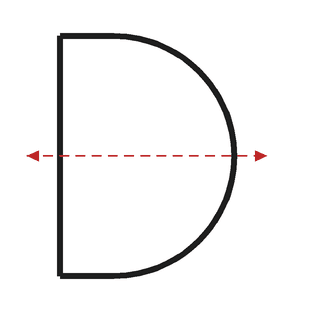
The letter D is a straight upright on the left closed by one curve on the right. The curve bulges equally above and below the middle, so a fold along the horizontal line through the middle puts the top half exactly on the bottom half.
Step 2 — Test a vertical fold.
A vertical fold would put the straight left side on the curved right side, so it does not work.
Step 3 — Compare with the statement.
D has exactly one line of symmetry, the horizontal one, which is what the statement says.
Therefore, the statement is true: D has only one line of symmetry.
- 83 marks
Question 8
State true or false :
(viii) A scalene triangle has three lines of symmetry.
Solve with AIWritten solution
Solution:
Concept: A triangle has a line of symmetry only through a vertex where two equal sides meet: the fold along the bisector of that angle puts one equal side on the other. So a scalene triangle has no line, an isosceles triangle has one and an equilateral triangle has three.
Step 1 — Recall the rule for triangles.
A fold can make a triangle fit onto itself only by putting one side on another side of the same length.
Step 2 — Apply it to a scalene triangle.
In a scalene triangle all three sides have different lengths, so no fold puts a side on an equal side. A scalene triangle therefore has no line of symmetry.
Step 3 — Compare with the statement.
Three lines of symmetry belong to an equilateral triangle (all sides equal), not to a scalene one.
Therefore, the statement is false: a scalene triangle has no line of symmetry.
- 93 marks
Question 9
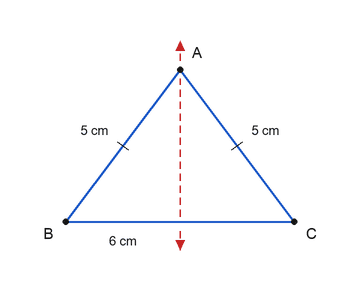
Construct a triangle ABC in which AB = AC = 5 cm and BC = 6 cm. Draw all its lines of symmetry.
Solve with AIWritten solution
Solution:
Concept: A triangle has a line of symmetry only through a vertex where two equal sides meet: the fold along the bisector of that angle puts one equal side on the other. So a scalene triangle has no line, an isosceles triangle has one and an equilateral triangle has three.
Given: AB and AC are each 5 cm long, and BC is 6 cm long.
Step 1 — Draw the base.
We draw the line segment BC, 6 cm long, with a ruler.
Step 2 — Locate A.
With B as centre and radius 5 cm we draw an arc above BC. With C as centre and the same radius 5 cm we draw another arc cutting the first one. The point where the arcs cut is A, because it is 5 cm from both B and C.
Step 3 — Complete the triangle.
We join AB and AC. The sides AB and AC are both 5 cm long, so triangle ABC is an isosceles triangle.
Step 4 — Draw the line of symmetry.
With B and C as centres and equal radii (more than 3 cm) we draw arcs on both sides of BC; the line through the two crossing points is the perpendicular bisector of BC. Because A is equally far from B and C, this line passes through A. We draw it as a dashed line.
Step 5 — Check that there are no other lines.
BC (6 cm) is longer than AB and AC (5 cm), so no fold can put BC on another side. Only the fold through A works.
Watch out: Draw the line through A perpendicular to BC; a line from B or C does not fold the triangle onto itself here.
Therefore, triangle ABC is isosceles and has only one line of symmetry, the line through A perpendicular to BC (it bisects ∠A and BC).
- 103 marks
Question 10
Examine each of the following figures carefully, draw line(s) of symmetry in whichever figure possible :
(i)
 Solve with AI
Written solution
Solution:
Concept: A triangle has a line of symmetry only through a vertex where two equal sides meet: the fold along the bisector of that angle puts one equal side on the other. So a scalene triangle has no line, an isosceles triangle has one and an equilateral triangle has three.
Step 1 — Look at the figure.
The figure is a right-angled triangle whose two arms (the sides forming the right angle) have different lengths. So all three sides are different: it is a scalene right-angled triangle.
Step 2 — Test the folds.
A line of symmetry of a triangle must fold one side onto another equal side. Here no two sides are equal, so no fold makes one part fall exactly on the other.
Watch out: A right angle alone does not give a line of symmetry; the two arms of the right angle must also be equal.
Therefore, drawing a line of symmetry is not possible: this triangle has no line of symmetry.
- 113 marks
Question 11
Examine each of the following figures carefully, draw line(s) of symmetry in whichever figure possible :
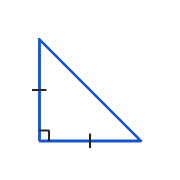
(ii)
 Solve with AI
Written solution
Solution:
Concept: A triangle has a line of symmetry only through a vertex where two equal sides meet: the fold along the bisector of that angle puts one equal side on the other. So a scalene triangle has no line, an isosceles triangle has one and an equilateral triangle has three.
Step 1 — Look at the figure.
The triangle has a right angle, and its two arms are marked equal. So it is an isosceles right-angled triangle.
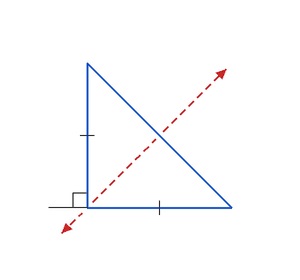
Step 2 — Find the fold.
When we fold along the bisector of the right angle, the two equal arms fall on each other and the longest side folds onto itself at its mid-point. So this bisector is a line of symmetry.
Step 3 — Check other lines.
No other fold works, because the longest side is longer than the arms and cannot be folded onto an arm.
Therefore, the triangle has one line of symmetry, the bisector of its right angle.
- 123 marks
Question 12
Examine each of the following figures carefully, draw line(s) of symmetry in whichever figure possible :
(iii)
 Solve with AI
Written solution
Solution:
Concept: A triangle has a line of symmetry only through a vertex where two equal sides meet: the fold along the bisector of that angle puts one equal side on the other. So a scalene triangle has no line, an isosceles triangle has one and an equilateral triangle has three.
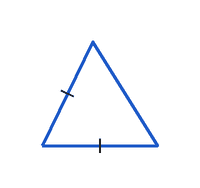
Step 1 — Look at the figure.
Only two sides are marked equal: the left side and the base. They meet at the bottom-left vertex, so the triangle is isosceles with its two equal sides meeting there.
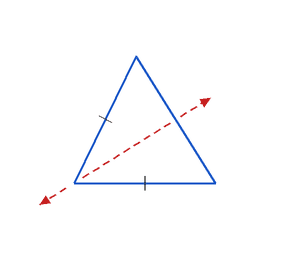
Step 2 — Find the fold.
Folding along the bisector of the angle at the bottom-left vertex puts the left side on the base, and the third side folds onto itself at its mid-point. So this bisector is a line of symmetry.
Step 3 — Check other lines.
The third side is not marked equal to the others, so no other fold works.
Watch out: The line of symmetry starts at the vertex where the two EQUAL sides meet, not at the top vertex.
Therefore, the triangle has one line of symmetry, the bisector of the angle between its two equal sides (it bisects the third side).
- 133 marks
Question 13
Examine each of the following figures carefully, draw line(s) of symmetry in whichever figure possible :
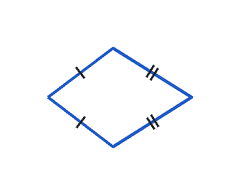
(iv)
 Solve with AI
Written solution
Solution:
Concept: A line of symmetry (axis of symmetry) divides a figure into two parts that fit exactly on each other when the figure is folded along that line, so each part is the mirror image of the other.
Step 1 — Look at the figure.
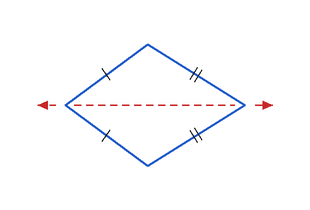
The two left sides are marked equal (single marks) and the two right sides are marked equal (double marks), but a left side is not equal to a right side. So the figure is a kite.
Step 2 — Find the fold.
Folding along the diagonal that joins the left and right corners puts the upper-left side on the lower-left side and the upper-right side on the lower-right side. So this diagonal is a line of symmetry.
Step 3 — Check other lines.
The other diagonal (top to bottom) would put a short left side on a long right side, so it does not work.
Watch out: Only the diagonal joining the corners where the UNEQUAL sides meet is a line of symmetry of a kite.
Therefore, the kite has one line of symmetry, its horizontal diagonal (joining the left and right corners).
- 143 marks
Question 14
Examine each of the following figures carefully, draw line(s) of symmetry in whichever figure possible :
(v)
 Solve with AI
Written solution
Solution:
Concept: A line of symmetry (axis of symmetry) divides a figure into two parts that fit exactly on each other when the figure is folded along that line, so each part is the mirror image of the other.
Step 1 — Look at the figure.
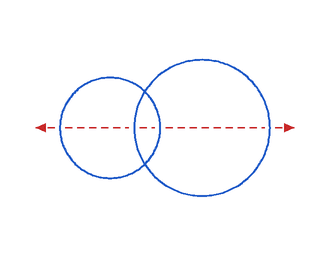
Two circles of different sizes cut each other.
Step 2 — Find the fold.
Each circle is symmetric about every line through its own centre. So the line through both centres folds each circle onto itself, and is a line of symmetry of the whole figure.
Step 3 — Check other lines.
The line through the two crossing points would put the small circle on the big circle, and they do not fit, because the circles are unequal.
Therefore, the figure has one line of symmetry, the line through the centres of the two circles.
- 153 marks
Question 15
Examine each of the following figures carefully, draw line(s) of symmetry in whichever figure possible :
(vi)
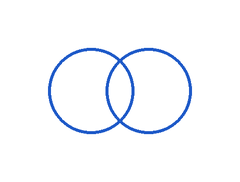
[Equal circles]
Solve with AIWritten solution
Solution:
Concept: A line of symmetry (axis of symmetry) divides a figure into two parts that fit exactly on each other when the figure is folded along that line, so each part is the mirror image of the other.
Step 1 — Look at the figure.
Two equal circles cut each other at two points.
Step 2 — Find the first fold.
The line through the two centres folds each circle onto itself, so it is a line of symmetry.
Step 3 — Find the second fold.
Because the circles are equal, the line through their two crossing points (the perpendicular bisector of the line joining the centres) folds one circle exactly onto the other. So it is a second line of symmetry.
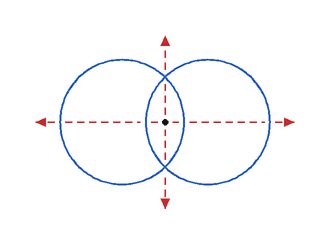
Watch out: The second line works only because the circles are equal; compare part (v).
Therefore, the figure has two lines of symmetry: the line through the centres and the line through the two points where the circles cut.
- 163 marks
Question 16
Construct a triangle XYZ in which XY = YZ = ZX = 4·5 cm. Draw all its lines of symmetry.
Solve with AIWritten solution
Solution:
Concept: A triangle has a line of symmetry only through a vertex where two equal sides meet: the fold along the bisector of that angle puts one equal side on the other. So a scalene triangle has no line, an isosceles triangle has one and an equilateral triangle has three.
Given: Each side of triangle XYZ is 4.5 cm long.
Step 1 — Draw the base.
We draw XY, 4.5 cm long.
Step 2 — Locate Z.
With X as centre and radius 4.5 cm we draw an arc; with Y as centre and the same radius we draw another arc cutting it at Z. We join XZ and YZ. All three sides are 4.5 cm, so triangle XYZ is equilateral.
Step 3 — Draw the lines of symmetry.
In an equilateral triangle any two sides are equal, so the bisector of each angle is a line of symmetry. We bisect each angle (or join each vertex to the mid-point of the opposite side) and draw the three lines dashed. They meet at one point inside the triangle.
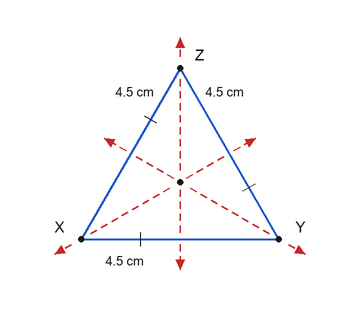
Watch out: An equilateral triangle has three lines of symmetry; drawing only one is incomplete.
Therefore, triangle XYZ is equilateral and has three lines of symmetry, the bisectors of its three angles.
- 173 marks
Question 17
Construct a triangle ABC in which AB = BC = 4 cm and ∠ ABC = 60°. Draw all its lines of symmetry.
Solve with AIWritten solution
Solution:
Concept: A triangle has a line of symmetry only through a vertex where two equal sides meet: the fold along the bisector of that angle puts one equal side on the other. So a scalene triangle has no line, an isosceles triangle has one and an equilateral triangle has three.
Given: AB and BC are each 4 cm long, and ∠ABC = 60°.
Step 1 — Draw the base and the angle.
We draw BC, 4 cm long. At B we construct ∠ABC = 60°: with B as centre we draw an arc cutting BC, and with the cutting point as centre and the same radius we cut that arc again; the ray from B through this point makes 60° with BC.
Step 2 — Locate A.
With B as centre and radius 4 cm we cut the ray at A, and join AC.
Step 3 — Find the other angles.
Since AB = BC, the angles opposite these sides are equal: ∠A = ∠C. The three angles add up to 180°, so ∠A (and also ∠C) is half of what is left after ∠B.
Step 4 — Name the triangle.
All three angles are 60°, so triangle ABC is equilateral and AC = 4 cm as well.
Step 5 — Draw the lines of symmetry.
An equilateral triangle has three lines of symmetry, the bisectors of its angles. We draw them dashed; they meet at one point.

Watch out: The stem gives only two equal sides; it is the 60° angle that makes the third side equal too.
Therefore, triangle ABC is equilateral, so it has three lines of symmetry, the bisectors of its angles.
- 183 marks
Question 18
Draw the line(s) of symmetry for each figure drawn below :
(i)
 Solve with AI
Written solution
Solution:
Concept: A line of symmetry (axis of symmetry) divides a figure into two parts that fit exactly on each other when the figure is folded along that line, so each part is the mirror image of the other.
Step 1 — Look at the figure.
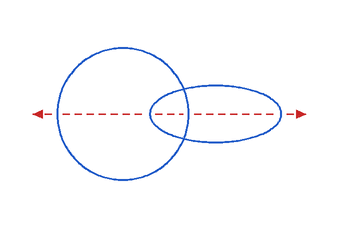
The figure is a circle with an oval overlapping it on the right. The long axis of the oval lies on the horizontal line through the centre of the circle.
Step 2 — Find the fold.
Folding along this horizontal line folds the circle onto itself (it passes through the centre) and folds the oval onto itself (it is the oval's long axis). So it is a line of symmetry.
Step 3 — Check other lines.
A vertical fold does not work, because the oval is on the right side only.
Therefore, the figure has one line of symmetry, the horizontal line through the centre of the circle along the long axis of the oval.
- 193 marks
Question 19
Draw the line(s) of symmetry for each figure drawn below :
(ii)
 Solve with AI
Written solution
Solution:
Concept: A line of symmetry (axis of symmetry) divides a figure into two parts that fit exactly on each other when the figure is folded along that line, so each part is the mirror image of the other.
Step 1 — Look at the figure.
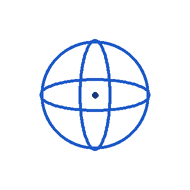
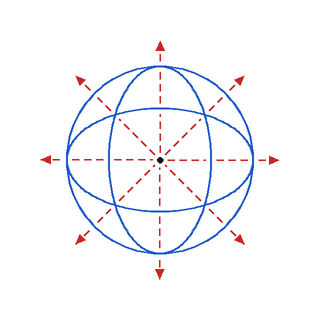
A circle has two equal ovals inside it, one lying horizontally and one standing vertically, and all three have the same centre (the dot).
Step 2 — Find the folds.
The horizontal and the vertical lines through the centre fold each oval onto itself and the circle onto itself. The two slanting lines at 45° fold the horizontal oval exactly onto the vertical one, because the ovals are equal. So there are four lines of symmetry.
Watch out: The slanting lines are easy to miss: they swap the two ovals instead of folding each onto itself.
Therefore, the figure has four lines of symmetry: the horizontal line, the vertical line and the two slanting lines through the centre.
- 203 marks
Question 20
Draw the line(s) of symmetry for each figure drawn below :
(iii)
 Solve with AI
Written solution
Solution:
Concept: A line of symmetry (axis of symmetry) divides a figure into two parts that fit exactly on each other when the figure is folded along that line, so each part is the mirror image of the other.
Step 1 — Look at the figure.
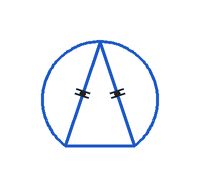
A circular arc is closed at the bottom by a straight base. A triangle stands on this base, and its two slant sides are marked equal and meet at the top point of the arc.
Step 2 — Find the fold.
The vertical line through the top point is perpendicular to the base at its mid-point. Folding along it puts one equal slant side on the other and folds the arc onto itself. So it is a line of symmetry.

Step 3 — Check other lines.
A horizontal fold would put the round top on the straight base, so it does not work.
Therefore, the figure has one line of symmetry, the vertical line through the top vertex.
- 213 marks
Question 21
Draw the line(s) of symmetry for each figure drawn below :
(iv)
 Solve with AI
Written solution
Solution:
Concept: A line of symmetry (axis of symmetry) divides a figure into two parts that fit exactly on each other when the figure is folded along that line, so each part is the mirror image of the other.
Step 1 — Look at the figure.
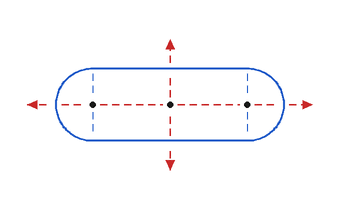
The figure is a rectangle with an equal semicircle on each short side. The dotted lines are the diameters of the semicircles, and the dots mark their centres, which lie on the middle horizontal line.
Step 2 — Find the folds.
Folding along the horizontal line through the two centres puts the top edge on the bottom edge and folds each semicircle onto itself. Folding along the vertical line through the middle puts the left semicircle on the right one, because they are equal. So there are two lines of symmetry.
Watch out: A line of symmetry must pass through the middle of the figure; a fold anywhere else leaves one part bigger.
Therefore, the figure has two lines of symmetry: the horizontal line through the two centres and the vertical line through the middle.
- 223 marks
Question 22
In each of the following cases, construct a point that is symmetric to the given point P with respect to the given line AB.
(i)
 Solve with AI
Written solution
Solution:
Concept: The point symmetric to P with respect to a line AB (its mirror image) lies on the perpendicular from P to AB, on the other side of AB and at the same distance from AB. Then AB is the perpendicular bisector of the segment joining P and its image.
Step 1 — Draw the perpendicular from P.
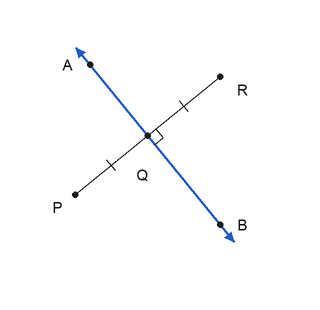
With P as centre we draw an arc cutting AB at two points. With these two points as centres and equal radii we draw arcs crossing each other on the other side of AB. The line from P through this crossing point is perpendicular to AB; it meets AB at Q.
Step 2 — Cut off an equal length.
We produce PQ beyond AB. With Q as centre and radius QP we cut it at R, so that QR = PQ.
Step 3 — Name the point.
R lies on the perpendicular from P, on the other side of AB, at the same distance from AB as P. So R is the point symmetric to P with respect to AB.

Watch out: R must be on the perpendicular from P; measuring the same distance along a slanting line gives a wrong point.
Therefore, R is the point symmetric to P with respect to AB: PR is perpendicular to AB at Q and PQ = QR.
- 233 marks
Question 23
In each of the following cases, construct a point that is symmetric to the given point P with respect to the given line AB.
(ii)
 Solve with AI
Written solution
Solution:
Concept: The point symmetric to P with respect to a line AB (its mirror image) lies on the perpendicular from P to AB, on the other side of AB and at the same distance from AB. Then AB is the perpendicular bisector of the segment joining P and its image.
Step 1 — Draw the perpendicular from P.
With P as centre we draw an arc cutting AB at two points. With these two points as centres and equal radii we draw arcs crossing each other on the other side of AB. The line from P through this crossing point is perpendicular to AB; it meets AB at Q.
Step 2 — Cut off an equal length.
We produce PQ beyond AB. With Q as centre and radius QP we cut it at R, so that QR = PQ.
Step 3 — Name the point.
R lies on the perpendicular from P, on the other side of AB, at the same distance from AB as P. So R is the point symmetric to P with respect to AB.
Watch out: R must be on the perpendicular from P; measuring the same distance along a slanting line gives a wrong point.
Therefore, R is the point symmetric to P with respect to AB: PR is perpendicular to AB at Q and PQ = QR.
- 243 marks
Question 24
In each of the following cases, construct a point that is symmetric to the given point P with respect to the given line AB.
(iii)
 Solve with AI
Written solution
Solution:
Concept: The point symmetric to P with respect to a line AB (its mirror image) lies on the perpendicular from P to AB, on the other side of AB and at the same distance from AB. Then AB is the perpendicular bisector of the segment joining P and its image.
Step 1 — Draw the perpendicular from P.
With P as centre we draw an arc cutting AB at two points. With these two points as centres and equal radii we draw arcs crossing each other on the other side of AB. The line from P through this crossing point is perpendicular to AB; it meets AB at Q.
Step 2 — Cut off an equal length.
We produce PQ beyond AB. With Q as centre and radius QP we cut it at R, so that QR = PQ.
Step 3 — Name the point.
R lies on the perpendicular from P, on the other side of AB, at the same distance from AB as P. So R is the point symmetric to P with respect to AB.

Watch out: R must be on the perpendicular from P; measuring the same distance along a slanting line gives a wrong point.
Therefore, R is the point symmetric to P with respect to AB: PR is perpendicular to AB at Q and PQ = QR.
- 253 marks
Question 25
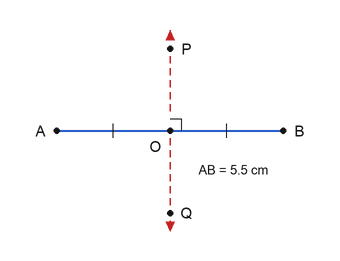
Mark two points A and B 5·5 cm apart. Draw a line PQ so that A and B are symmetric with respect to the line PQ. Give a special name to line PQ.
Solve with AIWritten solution
Solution:
Concept: The point symmetric to P with respect to a line AB (its mirror image) lies on the perpendicular from P to AB, on the other side of AB and at the same distance from AB. Then AB is the perpendicular bisector of the segment joining P and its image.
Given: AB = 5.5 cm.
Step 1 — Mark the points.
We mark A and B 5.5 cm apart and join them.
Step 2 — Draw the arcs.
With A and B as centres and the same radius (more than half of AB) we draw arcs on both sides of AB. The arcs cut each other at P (above AB) and Q (below AB).
Step 3 — Draw PQ.
We join PQ; it cuts AB at O. Since P and Q are each equally far from A and B, the line PQ is perpendicular to AB and passes through its mid-point, so each half of AB is half of 5.5 cm.
Step 4 — Check the symmetry.
B is on the perpendicular from A to PQ, on the other side of PQ, and AO = OB. So A and B are symmetric with respect to PQ.
Watch out: PQ must cut AB at its mid-point AND at right angles; a perpendicular through any other point does not work.
Therefore, PQ is the perpendicular bisector of the line segment AB.
- 263 marks
Question 26
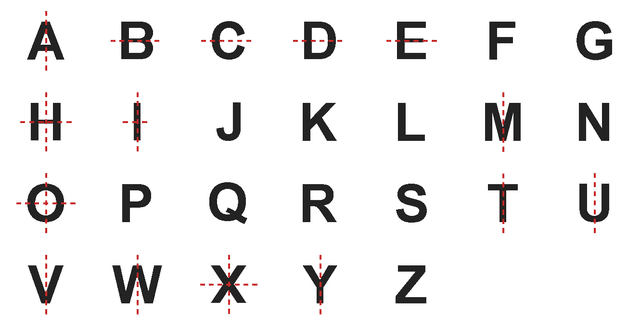
For each letter of the English alphabet, draw the maximum possible number of lines of symmetry.
Solve with AIWritten solution
Solution:
Concept: A line of symmetry (axis of symmetry) divides a figure into two parts that fit exactly on each other when the figure is folded along that line, so each part is the mirror image of the other. For a capital letter, a vertical line works when the left half is the mirror image of the right half, and a horizontal line works when the top half is the mirror image of the bottom half.
Step 1 — Test each letter.
For each capital letter we test two folds: a vertical fold (does the left half fit the right half?) and a horizontal fold (does the top half fit the bottom half?).
Step 2 — Draw the lines.
The dashed lines in the figure show every fold that works.
Step 3 — Sort the letters.
We group the letters by the number of lines of symmetry they have.
Lines of symmetry Letters One (vertical) A, M, T, U, V, W, Y One (horizontal) B, C, D, E Two (vertical and horizontal) H, I, O, X None F, G, J, K, L, N, P, Q, R, S, Z Watch out: The answer depends a little on how the letters are written: the groups above use the shapes shown in this chapter (O as an oval, K with its lower arm starting on the upper arm).
Note: If O is drawn as a perfect circle it has unlimited lines of symmetry, and if K is written with both arms meeting the middle of the upright it has one horizontal line.
Therefore, A, M, T, U, V, W, Y have one vertical line; B, C, D, E have one horizontal line; H, I, O, X have two lines; F, G, J, K, L, N, P, Q, R, S, Z have none.
- 273 marks
Question 27
Draw all the possible lines of symmetry for each figure given below :
(i)
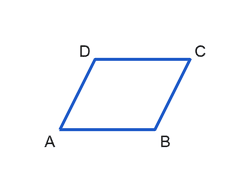
[Parallelogram]
Solve with AIWritten solution
Solution:
Concept: A line of symmetry (axis of symmetry) divides a figure into two parts that fit exactly on each other when the figure is folded along that line, so each part is the mirror image of the other.
Step 1 — Test the diagonals.
Folding the parallelogram ABCD along a diagonal does not make the two triangles fit, because the angles at the ends of that diagonal are not split equally.
Step 2 — Test the lines through mid-points.
Folding along the line joining the mid-points of AB and DC (or of AD and BC) does not work either, because the sides lean one way: the slanting side AD would fall on a side leaning the other way.
Step 3 — Conclude.
No fold makes one part fall exactly on the other, so there is no line of symmetry to draw.
Watch out: A parallelogram fits onto itself after a half turn about its centre, but that is a turn, not a fold.
Therefore, the parallelogram has no line of symmetry.
- 283 marks
Question 28
Draw all the possible lines of symmetry for each figure given below :
(ii)
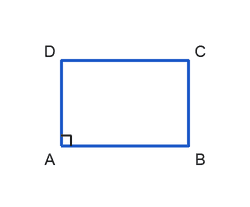
[Rectangle]
Solve with AIWritten solution
Solution:
Concept: A line of symmetry (axis of symmetry) divides a figure into two parts that fit exactly on each other when the figure is folded along that line, so each part is the mirror image of the other.
Step 1 — Find the folds.
Opposite sides of a rectangle are equal and all its angles are 90°. So it folds onto itself along the line joining the mid-points of AB and DC, and along the line joining the mid-points of AD and BC.
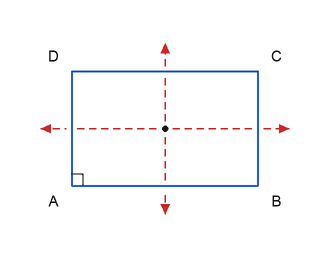
Step 2 — Test the diagonals.
A fold along a diagonal would put the long side AB on the short side BC, so the diagonals are not lines of symmetry (unless the rectangle is a square).
Watch out: The diagonals of a rectangle divide it into two equal halves, but these halves do not fit when folded.
Therefore, the rectangle has two lines of symmetry, the lines joining the mid-points of its opposite sides.
- 293 marks
Question 29
Draw all the possible lines of symmetry for each figure given below :
(iii)

[Square]
Solve with AIWritten solution
Solution:
Concept: A line of symmetry (axis of symmetry) divides a figure into two parts that fit exactly on each other when the figure is folded along that line, so each part is the mirror image of the other.
Step 1 — Find the folds through mid-points.
All sides of a square are equal and all its angles are 90°. So, like a rectangle, it folds onto itself along the two lines joining the mid-points of opposite sides.
Step 2 — Find the folds along the diagonals.
Because AB = BC, a fold along the diagonal AC puts AB on AD and CB on CD; in the same way the diagonal BD works. So the two diagonals are lines of symmetry too.
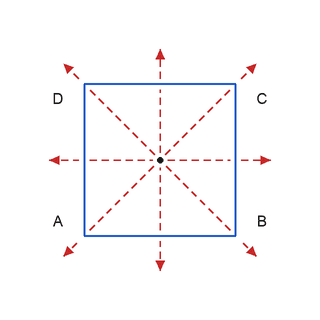
Therefore, the square has four lines of symmetry: the diagonals AC and BD and the two lines joining the mid-points of opposite sides.
- 303 marks
Question 30
Draw all the possible lines of symmetry for each figure given below :
(iv)

[A semi-circle]
Solve with AIWritten solution
Solution:
Concept: A line of symmetry (axis of symmetry) divides a figure into two parts that fit exactly on each other when the figure is folded along that line, so each part is the mirror image of the other.
Step 1 — Look at the figure.
O is the centre of the semi-circle, the mid-point of its diameter (the two halves are marked equal).
Step 2 — Find the fold.
Folding along the line through O perpendicular to the diameter puts one half of the diameter on the other and one quarter of the arc on the other. So this line is a line of symmetry.
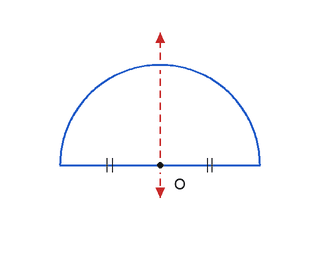
Step 3 — Check other lines.
The diameter itself is not a line of symmetry, because the arc lies on one side of it only.
Therefore, the semi-circle has one line of symmetry, the line through the centre O perpendicular to the diameter.
- 313 marks
Question 31
Draw all the possible lines of symmetry for each figure given below :
(v)
[A quadrant]
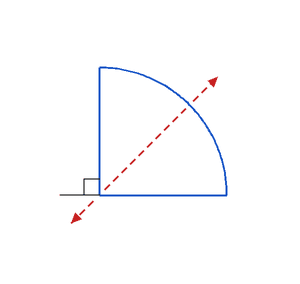
Solve with AIWritten solution
Solution:
Concept: A line of symmetry (axis of symmetry) divides a figure into two parts that fit exactly on each other when the figure is folded along that line, so each part is the mirror image of the other.
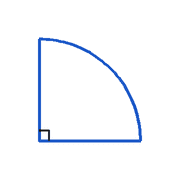
Step 1 — Look at the figure.
A quadrant is a quarter of a circle: two equal radii at right angles joined by an arc.
Step 2 — Find the fold.
Folding along the bisector of the right angle puts one radius on the other, and the arc folds onto itself. So this bisector is a line of symmetry.
Step 3 — Check other lines.
Any other fold would put a straight radius on the curved arc, so it does not work.
Therefore, the quadrant has one line of symmetry, the bisector of its right angle.
- 323 marks
Question 32
For each shaded portion given below, draw all the possible lines of symmetry :
(i)
 Solve with AI
Written solution
Solution:
Concept: A line of symmetry (axis of symmetry) divides a figure into two parts that fit exactly on each other when the figure is folded along that line, so each part is the mirror image of the other.
Step 1 — Look at the shaded part.
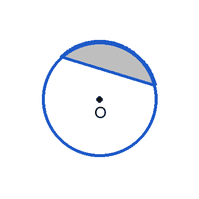
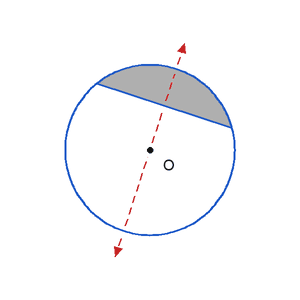
The shaded part is the smaller piece of the circle cut off by a chord (a minor segment). Only the shaded part has to be symmetric.
Step 2 — Find the fold.
The line through the centre O perpendicular to the chord bisects the chord and folds its arc onto itself. So it is a line of symmetry of the shaded segment.
Step 3 — Check other lines.
Any other fold would put part of the curved arc on the straight chord, so it does not work.
Therefore, the shaded segment has one line of symmetry, the line through O perpendicular to the chord.
- 333 marks
Question 33
For each shaded portion given below, draw all the possible lines of symmetry :
(ii)
 Solve with AI
Written solution
Solution:
Concept: A line of symmetry (axis of symmetry) divides a figure into two parts that fit exactly on each other when the figure is folded along that line, so each part is the mirror image of the other.
Step 1 — Look at the shaded part.
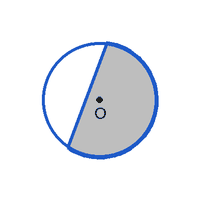
The shaded part is the larger piece of the circle cut off by a chord (a major segment); it contains the centre O.
Step 2 — Find the fold.
The line through O perpendicular to the chord bisects the chord and folds the large arc onto itself, just as for a small segment. So it is a line of symmetry of the shaded part.
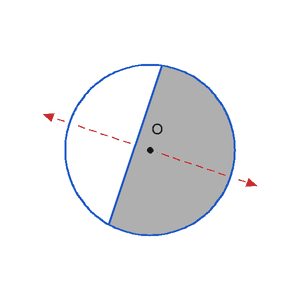
Step 3 — Check other lines.
No other fold puts the straight chord onto itself, so there is no second line.
Watch out: The line must be perpendicular to the chord; the chord itself is not a line of symmetry.
Therefore, the shaded segment has one line of symmetry, the line through O perpendicular to the chord.
- 343 marks
Question 34
For each shaded portion given below, draw all the possible lines of symmetry :
(iii)
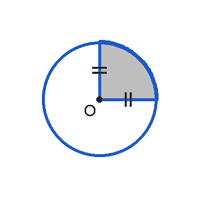 Solve with AI
Written solution
Solution:
Concept: A line of symmetry (axis of symmetry) divides a figure into two parts that fit exactly on each other when the figure is folded along that line, so each part is the mirror image of the other.
Step 1 — Look at the shaded part.
The shaded part is a quadrant: two radii, marked equal, at right angles at O, joined by an arc.
Step 2 — Find the fold.
Folding along the bisector of the right angle at O puts one radius on the other, and the arc folds onto itself. So this bisector is the line of symmetry.
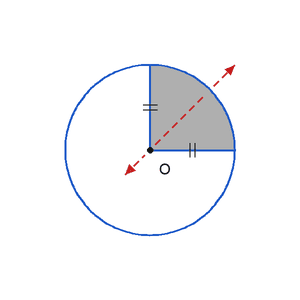
Watch out: Only the shaded quadrant is tested, not the whole circle.
Therefore, the shaded quadrant has one line of symmetry, the bisector of the right angle at O.
- 353 marks
Question 35
For each shaded portion given below, draw all the possible lines of symmetry :
(iv)
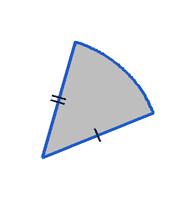 Solve with AI
Written solution
Solution:
Concept: A line of symmetry (axis of symmetry) divides a figure into two parts that fit exactly on each other when the figure is folded along that line, so each part is the mirror image of the other.
Step 1 — Look at the shaded part.
The shaded part is a sector: two straight edges meeting at a corner, joined by an arc centred at that corner. Both straight edges are radii of the arc, so they are equal in length.
Step 2 — Find the fold.
Folding along the bisector of the angle at the corner puts one radius on the other, and the arc folds onto itself. So this bisector is the line of symmetry.
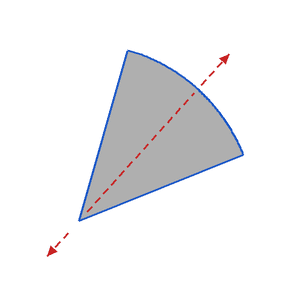
Watch out: The two straight edges carry different marks in the question figure, but as radii of the same arc they are equal.
Therefore, the shaded sector has one line of symmetry, the bisector of the angle where its two radii meet.
- 361 mark
Question 36
An isosceles triangle has :
Solve with AIAnswer
(A) no line symmetry
- Correct
(B) one line symmetry
(C) two line symmetry
(D) three line symmetry
Answer: (B) one line symmetry
Concept: A triangle has a line of symmetry only through a vertex where two equal sides meet: the fold along the bisector of that angle puts one equal side on the other. So a scalene triangle has no line, an isosceles triangle has one and an equilateral triangle has three.
Step 1 — Find the line.
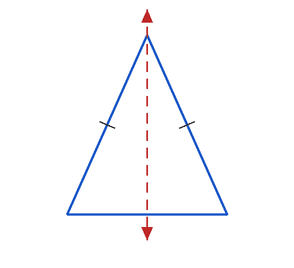
In an isosceles triangle two sides are equal. Folding along the bisector of the angle between them puts one equal side on the other, so this bisector is a line of symmetry.
Step 2 — Count.
The third side is different from the equal sides, so no other fold works: there is exactly one line.
Watch out: An equilateral triangle is a special isosceles triangle with three lines; the usual isosceles triangle has one.
Why the other options are wrong:
- (A) no line symmetry: a triangle with no line of symmetry is scalene; an isosceles triangle always has the bisector line.
- (C) two line symmetry: no triangle has exactly two lines: if two folds worked, all three sides would be equal, giving three lines.
- (D) three line symmetry: three lines need all three sides equal, which is the special case of an equilateral triangle.
Therefore, an isosceles triangle has one line of symmetry, option (B).
- 371 mark
Question 37
An equilateral triangle has :
Solve with AIAnswer
(A) no line symmetry
(B) one line symmetry
(C) two line symmetry
- Correct
(D) three line symmetry
Answer: (D) three line symmetry
Concept: A triangle has a line of symmetry only through a vertex where two equal sides meet: the fold along the bisector of that angle puts one equal side on the other. So a scalene triangle has no line, an isosceles triangle has one and an equilateral triangle has three.
Step 1 — Find the lines.
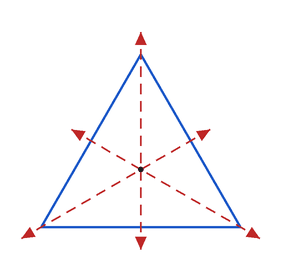
In an equilateral triangle every pair of sides is equal, so the bisector of each of the three angles folds one side onto another.
Step 2 — Count.
There are three angles, so there are three lines of symmetry.
Why the other options are wrong:
- (A) no line symmetry: a triangle with no line of symmetry is scalene, but here all sides are equal.
- (B) one line symmetry: one line belongs to an isosceles triangle whose third side is different.
- (C) two line symmetry: no triangle has exactly two lines of symmetry.
Therefore, an equilateral triangle has three lines of symmetry, option (D).
- 381 mark
Question 38
If a quadrilateral has 4 lines of symmetry, it is :
Solve with AIAnswer
(A) trapezium
(B) parallelogram
(C) rectangle
- Correct
(D) square
Answer: (D) square
Concept: A line of symmetry (axis of symmetry) divides a figure into two parts that fit exactly on each other when the figure is folded along that line, so each part is the mirror image of the other.
Step 1 — Count the lines of each shape.
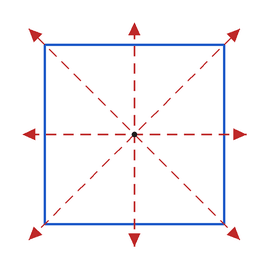
A trapezium has at most one line (when it is isosceles), a general parallelogram has none, a rectangle that is not a square has two, and a square has four: two diagonals and two lines through the mid-points of opposite sides.
Step 2 — Match the count.
Only the square has 4 lines of symmetry.
Why the other options are wrong:
- (A) trapezium: a trapezium has at most one line of symmetry, and that only when it is isosceles.
- (B) parallelogram: a parallelogram that is not a rectangle or a rhombus has no line of symmetry.
- (C) rectangle: a rectangle that is not a square has only two lines; its diagonals are not lines of symmetry.
Therefore, a quadrilateral with 4 lines of symmetry is a square, option (D).
- 391 mark
Question 39
A circle has :
Solve with AIAnswer
(A) one line symmetry
(B) exactly two line symmetry
(C) exactly three line symmetry
- Correct
(D) unlimited line symmetry
Answer: (D) unlimited line symmetry
Concept: A line of symmetry (axis of symmetry) divides a figure into two parts that fit exactly on each other when the figure is folded along that line, so each part is the mirror image of the other.
Step 1 — Find the lines.
Every line through the centre of a circle (every diameter) folds the circle exactly onto itself.

Step 2 — Count.
We can draw as many diameters as we like, so the number of lines of symmetry has no limit.
Why the other options are wrong:
- (A) one line symmetry: one line is far too few: every diameter is a line of symmetry.
- (B) exactly two line symmetry: the circle has many more than two lines, one for every diameter.
- (C) exactly three line symmetry: the circle has many more than three lines, one for every diameter.
Therefore, a circle has unlimited lines of symmetry, option (D).
- 401 mark
Question 40
The given figure has :
 Solve with AI
Answer
(A) no line symmetry
- Correct
(B) one line symmetry
(C) two line symmetry
(D) four line symmetry
Answer: (B) one line symmetry
Concept: A line of symmetry (axis of symmetry) divides a figure into two parts that fit exactly on each other when the figure is folded along that line, so each part is the mirror image of the other.
Step 1 — Test a horizontal fold.
H, O and X each have a horizontal line of symmetry through their middles, and these lines lie on one straight line. So the whole word folds onto itself about this horizontal line.
Step 2 — Test a vertical fold.
A vertical fold through the middle of the word would put H on X, and these letters do not match. So there is no vertical line for the whole figure.
Watch out: Count the lines of the whole figure, not of each letter separately.
Why the other options are wrong:
- (A) no line symmetry: the horizontal line through the middle of all three letters is a line of symmetry.
- (C) two line symmetry: two lines would need a vertical line too, but H and X would swap places and they do not match.
- (D) four line symmetry: four lines would need even more folds; each of H, O and X separately has only two.
Therefore, the figure HOX has one line of symmetry, option (B).
- 411 mark
Question 41
The maximum lines of symmetry, which a n-sided polygon may have is :
Solve with AIAnswer
(A) one
(B) 0
- Correct
(C) n
(D) 2n
Answer: (C) n
Concept: A line of symmetry (axis of symmetry) divides a figure into two parts that fit exactly on each other when the figure is folded along that line, so each part is the mirror image of the other.
Step 1 — Look at regular polygons.
A regular polygon (all sides and all angles equal) with n sides has n lines of symmetry: an equilateral triangle 3, a square 4, a regular pentagon 5.
Step 2 — Find the maximum.
A polygon with n sides cannot have more lines than a regular one, so the maximum is n.
Why the other options are wrong:
- (A) one: one line is possible for some polygons (an isosceles triangle), but it is not the largest number.
- (B) 0: 0 lines is possible (a scalene triangle), but it is the smallest number, not the largest.
- (D) 2n: 2n is more than any polygon with n sides can have; a square has 4 lines, not 8.
Therefore, an n-sided polygon can have at most n lines of symmetry, option (C).
- 421 mark
Question 42
A geometrical plane figure with unlimited lines of symmetry is :
Solve with AIAnswer
(A) isosceles trapezium
- Correct
(B) circle
(C) square
(D) rectangle
Answer: (B) circle
Concept: A line of symmetry (axis of symmetry) divides a figure into two parts that fit exactly on each other when the figure is folded along that line, so each part is the mirror image of the other.
Step 1 — Find the figure.
Every diameter of a circle is a line of symmetry, and a circle has unlimited diameters.
Why the other options are wrong:
- (A) isosceles trapezium: an isosceles trapezium has only one line of symmetry.
- (C) square: a square has exactly four lines of symmetry.
- (D) rectangle: a rectangle that is not a square has exactly two lines of symmetry.
Therefore, the figure with unlimited lines of symmetry is the circle, option (B).
- 431 mark
Question 43
Which of the following letters has only horizontal line of symmetry :
Solve with AIAnswer
(A) A
- Correct
(B) B
(C) M
(D) X
Answer: (B) B
Concept: A line of symmetry (axis of symmetry) divides a figure into two parts that fit exactly on each other when the figure is folded along that line, so each part is the mirror image of the other. For a capital letter, a vertical line works when the left half is the mirror image of the right half, and a horizontal line works when the top half is the mirror image of the bottom half.
Step 1 — Test each letter.
B folds onto itself about the horizontal line through its middle (its two loops match), and a vertical fold does not work.
Why the other options are wrong:
- (A) A: A has only a vertical line of symmetry.
- (C) M: M has only a vertical line of symmetry.
- (D) X: X has a horizontal line, but it has a vertical line as well, so not only a horizontal one.
Therefore, the letter with only a horizontal line of symmetry is B, option (B).
- 441 mark
Question 44
Which of the following letters has only vertical line of symmetry :
Solve with AIAnswer
(A) E
- Correct
(B) T
(C) X
(D) H
Answer: (B) T
Concept: A line of symmetry (axis of symmetry) divides a figure into two parts that fit exactly on each other when the figure is folded along that line, so each part is the mirror image of the other. For a capital letter, a vertical line works when the left half is the mirror image of the right half, and a horizontal line works when the top half is the mirror image of the bottom half.
Step 1 — Test each letter.
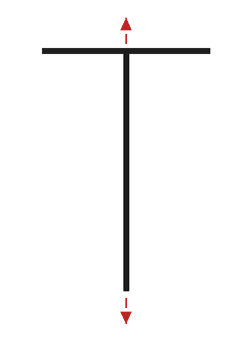
The stem of T stands in the middle of its top bar, so T folds onto itself about the vertical line through the stem; a horizontal fold does not work, because the bar is at the top only.
Why the other options are wrong:
- (A) E: E has only a horizontal line of symmetry.
- (C) X: X has a vertical line, but it has a horizontal line as well.
- (D) H: H has a vertical line, but it has a horizontal line as well.
Therefore, the letter with only a vertical line of symmetry is T, option (B).
- 451 mark
Question 45
Which of the following letters has no line symmetry :
Solve with AIAnswer
(A) O
- Correct
(B) Z
(C) I
(D) E
Answer: (B) Z
Concept: A line of symmetry (axis of symmetry) divides a figure into two parts that fit exactly on each other when the figure is folded along that line, so each part is the mirror image of the other. For a capital letter, a vertical line works when the left half is the mirror image of the right half, and a horizontal line works when the top half is the mirror image of the bottom half.
Step 1 — Test each letter.
The slanting stroke of Z runs from the top-right to the bottom-left. A vertical or a horizontal fold turns it the other way, so Z has no line of symmetry.
Watch out: Z fits onto itself after a half turn, but a turn is not a fold.
Why the other options are wrong:
- (A) O: O has two lines of symmetry when drawn as an oval, and unlimited lines when drawn as a circle.
- (C) I: I has two lines of symmetry, a vertical and a horizontal one.
- (D) E: E has a horizontal line of symmetry.
Therefore, the letter with no line of symmetry is Z, option (B).
- 461 mark
Question 46
The line symmetry of a line segment AB is a line :
Solve with AIAnswer
(A) parallel to AB
(B) perpendicular to AB
- Correct
(C) perpendicuolar bisector of AB
(D) none of these
Answer: (C) perpendicular bisector of AB
Concept: A line of symmetry (axis of symmetry) divides a figure into two parts that fit exactly on each other when the figure is folded along that line, so each part is the mirror image of the other.
Step 1 — Fold A onto B.
To fold the segment AB so that A falls exactly on B, the fold line must cross AB at right angles and pass through its mid-point. Such a line is the perpendicular bisector of AB.
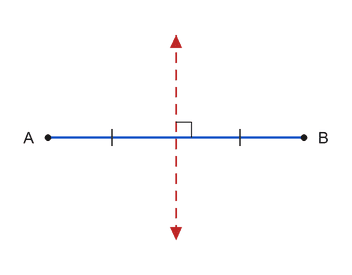
Watch out: Being perpendicular to AB is not enough; the line must also pass through the mid-point of AB.
Why the other options are wrong:
- (A) parallel to AB: a line parallel to AB never crosses it, so folding along it cannot put A on B.
- (B) perpendicular to AB: a perpendicular that misses the mid-point folds A onto a point other than B.
- (D) none of these: a correct choice is given in option (C).
Therefore, the line of symmetry of a line segment AB is its perpendicular bisector, option (C).
- 471 mark
Question 47
Statement 1 : A n-sided polygon has n line symmetry.
Statement 2 : A n sided polygon will have n lines of symmetry only when it is a regular polygon.
Which of the following options is correct?
Solve with AIAnswer
(A) Both the statements are true.
(B) Both the statements are false.
(C) Statement 1 is true, and statement 2 is false.
- Correct
(D) Statement 1 is false, and statement 2 is true.
Answer: (D) Statement 1 is false, and statement 2 is true.
Concept: We judge each statement separately, true or false, and then choose the option that matches both verdicts.
Step 1 — Judge Statement 1.
Statement 1 claims every n-sided polygon has n lines. A rectangle has 4 sides but only 2 lines, and a scalene triangle has 3 sides but none. So Statement 1 is false.
Step 2 — Judge Statement 2.
A regular polygon with n sides has n lines of symmetry (equilateral triangle 3, square 4, regular pentagon 5). If a polygon with n sides has n lines, the folds carry every side onto every other side, so all sides and all angles are equal and the polygon is regular. So Statement 2 is true.
Why the other options are wrong:
- (A): Statement 1 is false, as the rectangle shows.
- (B): Statement 2 is true: only a regular polygon has as many lines as sides.
- (C): it has the verdicts the wrong way round: Statement 1 is false and Statement 2 is true.
Therefore, Statement 1 is false and Statement 2 is true, option (D).
- 481 mark
Question 48
Choose your answer based on the codes given below :
(1) A is true, R is false. (2) A is false, R is true. (3) Both A and R are true. (4) Both A and R are false.
Assertion (A) : Line through vertices A and C is line symmetry of the given kite shaped figure.

Reason (R) : On folding the figure about line AC, the two parts of the figure will exactly coincide.
Solve with AIAnswer
(A) (1) A is true, R is false.
(B) (2) A is false, R is true.
- Correct
(C) (3) Both A and R are true.
(D) (4) Both A and R are false.
Answer: (C) (3) Both A and R are true.
Concept: In an Assertion–Reason item we judge the Assertion (A) and the Reason (R) separately, true or false, and then choose the code that matches both verdicts.
Step 1 — Read the figure.
In the kite ABCD the marks show AB = AD and CB = CD.
Step 2 — Judge the Reason.
When the figure is folded along AC, B falls on D, because B and D are each the same distance from A and from C. Then AB lies on AD and CB lies on CD, so the two parts coincide exactly. R is true.
Step 3 — Judge the Assertion.
A line along which a figure folds so that its two parts coincide is a line of symmetry. So AC is a line of symmetry and A is true.
Why the other options are wrong:
- (A): code (1) calls R false, but the two parts do coincide when folded along AC.
- (B): code (2) calls A false, but AC is a line of symmetry of the kite.
- (D): code (4) calls both false, but both are true.
Therefore, both A and R are true, code (3), option (C).
What Class 6 Maths Ch 18 covers
The sections of the chapter, in the order the book takes them. Every question above comes from one of these.
- 01Concept of Symmetry (Linear Symmetry)
- 022-D Symmetrical Objects
- 03Symmetric Point
- 04Locating a Point Symmetric to a Given Point
- 05Constructing the Line of Symmetry
More ways to study this chapter
The same chapter asked three other ways. Practise it, revise it, and see what the board has set on Ch 18 before.
Class 6 Maths Ch 18 questions students ask
How many questions are there in Class 6 Maths Ch 18?
48 questions. Every one is solved step by step on this page.
Are these Class 6 Maths solutions free?
Yes. Every question and its full working is free to read, with no account needed.
Can I download the Class 6 Maths Ch 18 solutions as a PDF?
There is no PDF to download. Every solution is on this page instead, which means it is searchable, always the current syllabus, and readable on a phone. Use your browser's print option if you want it on paper.