
Question 201 markMCQAsked 2020Easy
The inert electrode used in the electrolysis of acidified water, is:
Confirming your payment
Sign up now and get 250 free tokens.
Previous Year Questions · Question 20 of 60
The inert electrode used in the electrolysis of acidified water, is:
(A) Nickel
(B) Platinum
(C) Copper
(D) Silver
Answer: (B) Platinum
Concept: An inert electrode (platinum, graphite) only passes electrons and takes no part in the reaction. An active electrode (copper, nickel, silver) takes part: as an anode, its own atoms lose electrons and go into the solution as ions, so the anode dissolves. Platinum foils are used as the electrodes for the electrolysis of acidified water.
Step 1 — See what the electrode must do.
The electrodes must only carry the current, so that water alone is decomposed into hydrogen and oxygen. An anode that reacted or dissolved would spoil this.
Step 2 — Choose the inert metal.
Platinum is not attacked by the oxygen formed at the anode and does not dissolve, so it is the inert electrode used.
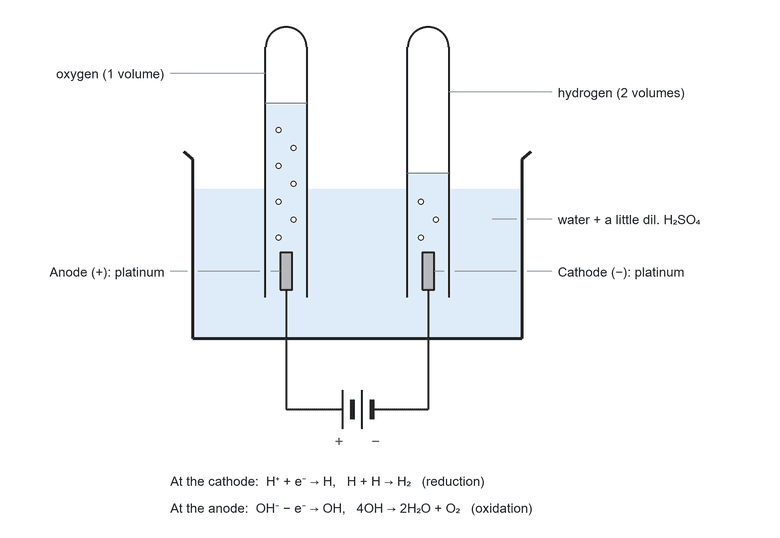
Watch out: Nickel, copper and silver are all ACTIVE electrodes; as anodes they dissolve.
Why the other options are wrong:
Therefore, the inert electrode used in the electrolysis of acidified water is platinum, option (B).