
Opening your dashboard
Class 9 Chemistry Chapter 1: The Language of Chemistry Solutions
60 textbook questions with step-by-step answers, free to read, for ICSE 2026-27.
Get talked through Ch 1, not just shown the answer
Reading a finished solution is not the same as being able to do it. The AI tutor takes one question at a time and works it with you, in your own words, until you can.
- Ask it out loud, in your own words
- It gives you the next step, not the answer
- Stuck on part (ii)? Start there
60 questions with solutions
1–5 marks · Mixed difficulty
The first 27 solutions are on this page. This chapter is a long one, so the rest open on their own page to keep this one quick to load.
- 11 mark
Question 1
Complete the following statements by selecting the correct option :
The formula of a compound represents
Solve with AIAnswer
(A) an atom
(B) a particle
- Correct
(C) a molecule
(D) a combination.
Answer: (C) a molecule
Concept: A symbol stands for one atom of an element, while a formula stands for one molecule of a substance (an element or a compound).
Step 1 — Recall what a formula stands for.
A chemical formula, such as or , tells us which atoms are joined together and how many of each there are in one molecule.
Step 2 — Match it with the options.
So the formula of a compound represents one molecule of that compound, which is option (C).
Watch out: An atom is represented by a symbol (H, O, Na), not by a formula.
Why the other options are wrong:
- (A) an atom: This is what a symbol represents (for example, O for one atom of oxygen), not a formula.
- (B) a particle: This is too vague: atoms, ions and molecules are all particles, and a formula stands for one particular kind, a molecule.
- (D) a combination: This does not say what is represented; a formula shows a definite combination of atoms that makes up one molecule.
Therefore, the formula of a compound represents a molecule, option (C).
- 21 mark
Question 2
Complete the following statements by selecting the correct option :
The correct formula of aluminium oxide is
Solve with AIAnswer
(A)
(B)
- Correct
(C)
(D)
Answer: (C)
Concept: To write a formula, put the symbols of the basic radical (positive part) and the acidic radical (negative part) side by side, then criss-cross their valencies: the valency of each radical becomes the subscript of the other. Cancel any common factor, and put a group radical in brackets when it is taken more than once.
Step 1 — Write the radicals with their valencies.
Aluminium forms the ion (valency 3) and oxygen forms the oxide ion (valency 2).
Step 2 — Criss-cross the valencies.
The valency of oxygen (2) becomes the subscript of aluminium, and the valency of aluminium (3) becomes the subscript of oxygen, so the formula is .
Step 3 — Check the charges.
We check that the positive and negative charges cancel in one formula unit.
The total charge is zero, so is correct.
Watch out: The subscripts are crossed over, so the valency of oxygen appears on aluminium and the valency of aluminium appears on oxygen.
Why the other options are wrong:
- (A) : This would need aluminium to show valency 6 (three oxygens at 2 each for one aluminium).
- (B) : This would need aluminium to show valency 4 (two oxygens at 2 each).
- (D) : This puts the valencies on the wrong atoms; it would make aluminium divalent and oxygen trivalent.
Therefore, the correct formula of aluminium oxide is Al₂O₃, option (C).
- 31 mark
Question 3
Complete the following statements by selecting the correct option :
The valency of nitrogen in nitrogen dioxide () is
Solve with AIAnswer
(A) one
(B) two
(C) three
- Correct
(D) four.
Answer: (D) four.
Concept: In a compound of two elements, the total valency of one element equals the total valency of the other. Oxygen has valency 2.
Step 1 — Find the total valency of oxygen.
One molecule of has two oxygen atoms, each with valency 2.
Step 2 — Give it all to nitrogen.
There is only one nitrogen atom, so it must supply all 4 units of combining capacity. Nitrogen is therefore tetravalent in .
Watch out: Do not read the subscript 2 as the valency of nitrogen; the subscript counts oxygen atoms.
Why the other options are wrong:
- (A) one: With valency 1, nitrogen and oxygen would combine as , not .
- (B) two: With valency 2, the formula would be .
- (C) three: With valency 3, the formula would be .
Therefore, the valency of nitrogen in NO₂ is four, option (D).
- 45 marks
Question 4
Match the following : (Refer common names in the beginning of the book)
Compound Formula (a) Boric acid (i) (b) Phosphoric acid (ii) (c) Nitrous acid (iii) (d) Nitric acid (iv) KOH (e) Sulphurous acid (v) (f) Sulphuric acid (vi) (g) Hydrochloric acid (vii) (h) Silica (sand) (viii) (i) Caustic soda (sodium hydroxide) (ix) (j) Caustic potash (potassium hydroxide) (x) (k) Washing soda (sodium carbonate) (xi) (l) Baking soda (sodium bicarbonate) (xii) HCl (m) Lime stone (calcium carbonate) (xiii) (n) Water (xiv) (o) Hydrogen sulphide (xv) (p) Ammonia (xvi) (q) Phosphine (xvii) (r) Methane (xviii) Solve with AIWritten solution
Solution:
Concept: Every acid contains replaceable hydrogen joined to an acid radical, so its formula is H followed by the radical (nitrite gives nitrous acid and nitrate gives nitric acid). The common names (caustic soda, washing soda, baking soda, lime stone) stand for definite compounds whose formulae we write from their radicals.
Step 1 — Write the acids from their radicals.
We put as many H atoms as the valency of the acid radical: borate gives , phosphate gives , sulphite gives and sulphate gives . The '-ous' acids end in '-ite' radicals, which have one oxygen fewer than the '-ic' acids.
Step 2 — Write the common compounds.
We recall what each common name stands for: caustic soda is sodium hydroxide, caustic potash is potassium hydroxide, washing soda is sodium carbonate, baking soda is sodium hydrogen carbonate and lime stone is calcium carbonate. Silica (sand) is silicon dioxide.
Step 3 — Write the hydrides.
Water, hydrogen sulphide, ammonia, phosphine and methane are hydrides: oxygen and sulphur are divalent, nitrogen and phosphorus trivalent and carbon tetravalent, so each takes that many H atoms.
Step 4 — Match each compound.
Putting these together gives the matching below.
Compound Matches Formula (a) Boric acid (xvi) (b) Phosphoric acid (xvii) (c) Nitrous acid (xv) (d) Nitric acid (xiv) (e) Sulphurous acid (xiii) (f) Sulphuric acid (xviii) (g) Hydrochloric acid (xii) (h) Silica (sand) (ii) (i) Caustic soda (i) (j) Caustic potash (iv) (k) Washing soda (iii) (l) Baking soda (vi) (m) Lime stone (v) (n) Water (viii) (o) Hydrogen sulphide (vii) (p) Ammonia (xi) (q) Phosphine (ix) (r) Methane (x) Watch out: Nitrous acid is and nitric acid is ; sulphurous acid is and sulphuric acid is . The '-ous' acid always has one oxygen fewer.
Therefore, (a)–(xvi), (b)–(xvii), (c)–(xv), (d)–(xiv), (e)–(xiii), (f)–(xviii), (g)–(xii), (h)–(ii), (i)–(i), (j)–(iv), (k)–(iii), (l)–(vi), (m)–(v), (n)–(viii), (o)–(vii), (p)–(xi), (q)–(ix), (r)–(x).
- 55 marks
Question 5
Select the basic and acidic radicals in the following compounds.
(a)
(b)
(c)
(d)
(e)
Solve with AIWritten solution
Solution:
Concept: In the formula of a salt or base, the basic radical is the positive ion (a metal ion or ammonium), written first, and the acidic radical is the negative ion, written second. A bracket with a subscript means that radical is taken more than once.
Step 1 — Split each formula into its two radicals.
We separate the positive part from the negative part. The subscripts only tell us how many of each radical there are; they are not part of the radical.
Step 2 — Name both radicals with their charges.
The table gives both radicals for every compound.
Compound Basic radical Acidic radical (a) (magnesium) (sulphate) (b) (ammonium) (sulphate) (c) (aluminium) (sulphate) (d) (zinc) (carbonate) (e) (magnesium) (hydroxide) Watch out: Ammonium, , is a basic radical even though it contains no metal.
Therefore, the basic radicals are Mg²⁺, NH₄⁺, Al³⁺, Zn²⁺ and Mg²⁺, and the acidic radicals are SO₄²⁻, SO₄²⁻, SO₄²⁻, CO₃²⁻ and OH⁻ for (a) to (e) respectively.
- 64 marks
Question 6
Give the formula and valency of :
(a) aluminate ________ ________
(b) chromate ________ ________
(c) aluminium ________ ________
(d) cupric ________ ________
Solve with AIWritten solution
Solution:
Concept: The valency of a radical (an ion) equals the number of charges it carries: a radical with charge 3− or 3+ has valency 3.
Step 1 — Write each radical with its charge.
We take each formula from the chapter's table of radicals.
Radical Formula Valency (a) aluminate 3 (b) chromate 2 (c) aluminium 3 (d) cupric 2 Step 2 — Read the valency from the charge.
Aluminate carries 3 negative charges, so its valency is 3; chromate carries 2, so its valency is 2. Aluminium loses 3 electrons and cupric (copper (II)) loses 2, so their valencies are 3 and 2.
Watch out: The book lists aluminate as (valency 3). The radical in sodium meta-aluminate, , is a different one, meta-aluminate , with valency 1.
Therefore, (a) aluminate AlO₃³⁻, valency 3; (b) chromate CrO₄²⁻, valency 2; (c) aluminium Al³⁺, valency 3; (d) cupric Cu²⁺, valency 2.
- 74 marks
Question 7
What do the following symbols stand for ?
(a) H
(b)
(c) 2H
(d)
Solve with AIWritten solution
Solution:
Concept: A symbol stands for one atom of an element. A subscript written after a symbol tells how many atoms are joined in one molecule, and a number written in front (coefficient) counts separate atoms or molecules.
Step 1 — (a) H.
The symbol alone stands for one atom of hydrogen (and also for the element hydrogen).
Step 2 — (b) H₂.
The subscript 2 shows two hydrogen atoms joined together, so is one molecule of hydrogen.
Step 3 — (c) 2H.
The 2 in front counts unjoined atoms, so 2H means two separate atoms of hydrogen.
Step 4 — (d) 2H₂.
The 2 in front counts molecules, and each molecule has 2 atoms, so means two molecules of hydrogen, that is four hydrogen atoms in all.
Watch out: 2H and both contain two hydrogen atoms, but in 2H the atoms are separate, while in they are joined as one molecule.
Therefore, H is one atom of hydrogen, H₂ is one molecule of hydrogen, 2H is two atoms of hydrogen and 2H₂ is two molecules of hydrogen.
- 85 marks
Question 8
Write the chemical names of the following compounds :
(a)
(b)
(c)
(d)
(e)
(f)
(g)
(h)
(i)
(j)
Solve with AIWritten solution
Solution:
Concept: A compound is named by writing the name of the basic radical first and the acidic radical second. Where the metal has variable valency, its valency is shown by -ous/-ic or by a Roman numeral.
Step 1 — Identify the two radicals in each formula.
We split every formula into its positive and negative radicals and name each one.
Formula Basic radical Acidic radical Name (a) Calcium phosphate (b) Potassium carbonate (c) (manganate) Potassium manganate (d) (borate) Manganese (II) borate (manganous borate) (e) Magnesium hydrogen carbonate (magnesium bicarbonate) (f) (ferrocyanide) Sodium ferrocyanide (g) (chlorate) Barium chlorate (h) (sulphite) Silver sulphite (i) (acetate) Lead (II) acetate (lead acetate) (j) (silicate) Sodium silicate Step 2 — Check the valency of the metals with variable valency.
In two borate ions carry 6 negative charges, shared by 3 manganese atoms, so manganese is +2 and the name is manganese (II) borate. In lead acetate, two acetate ions balance one lead, so lead is +2.
Watch out: Manganate is (valency 2), while permanganate is (valency 1); so is potassium manganate, not permanganate. In (i) the acetate is written first, but lead is still the basic radical and is named first.
Therefore, the names are (a) calcium phosphate, (b) potassium carbonate, (c) potassium manganate, (d) manganese (II) borate, (e) magnesium hydrogen carbonate, (f) sodium ferrocyanide, (g) barium chlorate, (h) silver sulphite, (i) lead (II) acetate and (j) sodium silicate.
- 93 marks
Question 9
Write chemical formulae of the sulphates of Aluminium, Ammonium and Zinc.
Solve with AIWritten solution
Solution:
Concept: To write a formula, put the symbols of the basic radical (positive part) and the acidic radical (negative part) side by side, then criss-cross their valencies: the valency of each radical becomes the subscript of the other. Cancel any common factor, and put a group radical in brackets when it is taken more than once. Sulphate is (valency 2).
Step 1 — Aluminium sulphate.
Aluminium is (valency 3). Criss-crossing 3 and 2 gives 2 aluminium ions and 3 sulphate ions, so the formula is .
Step 2 — Ammonium sulphate.
Ammonium is (valency 1). Criss-crossing 1 and 2 gives 2 ammonium ions for one sulphate, so the formula is .
Step 3 — Zinc sulphate.
Zinc is (valency 2). Criss-crossing 2 and 2 gives , and cancelling the common factor 2 gives .
Watch out: Brackets are needed round a group radical (, ) when it is taken more than once; without them the formula would read Al₂SO₄₃, which is meaningless.
Therefore, the formulae are Al₂(SO₄)₃, (NH₄)₂SO₄ and ZnSO₄.
- 101 mark
Question 10
The valency of an element A is 3 and that of element B is 2. Write the formula of the compound formed by the combination of A and B.
Solve with AIWritten solution
Solution:
Concept: In the criss-cross method, the valency of each element becomes the subscript of the other element.
Step 1 — Write the symbols with their valencies.
Element A has valency 3 and element B has valency 2.
Step 2 — Criss-cross the valencies.
The valency of B (2) becomes the subscript of A, and the valency of A (3) becomes the subscript of B, so the formula is . There is no common factor to cancel.
Step 3 — Check the combining capacity.
We check that both sides supply the same total valency.
Watch out: The subscripts are swapped, so the formula is not .
Therefore, the formula of the compound is A₂B₃.
- 114 marks
Question 11
Give the names of the following compounds :
(a) KClO
(b)
(c)
(d)
Solve with AIWritten solution
Solution:
Concept: Chlorine forms four oxy-anions, each with valency 1. With one more oxygen atom each time they are hypochlorite , chlorite , chlorate and perchlorate .
Step 1 — Identify the radicals.
Each compound is potassium, , joined to one of the four oxy-anions of chlorine, so we count the oxygen atoms.
Step 2 — Name each compound.
The number of oxygen atoms decides the name.
Formula Acidic radical Name (a) (1 O) Potassium hypochlorite (b) (2 O) Potassium chlorite (c) (3 O) Potassium chlorate (d) (4 O) Potassium perchlorate Watch out: The word 'chlorate' is (three oxygens), not ; the prefix 'per-' marks the one with the most oxygen.
Therefore, the names are (a) potassium hypochlorite, (b) potassium chlorite, (c) potassium chlorate and (d) potassium perchlorate.
- 124 marks
Question 12
The formula of the sulphate of an element M is . Write the formula of its :
(a) Chloride
(b) Oxide
(c) Phosphate
(d) Acetate
Solve with AIWritten solution
Solution:
Concept: From a known formula we can work backwards (reverse criss-cross) to find the valency of an element, and then use that valency to write its other compounds.
Step 1 — Find the valency of M.
In the sulphate ion has valency 2. Three sulphate ions give a total of 6 units, which are shared by 2 atoms of M.
Step 2 — Write the four compounds.
Now we criss-cross the valency of M (3) with the valency of each radical.
Compound Radical (valency) Formula (a) Chloride (1) (b) Oxide (2) (c) Phosphate (3) (d) Acetate (1) Step 3 — Simplify the phosphate.
For the phosphate, criss-crossing 3 and 3 gives ; cancelling the common factor 3 gives .
Watch out: Always cancel a common factor: the phosphate is , not .
Therefore, M is trivalent and the formulae are (a) MCl₃, (b) M₂O₃, (c) MPO₄ and (d) M(CH₃COO)₃.
- 132 marks
Question 13
What is a symbol of an element ? What information does it convey ?
Solve with AIWritten solution
Solution:
Concept: A symbol is the short form used for an element in chemical writing; modern symbols follow Berzelius's idea of using the first one or two letters of the element's name.
Step 1 — Define a symbol.
A symbol of an element is the abbreviation (one capital letter, or a capital followed by a small letter) that stands for that element and for one atom of it, e.g. O for oxygen, Na for sodium.
Step 2 — List the information it conveys.
A symbol tells us three things.
- It gives the name of the element.
- It stands for one atom of that element.
- It stands for a definite mass of the element, its atomic mass (e.g. O stands for 16 u of oxygen).
Step 3 — Example.
The symbol Cl stands for the element chlorine, for one atom of chlorine, and for 35.5 u of chlorine.
Watch out: A symbol stands for one atom, not one molecule: O is one atom of oxygen, while is one molecule.
Therefore, a symbol is the short form of an element's name, and it tells us the element, one atom of it and its atomic mass.
- 142 marks
Question 14
Why is the symbol S for sulphur, but Na for sodium and Si for silicon ?
Solve with AIWritten solution
Solution:
Concept: Symbols are taken from the first letter of the element's name (written as a capital). When two elements start with the same letter, a second letter of the name is added (as a small letter). Some symbols come from the Latin name of the element.
Step 1 — Sulphur — S.
Sulphur was given the single first letter of its name, written as a capital, S.
Step 2 — Silicon — Si.
Silicon also starts with S. To tell it apart from sulphur, the next letter of its name, i, is added as a small letter, giving Si.
Step 3 — Sodium — Na.
Sodium cannot use S (sulphur) or So. Its symbol comes from its Latin name, Natrium, so it is Na.
Watch out: The second letter of a symbol is always small: Si, not SI.
Therefore, sulphur takes S from its first letter, silicon adds a second letter to become Si, and sodium's symbol Na comes from its Latin name Natrium.
- 152 marks
Question 15
Write the full form of IUPAC. Name the elements represented by the following symbols :
Au, Pb, Sn, Hg.
Solve with AIWritten solution
Solution:
Concept: IUPAC is the body that sets the rules for chemical names and symbols. Some symbols come from the Latin names of elements known since ancient times.
Step 1 — Full form of IUPAC.
IUPAC stands for the International Union of Pure and Applied Chemistry.
Step 2 — Name the elements.
Each of these symbols comes from the element's Latin name.
Symbol Element Latin name Au Gold Aurum Pb Lead Plumbum Sn Tin Stannum Hg Mercury Hydrargyrum Watch out: Pb is lead (Plumbum), not platinum; platinum is Pt.
Therefore, IUPAC is the International Union of Pure and Applied Chemistry, and Au, Pb, Sn and Hg are gold, lead, tin and mercury.
- 162 marks
Question 16
If the symbol for Cobalt, Co, were written as CO, what would be wrong with it ?
Solve with AIWritten solution
Solution:
Concept: In a symbol only the first letter is a capital. A new capital letter always begins the symbol of a new element.
Step 1 — Read Co.
Co (capital C, small o) is one symbol, so it stands for one atom of the element cobalt.
Step 2 — Read CO.
CO has two capital letters, so it is two symbols: C (carbon) and O (oxygen). Together they form the formula of the compound carbon monoxide.
Step 3 — State what is wrong.
Writing CO for cobalt would change a single element into a compound of two other elements.
Therefore, CO would wrongly represent carbon monoxide (a compound of carbon and oxygen) instead of the element cobalt, Co.
- 172 marks
Question 17
What is meant by atomicity ? Name a diatomic element.
Solve with AIWritten solution
Solution:
Concept: Elements exist as single atoms or as molecules made of a fixed number of atoms of the same kind.
Step 1 — Define atomicity.
Atomicity is the number of atoms present in one molecule of an element. For example, helium (He) is monatomic, oxygen () is diatomic and ozone () is triatomic.
Step 2 — Name a diatomic element.
A diatomic element has two atoms in each molecule. Hydrogen, , is one; others are , and .
Therefore, atomicity is the number of atoms in one molecule of an element, and hydrogen (H₂) is a diatomic element.
- 184 marks
Question 18
(a) Explain the terms 'valency' and 'variable valency'.
(b) How are the elements with variable valency named ? Explain with an example.
Solve with AIWritten solution
Solution:
Concept: Valency is the combining capacity of an element or radical. Some metals can lose different numbers of electrons, so they show more than one valency.
Step 1 — (a) Explain valency.
Valency is the combining capacity of an element or a radical. It is the number of hydrogen atoms (or chlorine atoms) that one atom of the element can combine with or displace. For example, in one oxygen atom combines with two hydrogen atoms, so the valency of oxygen is 2. For an ion, the valency equals the number of electrons lost or gained, that is, its charge.
Step 2 — (a) Explain variable valency.
Some elements, mostly metals, show more than one valency and so form more than one compound with the same radical. This is called variable valency. For example, iron has valency 2 in and valency 3 in .
Step 3 — (b) Name them by the -ous / -ic method.
The lower valency is shown by the suffix -ous and the higher valency by the suffix -ic, added to the root (often Latin) name of the element: ferrous for and ferric for .
Step 4 — (b) Name them by Stock notation.
The valency is written as a Roman numeral in brackets after the name of the element: iron (II) for and iron (III) for .
Step 5 — (b) Example.
So is ferrous chloride or iron (II) chloride, and is ferric chloride or iron (III) chloride.
Watch out: '-ous' always means the LOWER valency of that element, which need not be 1 (stannous = Sn²⁺).
Therefore, valency is combining capacity, variable valency is showing more than one valency, and such elements are named with -ous (lower) / -ic (higher) or with a Roman numeral, e.g. ferrous or iron (II) chloride FeCl₂ and ferric or iron (III) chloride FeCl₃.
- 194 marks
Question 19
(a) What is a chemical formula ?
(b) What is the significance of a formula ? Give an example to illustrate.
Solve with AIWritten solution
Solution:
Concept: A formula is the symbolic form of one molecule. Because each symbol also stands for a definite mass, a formula tells us about masses as well as about atoms.
Step 1 — (a) Define a chemical formula.
A chemical (molecular) formula is the symbolic representation of one molecule of an element or a compound. It shows which elements are present and the number of atoms of each in one molecule.
Step 2 — (b) State its significance.
A formula tells us the following.
- The name of the substance.
- One molecule of the substance.
- The elements present in it.
- The number of atoms of each element in one molecule.
- Its molecular mass and the ratio of the masses of the elements.
Step 3 — (b) Example: sulphuric acid.
The formula stands for one molecule of sulphuric acid, made of hydrogen, sulphur and oxygen, with 2 atoms of H, 1 atom of S and 4 atoms of O. Its molecular mass is found by adding the atomic masses (H = 1, S = 32, O = 16).
Step 4 — (b) Mass ratio.
The masses of the three elements in one molecule are 2, 32 and 64. Dividing each by 2 gives the simplest ratio.
Therefore, a chemical formula is the symbolic form of one molecule; H₂SO₄ tells us it is one molecule of sulphuric acid with 2 H, 1 S and 4 O atoms, molecular mass 98 u and mass ratio H : S : O = 1 : 16 : 32.
- 204 marks
Question 20
What do you understand by the following terms ?
(a) Acid radical
(b) Basic radical
Solve with AIWritten solution
Solution:
Concept: A radical is an atom or group of atoms that carries a charge and behaves as a single unit in reactions. Every salt is made of one positive (basic) and one negative (acidic) radical.
Step 1 — (a) Acid radical.
An acid radical is a negatively charged atom or group of atoms (an anion, an electronegative radical). It is what is left when the replaceable hydrogen is removed from an acid, e.g. chloride from HCl, sulphate from and nitrate from .
Step 2 — (b) Basic radical.
A basic radical is a positively charged atom or group of atoms (a cation, an electropositive radical). It comes from a base, and is usually a metal ion or the ammonium ion, e.g. , and .
Therefore, an acid radical is a negatively charged radical derived from an acid (Cl⁻, SO₄²⁻, NO₃⁻), and a basic radical is a positively charged radical derived from a base (Na⁺, Ca²⁺, NH₄⁺).
- 215 marks
Question 21
Write the basic radicals and acidic radicals of the following and then write the chemical formulae of these compounds.
(a) Barium sulphate
(b) Bismuth nitrate
(c) Calcium bromide
(d) Ferrous sulphide
(e) Chromium sulphate
(f) Calcium silicate
(g) Stannic oxide
(h) Sodium zincate
(i) Magnesium phosphate
(j) Sodium thiosulphate
(k) Stannic phosphate
(l) Nickel bisulphate
(m) Potassium manganate
(n) Potassium ferrocyanide
Solve with AIWritten solution
Solution:
Concept: To write a formula, put the symbols of the basic radical (positive part) and the acidic radical (negative part) side by side, then criss-cross their valencies: the valency of each radical becomes the subscript of the other. Cancel any common factor, and put a group radical in brackets when it is taken more than once.
Step 1 — Write the radicals with their valencies.
We first name the basic radical (from the first word) and the acidic radical (from the second word), with their charges. 'Ferrous' means iron (II), 'stannic' means tin (IV), and 'bisulphate' means hydrogen sulphate, .
Step 2 — Criss-cross to get each formula.
We swap the valencies as subscripts, cancel any common factor and bracket group radicals taken more than once.
Compound Basic radical Acidic radical Formula (a) Barium sulphate (b) Bismuth nitrate (c) Calcium bromide (d) Ferrous sulphide (e) Chromium sulphate (f) Calcium silicate (g) Stannic oxide (h) Sodium zincate (i) Magnesium phosphate (j) Sodium thiosulphate (k) Stannic phosphate (l) Nickel bisulphate (m) Potassium manganate (n) Potassium ferrocyanide Step 3 — Check two that need care.
In stannic phosphate, and need 3 tin ions (+12) and 4 phosphate ions (−12), so the formula is . In stannic oxide, criss-crossing 4 and 2 gives , which simplifies to .
Watch out: Do not confuse ferrous (Fe²⁺) with ferric (Fe³⁺), or manganate (MnO₄²⁻) with permanganate (MnO₄⁻).
Therefore, the formulae are BaSO₄, Bi(NO₃)₃, CaBr₂, FeS, Cr₂(SO₄)₃, CaSiO₃, SnO₂, Na₂ZnO₂, Mg₃(PO₄)₂, Na₂S₂O₃, Sn₃(PO₄)₄, Ni(HSO₄)₂, K₂MnO₄ and K₄Fe(CN)₆ for (a) to (n).
- 225 marks
Question 22
Give the names of the elements and number of atoms of those elements, present in the following compounds.
(a) Sodium sulphate
(b) Quick lime
(c) Baking soda
(d) Ammonia
(e) Ammonium dichromate
Solve with AIWritten solution
Solution:
Concept: Write the formula of each compound first. A subscript gives the number of atoms of the element just before it; a subscript outside a bracket multiplies every atom inside the bracket.
Step 1 — Write the formulae.
Quick lime is calcium oxide, baking soda is sodium hydrogen carbonate, and ammonium dichromate is made of two ions and one ion.
Step 2 — Count the atoms.
We read the atoms of each element from the subscripts.
Compound Formula Elements and number of atoms (a) Sodium sulphate Sodium 2, sulphur 1, oxygen 4 (b) Quick lime Calcium 1, oxygen 1 (c) Baking soda Sodium 1, hydrogen 1, carbon 1, oxygen 3 (d) Ammonia Nitrogen 1, hydrogen 3 (e) Ammonium dichromate Nitrogen 2, hydrogen 8, chromium 2, oxygen 7 Step 3 — Check the bracket in (e).
In the subscript 2 outside the bracket doubles both N and H, giving 2 N and 8 H atoms.
Watch out: Baking soda has a hydrogen atom in its formula (); it is not (washing soda).
Therefore, (a) Na₂SO₄: Na 2, S 1, O 4; (b) CaO: Ca 1, O 1; (c) NaHCO₃: Na 1, H 1, C 1, O 3; (d) NH₃: N 1, H 3; (e) (NH₄)₂Cr₂O₇: N 2, H 8, Cr 2, O 7.
- 232 marks
Question 23
What is a chemical equation ? Why is it necessary to balance it?
Solve with AIWritten solution
Solution:
Concept: A chemical equation is the short, symbolic way of writing a chemical reaction. It must obey the law of conservation of mass: matter is neither created nor destroyed in a chemical reaction.
Step 1 — Define a chemical equation.
A chemical equation is the symbolic representation of a chemical reaction, using the symbols and formulae of the reactants (on the left) and the products (on the right), joined by an arrow. For example, carbon burns in oxygen to form carbon dioxide:
Step 2 — Explain why it must be balanced.
Atoms are only rearranged in a reaction; none are created or destroyed. So the number of atoms of each element, and hence the total mass, must be the same on both sides. Only a balanced equation shows this.
Step 3 — Show an example.
The skeleton equation for hydrogen burning in oxygen has 2 oxygen atoms on the left but only 1 on the right, so it is not balanced:
Taking two molecules of hydrogen and two of water gives 4 H atoms and 2 O atoms on each side:
Watch out: Never balance by changing a formula (for example writing for water); change only the numbers in front.
Therefore, a chemical equation is the symbolic representation of a reaction, and it must be balanced so that it obeys the law of conservation of mass (same number of atoms of each element on both sides).
- 242 marks
Question 24
State the information conveyed by the following equation.
Solve with AIWritten solution
Solution:
Concept: A balanced equation with state symbols tells us the substances taking part, their physical states, the number of particles of each, and (using atomic masses) the masses that react. Here Zn = 65, H = 1, Cl = 35.5.
Step 1 — Read the reactants and products.
Zinc reacts with hydrochloric acid to form zinc chloride and hydrogen gas.
Step 2 — Read the physical states.
The symbol (s) shows zinc is a solid, (aq) shows hydrochloric acid and zinc chloride are in aqueous solution, and the upward arrow shows hydrogen escapes as a gas.
Step 3 — Read the number of particles.
The coefficients tell us that 1 atom of zinc reacts with 2 molecules of hydrogen chloride to give 1 formula unit of zinc chloride and 1 molecule of hydrogen.
Step 4 — Work out the masses.
We multiply each coefficient by the formula mass. Two molecules of HCl have a mass of 2 × 36.5 = 73 g, and zinc chloride has the mass below.
So 65 g of zinc reacts with 73 g of hydrogen chloride to give 136 g of zinc chloride and 2 g of hydrogen.
Step 5 — Check that mass is conserved.
We add the masses on each side.
Therefore, the equation tells us that solid zinc reacts with aqueous HCl to give aqueous zinc chloride and hydrogen gas; 1 atom of Zn reacts with 2 molecules of HCl to give 1 ZnCl₂ and 1 H₂; and 65 g of Zn reacts with 73 g of HCl to give 136 g of ZnCl₂ and 2 g of H₂ (138 g on each side).
- 252 marks
Question 25
What is the limitation of the reaction given in question 2.
Solve with AIWritten solution
Solution:
Concept: An equation tells us WHAT reacts and WHAT forms, in what amounts. It does not tell us HOW or under what conditions the reaction happens.
Step 1 — Note what the equation does show.
The equation in question 2 already shows the reactants, the products, their physical states and the number of particles, so these are not its limitations.
Step 2 — List what it does not show.
The equation does not tell us the following.
- The concentration of the hydrochloric acid used (dilute or concentrated).
- Whether heat is given out or taken in during the reaction.
- The rate of the reaction, that is, how fast it goes or how long it takes.
- The conditions needed, such as temperature, pressure or a catalyst.
- Whether the reaction goes to completion or is reversible.
Therefore, the limitation of the equation is that it does not show the concentration of the acid, the heat change, the rate of the reaction, the conditions needed, or whether the reaction goes to completion.
- 265 marks
Question 26
Write chemical equations for the following word equations and balance them.
(a) Carbon + Oxygen Carbon dioxide
(b) Nitrogen + Oxygen Nitrogen monoxide
(c) Calcium + Nitrogen Calcium nitride
(d) Calcium oxide + Carbon dioxide Calcium carbonate
(e) Magnesium + Sulphuric acid Magnesium sulphate + Hydrogen
(f) Sodium reacts with water to form sodium hydroxide and hydrogen.
Solve with AIWritten solution
Solution:
Concept: First write the correct formula of every substance (oxygen, nitrogen and hydrogen gases are diatomic: , , ), then balance. A balanced equation has the same number of atoms of each element on both sides (law of conservation of mass). We balance by changing only the coefficients (numbers in front), never the subscripts inside a formula, because changing a subscript changes the substance.
Step 1 — (a) Carbon and oxygen.
Carbon dioxide has one C and two O atoms, which match one C atom and one molecule, so the equation is balanced as written.
Step 2 — (b) Nitrogen and oxygen.
Nitrogen monoxide is NO. One and one give 2 N and 2 O atoms, so we need two molecules of NO.
Step 3 — (c) Calcium and nitrogen.
Calcium nitride is (Ca²⁺ and N³⁻ criss-crossed). It has 3 Ca atoms, so we take 3 Ca; the 2 N atoms come from one .
Step 4 — (d) Calcium oxide and carbon dioxide.
One CaO and one together have 1 Ca, 1 C and 3 O atoms, exactly the atoms in , so it is balanced as written.
Step 5 — (e) Magnesium and sulphuric acid.
Magnesium (Mg²⁺) replaces the two hydrogen atoms of , which are released as one molecule; every atom is already matched.
Step 6 — (f) Sodium and water.
One Na and one give NaOH and a single H atom, but hydrogen is released as . Doubling Na, and NaOH supplies the 2 H atoms for one .
Watch out: Write hydrogen, oxygen and nitrogen gases as , and ; writing a single atom (H, O, N) for the gas is a common slip.
Therefore, the balanced equations are (a) , (b) , (c) , (d) , (e) and (f) .
- 275 marks
Question 27
Balance the following equations :
(a)
(b)
(c)
(d)
(e)
(f)
(g)
(h)
(i)
(j)
(k)
(l)
(m)
(n)
(o)
(p)
(q)
(r)
(s)
Solve with AIWritten solution
Solution:
Concept: A balanced equation has the same number of atoms of each element on both sides (law of conservation of mass). We balance by changing only the coefficients (numbers in front), never the subscripts inside a formula, because changing a subscript changes the substance. Start with the element that appears in the fewest formulae, leave hydrogen and oxygen till last, and for redox equations match the rise and fall in oxidation number.
Step 1 — (a) Balance the equation.
Fe₃O₄ needs 3 Fe atoms, so take 3Fe. Its 4 O atoms come from 4H₂O, and the 8 H atoms of 4H₂O form 4H₂.
Step 2 — (b) Balance the equation.
Ca₃N₂ has 3 Ca atoms, so take 3Ca; the 2 N atoms come from one N₂ molecule.
Step 3 — (c) Balance the equation.
K₂ZnO₂ has 2 K atoms, so take 2KOH. Its 2 O atoms then match, and its 2 H atoms form one H₂.
Step 4 — (d) Balance the equation.
Fe₂O₃ gives 2 Fe atoms, so write 2Fe. Its 3 O atoms are taken by 3 CO molecules, which become 3CO₂.
Step 5 — (e) Balance the equation.
N₂ needs 2NH₃. Their 6 H atoms form 3H₂O, whose 3 O atoms come from 3PbO, which gives 3Pb.
Step 6 — (f) Balance the equation.
One Pb₃O₄ gives 3PbO and one spare O atom, which is only half an O₂ molecule. Doubling everything removes the half.
Step 7 — (g) Balance the equation.
Each PbS gives PbO + SO₂, which needs 3 O atoms (one and a half O₂). Doubling gives whole molecules: 2PbS needs 3O₂.
Step 8 — (h) Balance the equation.
Take 2H₂SO₄: its 4 H atoms form 2H₂O. Sulphur atoms then total 1 + 2 = 3, giving 3SO₂, and oxygen checks: 8 on the left, 6 + 2 on the right.
Step 9 — (i) Balance the equation.
Sulphur goes up by 6 in oxidation number (0 to +6) and each N comes down by 1 (+5 to +4), so 6HNO₃ give 6NO₂. The 6 H atoms form H₂SO₄ (2 H) and 2H₂O (4 H).
Step 10 — (j) Balance the equation.
The products have 2 Cl in MnCl₂ and 2 Cl in Cl₂, so take 4HCl. Its 4 H atoms form 2H₂O, which uses both O atoms of MnO₂.
Step 11 — (k) Balance the equation.
Carbon goes up by 4 (0 to +4) and each S comes down by 2 (+6 to +4), so 2H₂SO₄ give 2SO₂. Their 4 H atoms form 2H₂O.
Step 12 — (l) Balance the equation.
The products have 2 K atoms (KCl and KClO), so take 2KOH. Its 2 H atoms form H₂O, and the 2 Cl atoms come from one Cl₂.
Step 13 — (m) Balance the equation.
The products contain 2 N atoms (one in HNO₂, one in HNO₃), so take 2NO₂; hydrogen and oxygen then match.
Step 14 — (n) Balance the equation.
Pb₃O₄ gives 3PbCl₂ (6 Cl); adding Cl₂ makes 8 Cl, so take 8HCl. Its 8 H atoms form 4H₂O, using the 4 O atoms of Pb₃O₄.
Step 15 — (o) Balance the equation.
One O₂ needs 2H₂O. Their 4 H atoms form 4HCl, whose 4 Cl atoms come from 2Cl₂.
Step 16 — (p) Balance the equation.
Na₂CO₃ needs 2 Na atoms, so take 2NaHCO₃. The 2 H atoms form H₂O, and C and O then match.
Step 17 — (q) Balance the equation.
Sulphur goes up by 2 (−2 to 0) and each N comes down by 1, so 2HNO₃ give 2NO₂. The 4 H atoms (2 from HNO₃, 2 from H₂S) form 2H₂O.
Step 18 — (r) Balance the equation.
Phosphorus goes up by 5 (0 to +5) and each N comes down by 1, so 5HNO₃ give 5NO₂. Of the 5 H atoms, 3 go into H₃PO₄ and 2 form H₂O.
Step 19 — (s) Balance the equation.
Zinc goes up by 2 and each N in NO₂ comes down by 1, so 2NO₂ form; 2 more HNO₃ supply the two nitrate ions of Zn(NO₃)₂. The 4 H atoms of 4HNO₃ form 2H₂O.
Watch out: After balancing, recount every element (including O and H) on both sides; and never change a subscript, such as turning into .
Therefore, every equation is balanced as shown in Steps 1 to 19, with the same number of atoms of each element on both sides.
- 281 mark
Question 28
Modern atomic symbols are based on the method proposed by :
- 291 mark
Question 29
The number of carbon atoms in a hydrogen carbonate radical is :
- 301 mark
Question 30
The formula of iron (III) sulphate is :
- 311 mark
Question 31
In water, the hydrogen-to-oxygen mass ratio is :
- 321 mark
Question 32
The formula of sodium carbonate is and that of calcium hydrogen carbonate is :
- 331 mark
Question 33
The correct atomic symbols for carbon, calcium, copper and cadmium respectively are :
- 341 mark
Question 34
Hydrargyrum is the Latin name of :
- 351 mark
Question 35
In , the valency of Zn and Phosphate respectively is :
- 361 mark
Question 36
In , the value of x is :
- 371 mark
Question 37
In , the valency of carbon is :
- 385 marks
Question 38
Fill in the blanks :
(a) Dalton used symbol ________ for oxygen and ________ for hydrogen.
(b) Symbol represents ________ atom of an element.
(c) Symbolic expression for a molecule is called ________
(d) Sodium chloride has two radicals. Sodium is a ________ radical while chloride is a ________ radical.
(e) Valency of phosphorus in is ________ and in is ________ .
(f) Valency of Iron in is ________ and in it is ________ .
(g) Formula of iron (III) carbonate is ________
- 395 marks
Question 39
Complete the following table.
Acid Radicals → / Basic Radicals ↓ Chloride Nitrate Sulphate Carbonate Hydroxide Phosphate Magnesium Sodium Zinc Silver Ammonium Calcium Iron (II) Potassium - 405 marks
Question 40
Correct the following statements :
(a) A molecular formula represents an element.
(b) Molecular formula of water is .
(c) A molecule of sulphur is monoatomic.
(d) CO and Co both represent cobalt.
(e) Formula of iron (III) oxide is FeO.
- 414 marks
Question 41
Give the empirical formula of :
(a) Benzene ()
(b) Glucose ()
(c) Acetylene ()
(d) Acetic acid ()
- 425 marks
Question 42
What is the valency of :
(a) fluorine in
(b) sulphur in
(c) phosphorus in
(d) carbon in
(e) Manganese in
(f) Copper in
(g) Magnesium in
(h) nitrogen in the following compounds :
(i)
(ii)
(iii)
(iv) NO
- 432 marks
Question 43
Why should an equation be balanced ? Explain with the help of a simple equation.
- 442 marks
Question 44
Define atomic mass unit.
- 455 marks
Question 45
Write the balanced chemical equations of the following word equations.
(a) Sodium hydroxide + sulphuric acid sodium sulphate + water
(b) Potassium bicarbonate + sulphuric acid potassium sulphate + carbon dioxide + water
(c) Iron + sulphuric acid ferrous sulphate + hydrogen
(d) Chlorine + sulphur dioxide + water sulphuric acid + hydrogen chloride
(e) Silver nitrate silver + nitrogen dioxide + oxygen
(f) Copper + nitric acid copper nitrate + nitric oxide + water
(g) Ammonia + oxygen nitric oxide + water
(h) Barium chloride + sulphuric acid barium sulphate + hydrochloric acid
(i) Zinc sulphide + oxygen zinc oxide + sulphur dioxide
(j) Aluminium carbide + water aluminium hydroxide + methane
(k) Iron pyrites () + oxygen ferric oxide + sulphur dioxide
(l) Potassium permanganate + hydrochloric acid potassium chloride + manganese chloride + chlorine + water
(m) Aluminium sulphate + sodium hydroxide sodium sulphate + sodium meta aluminate + water
(n) Aluminium + sodium hydroxide + water sodium meta aluminate + hydrogen
(o) Potassium dichromate + sulphuric acid potassium sulphate + chromium sulphate + water + oxygen
(p) Potassium dichromate + hydrochloric acid potassium chloride + chromium chloride + water + chlorine
(q) Sulphur + nitric acid sulphuric acid + nitrogen dioxide + water
(r) Sodium chloride + manganese dioxide + sulphuric acid sodium hydrogen sulphate + manganese sulphate + water + chlorine
- 465 marks
Question 46
Sodium chloride reacts with silver nitrate to produce silver chloride and sodium nitrate
(a) Write the equation.
(b) Check whether it is balanced, if not balance it.
(c) Find the weights of reactants and products.
(d) State the law that this equation satisfies.
- 475 marks
Question 47
What information does the following chemical equations convey ?
(a)
(b)
- 485 marks
Question 48
(a) What are poly-atomic ions ? Give two examples.
(b) Name and state the fundamental law that every equation must fulfill.
- 493 marks
Question 49
Give the information conveyed by the chemical formula of a compound.
- 503 marks
Question 50
Write the significance of a molecular formula.
- 513 marks
Question 51
What do you understand by radicals : What are basic and acidic radicals ? Explain with examples.
- 523 marks
Question 52
Give four examples of compounds with variable valency.
- 534 marks
Question 53
Elements X, Y and Z have 3, 7 and 6 electrons in their valence shells respectively. Write the formula of the compound formed between :
(a) X and Y
(b) X and Z
- 545 marks
Question 54
The following figure represents the structural formula of a chemical compound.
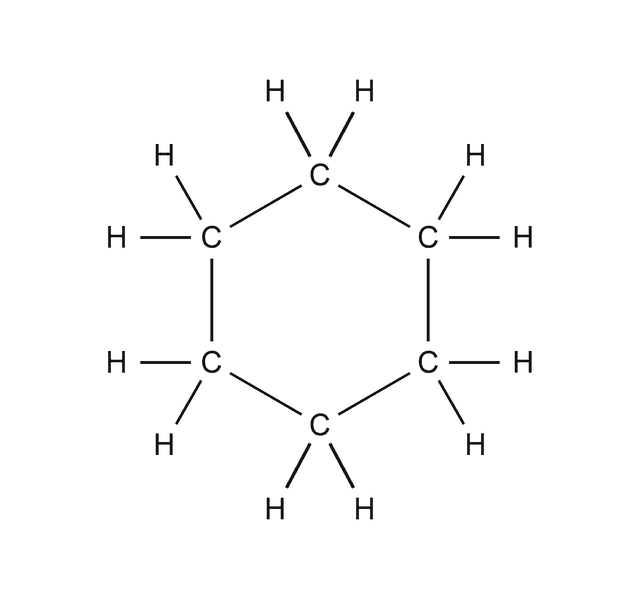
Answer the questions given below :
(a) How many Carbon and Hydrogen atoms are present in the compound ?
(b) Write the molecular and empirical formulae of the compound.
(c) Calculate the percentage composition of all the elements present in the compound.
[At. wt. of C = 12, H = 1]
- 553 marks
Question 55
Calculate the molecular mass of the following :
(a)
(b)
(c)
(d)
Given atomic mass of Na = 23, H = 1, O = 16, C = 12, N = 14, Mg = 24, S = 32
- 563 marks
Question 56
Calculate the relative molecular masses of :
(a)
(b)
(c)
(d)
(e)
(f) Potassium chlorate,
(g) Ammonium chloroplatinate,
[At. mass : C = 12, H = 1, O = 16, Cl = 35.5, N = 14, Cu = 63.5, S = 32, Na = 23, K = 39, Pt = 195, Ca = 40, P = 31, Mg = 24, Cr = 52]
- 573 marks
Question 57
Find the percentage mass of water in Epsom salt, .
- 583 marks
Question 58
Calculate the percentage of phosphorus in :
(a) Calcium hydrogen phosphate,
(b) Calcium phosphate,
- 593 marks
Question 59
Calculate the percentage composition of each element in Potassium chlorate, .
- 603 marks
Question 60
Urea is a very important nitrogenous fertilizer. Its formula is . Calculate the percentage of carbon in urea. (C = 12, O = 16, N = 14 and H = 1)
What Class 9 Chemistry Ch 1 covers
The sections of the chapter, in the order the book takes them. Every question above comes from one of these.
- 01Symbols
- 02Valency
- 03Radicals
- 04Writing Chemical Formulae
- 05Naming Certain Compounds
- 06Chemical Equation
More ways to study this chapter
The same chapter asked three other ways. Practise it, revise it, and see what the board has set on Ch 1 before.
Class 9 Chemistry Ch 1 questions students ask
How many questions are there in Class 9 Chemistry Ch 1?
60 questions. Every one is solved step by step on this page.
Are these Class 9 Chemistry solutions free?
Yes. Every question and its full working is free to read, with no account needed.
Can I download the Class 9 Chemistry Ch 1 solutions as a PDF?
There is no PDF to download. Every solution is on this page instead, which means it is searchable, always the current syllabus, and readable on a phone. Use your browser's print option if you want it on paper.