
Question 565 marksMedium
Discuss various factors that affect the rate of enzymatic reaction.
Confirming your payment
Sign up now and get 250 free tokens.
Enzymes · Question 56 of 59
Discuss various factors that affect the rate of enzymatic reaction.
Solution:
Concept: The rate of an enzyme reaction depends on the conditions in which the enzyme works.
Step 1 — What is asked: We need to explain the topic fully, point by point.
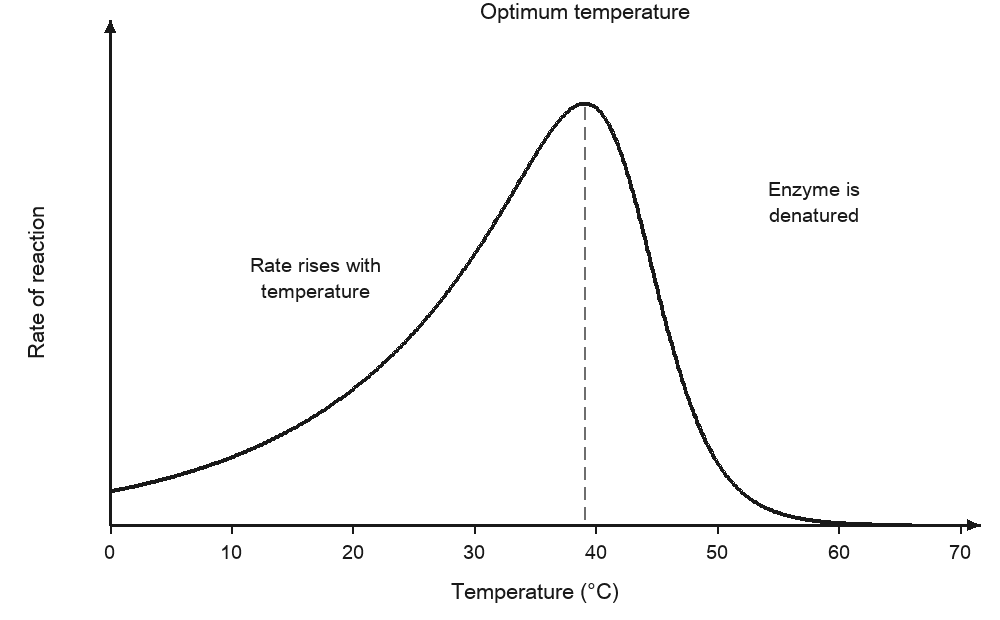
Step 2 — Temperature: The rate rises with temperature (roughly doubling per 10 °C) up to the optimum, generally 37–40 °C for body enzymes. At low temperature the enzyme works only slowly; near freezing it is almost inactive but is not damaged, and it works again when warmed. Above the optimum it is denatured and the rate falls.
Step 3 — Enzyme concentration: With substrate in excess and pH and temperature constant, the rate rises in proportion to the enzyme concentration, because more active sites are available.

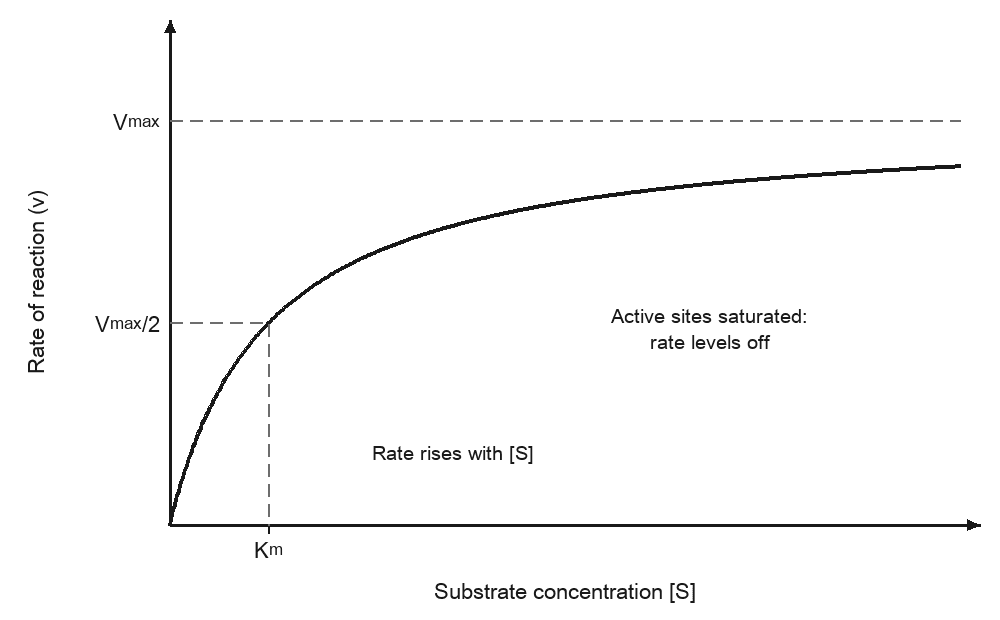
Step 4 — Substrate concentration: At a fixed enzyme concentration the rate rises with substrate concentration and then levels off at when all active sites are saturated; is the substrate concentration at which the rate is half of .
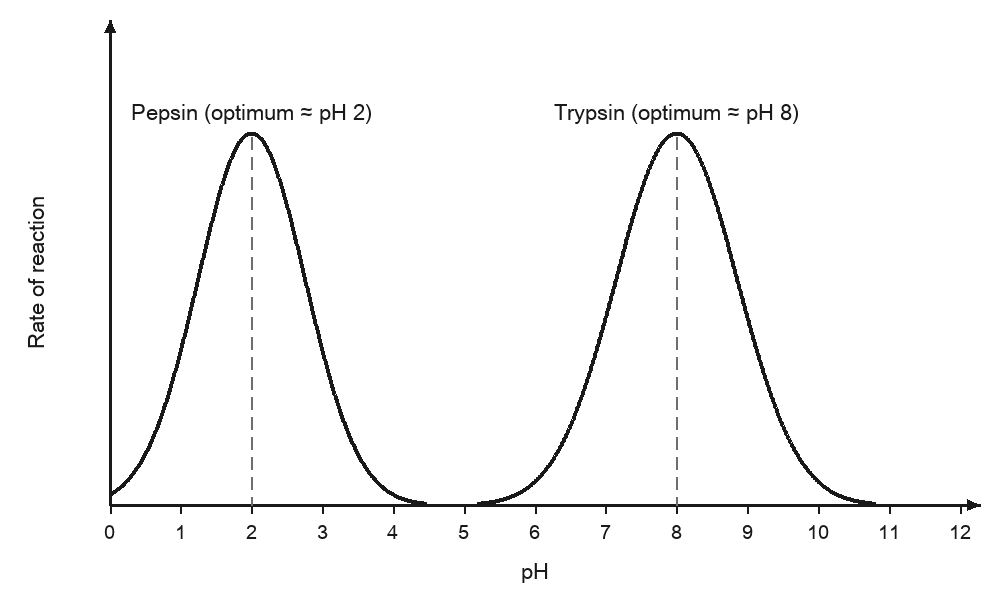
Step 5 — pH: Each enzyme works over a narrow pH range with an optimum pH: pepsin about pH 2, trypsin about pH 8. A change in pH alters the active site, and extreme pH denatures the enzyme.
Step 6 — Inhibitors and modulators: Inhibitors lower the rate (competitive, non-competitive, allosteric and end-product inhibition), while allosteric activators can raise it.
Therefore, the rate of an enzyme reaction is affected by temperature, enzyme concentration, substrate concentration, pH and the presence of inhibitors or activators.