
Confirming your payment

Skip to content

Sign up now and get .

Opening your dashboard

Class 10 Maths Chapter 21: Trigonometrical Identities Solutions

131 textbook questions with step-by-step answers, free to read, for ICSE 2026-27.

AI Tutor

Get talked through Ch 21, not just shown the answer

Reading a finished solution is not the same as being able to do it. The AI tutor takes one question at a time and works it with you, in your own words, until you can.

  • Ask it out loud, in your own words
  • It gives you the next step, not the answer
  • Stuck on part (ii)? Start there
Ch 21 solutions

131 questions with solutions

1–3 marks · Mixed difficulty

The first 15 solutions are on this page. This chapter is a long one, so the rest open on their own page to keep this one quick to load.

  1. 1

    Question 1

    sin⁡4θ−cos⁡4θ\sin^4 \theta - \cos^4 \theta is equal to :

    MCQEasy
    1 mark
    Solve with AI
    Answer
    • (A) sin⁡2θ−1\sin^2 \theta - 1

    • (B) 1+cos⁡2θ1 + \cos^2 \theta

    • (C) 2sin⁡2θ−12\sin^2 \theta - 1

      Correct
    • (D) 1−cos⁡2θ1 - \cos^2 \theta

    Answer: (C) 2sin⁡2θ−12\sin^2 \theta - 1

    Concept: A difference of two squares factorises: a2−b2=(a+b)(a−b)a^2 - b^2 = (a + b)(a - b); used together with the identity sin⁡2θ+cos⁡2θ=1\sin^2 \theta + \cos^2 \theta = 1, this shortens many expressions with fourth powers.

    Step 1 — Spot a difference of two squares.

    The fourth powers are squares of squares: sin⁡4θ=(sin⁡2θ)2\sin^4 \theta = (\sin^2 \theta)^2 and cos⁡4θ=(cos⁡2θ)2\cos^4 \theta = (\cos^2 \theta)^2; so we can use the rule a2−b2=(a+b)(a−b)a^2 - b^2 = (a + b)(a - b), taking sin⁡2θ\sin^2 \theta as aa and cos⁡2θ\cos^2 \theta as bb:

    sin⁡4θ−cos⁡4θ=(sin⁡2θ+cos⁡2θ)(sin⁡2θ−cos⁡2θ)\sin^4 \theta - \cos^4 \theta = (\sin^2 \theta + \cos^2 \theta)(\sin^2 \theta - \cos^2 \theta)

    Step 2 — Use sin²θ + cos²θ = 1.

    The first bracket is exactly sin⁡2θ+cos⁡2θ\sin^2 \theta + \cos^2 \theta, which equals 1, so only the second bracket is left:

    sin⁡4θ−cos⁡4θ=1×(sin⁡2θ−cos⁡2θ)=sin⁡2θ−cos⁡2θ\begin{aligned} \sin^4 \theta - \cos^4 \theta &= 1 \times (\sin^2 \theta - \cos^2 \theta) \\ &= \sin^2 \theta - \cos^2 \theta \end{aligned}

    Step 3 — Write everything in terms of sin θ.

    All the options except one use sines, so we replace cos⁡2θ\cos^2 \theta by 1−sin⁡2θ1 - \sin^2 \theta:

    sin⁡4θ−cos⁡4θ=sin⁡2θ−(1−sin⁡2θ)=sin⁡2θ−1+sin⁡2θ=2sin⁡2θ−1\begin{aligned} \sin^4 \theta - \cos^4 \theta &= \sin^2 \theta - (1 - \sin^2 \theta) \\ &= \sin^2 \theta - 1 + \sin^2 \theta \\ &= 2\sin^2 \theta - 1 \end{aligned}

    Watch out: Only the SUM sin⁡2θ+cos⁡2θ\sin^2 \theta + \cos^2 \theta equals 1. The difference sin⁡2θ−cos⁡2θ\sin^2 \theta - \cos^2 \theta is not 1; it must be kept.

    Why the other options are wrong:

    • (A) sin⁡2θ−1\sin^2 \theta - 1: sin⁡2θ−1\sin^2 \theta - 1 equals −cos⁡2θ-\cos^2 \theta. At θ = 30° it is −34-\dfrac{3}{4}, but the expression is −12-\dfrac{1}{2} there.
    • (B) 1+cos⁡2θ1 + \cos^2 \theta: at θ = 30°, 1+cos⁡2θ1 + \cos^2 \theta is 74\dfrac{7}{4}, while the expression is −12-\dfrac{1}{2}. This option even has the wrong sign.
    • (D) 1−cos⁡2θ1 - \cos^2 \theta: 1−cos⁡2θ1 - \cos^2 \theta is just sin⁡2θ\sin^2 \theta. At θ = 30° it is 14\dfrac{1}{4}, not −12-\dfrac{1}{2}.

    Therefore, sin⁡4θ−cos⁡4θ=2sin⁡2θ−1\sin^4 \theta - \cos^4 \theta = 2\sin^2 \theta - 1, option (C).

  2. 2

    Question 2

    (1+tan⁡θ)2+(1−tan⁡θ)2(1 + \tan \theta)^2 + (1 - \tan \theta)^2 is equal to :

    MCQEasy
    1 mark
    Solve with AI
    Answer
    • (A) 2cosec⁡2θ2\operatorname{cosec}^2 \theta

    • (B) 2sec⁡2θ2\sec^2 \theta

      Correct
    • (C) cosec⁡2θ\operatorname{cosec}^2 \theta

    • (D) sec⁡2θ\sec^2 \theta

    Answer: (B) 2sec⁡2θ2\sec^2 \theta

    Concept: The three Pythagorean identities hold for every angle A where the ratios exist: sin⁡2A+cos⁡2A=1\sin^2 A + \cos^2 A = 1,   1+tan⁡2A=sec⁡2A\;1 + \tan^2 A = \sec^2 A and   1+cot⁡2A=cosec⁡2A\;1 + \cot^2 A = \operatorname{cosec}^2 A. Each can be rearranged, for example sec⁡2A−tan⁡2A=1\sec^2 A - \tan^2 A = 1 or 1−sin⁡2A=cos⁡2A1 - \sin^2 A = \cos^2 A.

    Step 1 — Expand both squares.

    We expand both squares with the rules (a+b)2=a2+2ab+b2(a + b)^2 = a^2 + 2ab + b^2 and (a−b)2=a2−2ab+b2(a - b)^2 = a^2 - 2ab + b^2, taking 1 as aa and tan⁡θ\tan \theta as bb:

    (1+tan⁡θ)2+(1−tan⁡θ)2=(1+2tan⁡θ+tan⁡2θ)+(1−2tan⁡θ+tan⁡2θ)(1 + \tan \theta)^2 + (1 - \tan \theta)^2 = (1 + 2\tan \theta + \tan^2 \theta) + (1 - 2\tan \theta + \tan^2 \theta)

    Step 2 — Collect like terms.

    The middle terms +2tan⁡θ+2\tan \theta and −2tan⁡θ-2\tan \theta cancel, and what remains has a common factor 2:

    (1+tan⁡θ)2+(1−tan⁡θ)2=2+2tan⁡2θ=2(1+tan⁡2θ)\begin{aligned} (1 + \tan \theta)^2 + (1 - \tan \theta)^2 &= 2 + 2\tan^2 \theta \\ &= 2(1 + \tan^2 \theta) \end{aligned}

    Step 3 — Use 1 + tan²θ = sec²θ.

    The bracket is the Pythagorean identity 1+tan⁡2θ=sec⁡2θ1 + \tan^2 \theta = \sec^2 \theta:

    (1+tan⁡θ)2+(1−tan⁡θ)2=2sec⁡2θ(1 + \tan \theta)^2 + (1 - \tan \theta)^2 = 2\sec^2 \theta

    Watch out: Keep the brackets when you expand: (a−b)2=a2−2ab+b2(a - b)^2 = a^2 - 2ab + b^2, and the middle term changes sign in (a+b)2(a + b)^2.

    Why the other options are wrong:

    • (A) 2cosec⁡2θ2\operatorname{cosec}^2 \theta: 1+cot⁡2θ1 + \cot^2 \theta (not 1+tan⁡2θ1 + \tan^2 \theta) equals cosec⁡2θ\operatorname{cosec}^2 \theta. At θ = 30°, 2cosec⁡2θ2\operatorname{cosec}^2 \theta is 8, but the expression is 83\dfrac{8}{3}.
    • (C) cosec⁡2θ\operatorname{cosec}^2 \theta: cosec⁡2θ\operatorname{cosec}^2 \theta is 4 at θ = 30°, but the expression is 83\dfrac{8}{3}; the wrong identity is used and the factor 2 is lost.
    • (D) sec⁡2θ\sec^2 \theta: sec⁡2θ\sec^2 \theta is only half of the result: the factor 2 from 2+2tan⁡2θ2 + 2\tan^2 \theta has been dropped.

    Therefore, (1+tan⁡θ)2+(1−tan⁡θ)2=2sec⁡2θ(1 + \tan \theta)^2 + (1 - \tan \theta)^2 = 2\sec^2 \theta, option (B).

  3. 3

    Question 3

    cot⁡4θ+cot⁡2θ\cot^4 \theta + \cot^2 \theta is equal to :

    MCQEasy
    1 mark
    Solve with AI
    Answer
    • (A) 2cot⁡2θ⋅cosec⁡2θ2\cot^2 \theta \cdot \operatorname{cosec}^2 \theta

    • (B) tan⁡2θ+tan⁡4θ\tan^2 \theta + \tan^4 \theta

    • (C) tan⁡2θ⋅cosec⁡2θ\tan^2 \theta \cdot \operatorname{cosec}^2 \theta

    • (D) cosec⁡4θ−cosec⁡2θ\operatorname{cosec}^4 \theta - \operatorname{cosec}^2 \theta

      Correct

    Answer: (D) cosec⁡4θ−cosec⁡2θ\operatorname{cosec}^4 \theta - \operatorname{cosec}^2 \theta

    Concept: The three Pythagorean identities hold for every angle A where the ratios exist: sin⁡2A+cos⁡2A=1\sin^2 A + \cos^2 A = 1,   1+tan⁡2A=sec⁡2A\;1 + \tan^2 A = \sec^2 A and   1+cot⁡2A=cosec⁡2A\;1 + \cot^2 A = \operatorname{cosec}^2 A. Each can be rearranged, for example sec⁡2A−tan⁡2A=1\sec^2 A - \tan^2 A = 1 or 1−sin⁡2A=cos⁡2A1 - \sin^2 A = \cos^2 A.

    Step 1 — Take out the common factor.

    Both terms contain cot⁡2θ\cot^2 \theta, so we take it out:

    cot⁡4θ+cot⁡2θ=cot⁡2θ(cot⁡2θ+1)\cot^4 \theta + \cot^2 \theta = \cot^2 \theta(\cot^2 \theta + 1)

    Step 2 — Use 1 + cot²θ = cosec²θ.

    The bracket cot⁡2θ+1\cot^2 \theta + 1 is cosec⁡2θ\operatorname{cosec}^2 \theta by the Pythagorean identity:

    cot⁡4θ+cot⁡2θ=cot⁡2θ⋅cosec⁡2θ\cot^4 \theta + \cot^2 \theta = \cot^2 \theta \cdot \operatorname{cosec}^2 \theta

    Step 3 — Write cot²θ in terms of cosec θ.

    The options are written with cosec, so we use cot⁡2θ=cosec⁡2θ−1\cot^2 \theta = \operatorname{cosec}^2 \theta - 1 and multiply out:

    cot⁡4θ+cot⁡2θ=(cosec⁡2θ−1)cosec⁡2θ=cosec⁡4θ−cosec⁡2θ\begin{aligned} \cot^4 \theta + \cot^2 \theta &= (\operatorname{cosec}^2 \theta - 1)\operatorname{cosec}^2 \theta \\ &= \operatorname{cosec}^4 \theta - \operatorname{cosec}^2 \theta \end{aligned}

    Watch out: cot⁡θ\cot \theta and tan⁡θ\tan \theta are reciprocals, so swapping cot for tan changes the value; it is not allowed.

    Why the other options are wrong:

    • (A) 2cot⁡2θ⋅cosec⁡2θ2\cot^2 \theta \cdot \operatorname{cosec}^2 \theta: the correct product is cot⁡2θ⋅cosec⁡2θ\cot^2 \theta \cdot \operatorname{cosec}^2 \theta, without the 2. At θ = 30° the expression is 12, but this option is 24.
    • (B) tan⁡2θ+tan⁡4θ\tan^2 \theta + \tan^4 \theta: this swaps cot for tan. At θ = 30°, tan⁡2θ+tan⁡4θ\tan^2 \theta + \tan^4 \theta is 49\dfrac{4}{9}, not 12.
    • (C) tan⁡2θ⋅cosec⁡2θ\tan^2 \theta \cdot \operatorname{cosec}^2 \theta: tan⁡2θ⋅cosec⁡2θ\tan^2 \theta \cdot \operatorname{cosec}^2 \theta simplifies to sec⁡2θ\sec^2 \theta. At θ = 30° this option is 43\dfrac{4}{3}, not 12.

    Therefore, cot⁡4θ+cot⁡2θ=cosec⁡4θ−cosec⁡2θ\cot^4 \theta + \cot^2 \theta = \operatorname{cosec}^4 \theta - \operatorname{cosec}^2 \theta, option (D).

  4. 4

    Question 4

    11−sin⁡A\dfrac{1}{1 - \sin A} is equal to :

    MCQEasy
    1 mark
    Solve with AI
    Answer
    • (A) 1+sin⁡A1 + \sin A

    • (B) sec⁡2A(1+sin⁡A)\sec^2 A(1 + \sin A)

      Correct
    • (C) sec⁡2A\sec^2 A

    • (D) sec⁡2A+sin⁡A\sec^2 A + \sin A

    Answer: (B) sec⁡2A(1+sin⁡A)\sec^2 A(1 + \sin A)

    Concept: Multiplying the top and bottom of a fraction by the conjugate of its denominator (for 1−sin⁡A1 - \sin A the conjugate is 1+sin⁡A1 + \sin A) gives a difference of two squares, (a−b)(a+b)=a2−b2(a - b)(a + b) = a^2 - b^2, which a Pythagorean identity then simplifies.

    Step 1 — Multiply by the conjugate.

    We multiply the top and the bottom by 1+sin⁡A1 + \sin A. This does not change the value, because we multiply by 1 in disguise:

    11−sin⁡A=1+sin⁡A(1−sin⁡A)(1+sin⁡A)\dfrac{1}{1 - \sin A} = \dfrac{1 + \sin A}{(1 - \sin A)(1 + \sin A)}

    Step 2 — Simplify the denominator.

    The denominator is a difference of two squares, (1−sin⁡A)(1+sin⁡A)=1−sin⁡2A(1 - \sin A)(1 + \sin A) = 1 - \sin^2 A, and 1−sin⁡2A=cos⁡2A1 - \sin^2 A = \cos^2 A:

    11−sin⁡A=1+sin⁡A1−sin⁡2A=1+sin⁡Acos⁡2A\begin{aligned} \dfrac{1}{1 - \sin A} &= \dfrac{1 + \sin A}{1 - \sin^2 A} \\ &= \dfrac{1 + \sin A}{\cos^2 A} \end{aligned}

    Step 3 — Use sec A = 1/cos A.

    Dividing by cos⁡2A\cos^2 A is the same as multiplying by sec⁡2A\sec^2 A:

    11−sin⁡A=sec⁡2A(1+sin⁡A)\dfrac{1}{1 - \sin A} = \sec^2 A(1 + \sin A)

    Watch out: 11−sin⁡A\dfrac{1}{1 - \sin A} is not 1+sin⁡A1 + \sin A: multiplying by the conjugate also changes the denominator to cos⁡2A\cos^2 A.

    Why the other options are wrong:

    • (A) 1+sin⁡A1 + \sin A: at A = 30° the expression is 2, but 1+sin⁡A1 + \sin A is 32\dfrac{3}{2}. The new denominator cos⁡2A\cos^2 A has been forgotten.
    • (C) sec⁡2A\sec^2 A: sec⁡2A\sec^2 A is 43\dfrac{4}{3} at A = 30°, not 2; the factor 1+sin⁡A1 + \sin A in the numerator is missing.
    • (D) sec⁡2A+sin⁡A\sec^2 A + \sin A: the numerator 1+sin⁡A1 + \sin A must multiply sec⁡2A\sec^2 A, not be added to it. At A = 30° this option is 116\dfrac{11}{6}, not 2.

    Therefore, 11−sin⁡A=sec⁡2A(1+sin⁡A)\dfrac{1}{1 - \sin A} = \sec^2 A(1 + \sin A), option (B).

  5. 5

    Question 5

    tan⁡2A(sec⁡A+1)2\dfrac{\tan^2 A}{(\sec A + 1)^2} is equal to :

    MCQEasy
    1 mark
    Solve with AI
    Answer
    • (A) 1+cos⁡A1−cos⁡A\dfrac{1 + \cos A}{1 - \cos A}

    • (B) 1−cos⁡A1+cos⁡A\dfrac{1 - \cos A}{1 + \cos A}

      Correct
    • (C) 11+cos⁡A\dfrac{1}{1 + \cos A}

    • (D) 11−cos⁡A\dfrac{1}{1 - \cos A}

    Answer: (B) 1−cos⁡A1+cos⁡A\dfrac{1 - \cos A}{1 + \cos A}

    Concept: The three Pythagorean identities hold for every angle A where the ratios exist: sin⁡2A+cos⁡2A=1\sin^2 A + \cos^2 A = 1,   1+tan⁡2A=sec⁡2A\;1 + \tan^2 A = \sec^2 A and   1+cot⁡2A=cosec⁡2A\;1 + \cot^2 A = \operatorname{cosec}^2 A. Each can be rearranged, for example sec⁡2A−tan⁡2A=1\sec^2 A - \tan^2 A = 1 or 1−sin⁡2A=cos⁡2A1 - \sin^2 A = \cos^2 A. Also, sec⁡A=1cos⁡A\sec A = \dfrac{1}{\cos A}.

    Step 1 — Write tan²A with sec A.

    We rearrange the identity 1+tan⁡2A=sec⁡2A1 + \tan^2 A = \sec^2 A to express tan⁡2A\tan^2 A through sec A:

    tan⁡2A=sec⁡2A−1\tan^2 A = \sec^2 A - 1

    Then sec⁡2A−1\sec^2 A - 1 is a difference of two squares:

    tan⁡2A(sec⁡A+1)2=sec⁡2A−1(sec⁡A+1)2=(sec⁡A−1)(sec⁡A+1)(sec⁡A+1)2\begin{aligned} \dfrac{\tan^2 A}{(\sec A + 1)^2} &= \dfrac{\sec^2 A - 1}{(\sec A + 1)^2} \\ &= \dfrac{(\sec A - 1)(\sec A + 1)}{(\sec A + 1)^2} \end{aligned}

    Step 2 — Cancel the common factor.

    One factor sec⁡A+1\sec A + 1 cancels from the top and the bottom:

    tan⁡2A(sec⁡A+1)2=sec⁡A−1sec⁡A+1\dfrac{\tan^2 A}{(\sec A + 1)^2} = \dfrac{\sec A - 1}{\sec A + 1}

    Step 3 — Change sec A to cos A.

    We put sec⁡A=1cos⁡A\sec A = \dfrac{1}{\cos A} and multiply the top and the bottom by cos⁡A\cos A to clear the small fractions:

    tan⁡2A(sec⁡A+1)2=1cos⁡A−11cos⁡A+1=1−cos⁡A1+cos⁡A\begin{aligned} \dfrac{\tan^2 A}{(\sec A + 1)^2} &= \dfrac{\dfrac{1}{\cos A} - 1}{\dfrac{1}{\cos A} + 1} \\ &= \dfrac{1 - \cos A}{1 + \cos A} \end{aligned}

    Watch out: Cancel only whole factors. sec⁡A+1\sec A + 1 is a factor of both top and bottom here; single terms such as the 1s can never be cancelled.

    Why the other options are wrong:

    • (A) 1+cos⁡A1−cos⁡A\dfrac{1 + \cos A}{1 - \cos A}: this is the reciprocal of the correct answer: the top and bottom have been swapped. At A = 60° it is 3, but the expression is 13\dfrac{1}{3}.
    • (C) 11+cos⁡A\dfrac{1}{1 + \cos A}: the factor 1−cos⁡A1 - \cos A in the numerator is missing. At A = 60° this option is 23\dfrac{2}{3}, not 13\dfrac{1}{3}.
    • (D) 11−cos⁡A\dfrac{1}{1 - \cos A}: at A = 60°, 11−cos⁡A\dfrac{1}{1 - \cos A} is 2, while the expression is 13\dfrac{1}{3}.

    Therefore, tan⁡2A(sec⁡A+1)2=1−cos⁡A1+cos⁡A\dfrac{\tan^2 A}{(\sec A + 1)^2} = \dfrac{1 - \cos A}{1 + \cos A}, option (B).

  6. 6

    Question 6

    Prove that : sec⁡A−1sec⁡A+1=1−cos⁡A1+cos⁡A\dfrac{\sec A - 1}{\sec A + 1} = \dfrac{1 - \cos A}{1 + \cos A}

    Easy
    3 marks
    Solve with AI
    Written solution

    Solution:

    Concept: Every ratio can be written with sine and cosine: tan⁡A=sin⁡Acos⁡A\tan A = \dfrac{\sin A}{\cos A}, cot⁡A=cos⁡Asin⁡A\cot A = \dfrac{\cos A}{\sin A}, sec⁡A=1cos⁡A\sec A = \dfrac{1}{\cos A} and cosec⁡A=1sin⁡A\operatorname{cosec} A = \dfrac{1}{\sin A}. Changing everything to sin and cos, then using sin⁡2A+cos⁡2A=1\sin^2 A + \cos^2 A = 1, proves most identities.

    Step 1 — Start from the left-hand side.

    We begin with the LHS. It is the more complicated side, so we work on it and turn it into the RHS.

    LHS=sec⁡A−1sec⁡A+1\text{LHS} = \dfrac{\sec A - 1}{\sec A + 1}

    Step 2 — Write sec A as 1/cos A.

    Since sec A is the reciprocal of cos A, we put sec⁡A=1cos⁡A\sec A = \dfrac{1}{\cos A} in the numerator and in the denominator:

    LHS=1cos⁡A−11cos⁡A+1\text{LHS} = \dfrac{\dfrac{1}{\cos A} - 1}{\dfrac{1}{\cos A} + 1}

    Step 3 — Make single fractions.

    In the numerator and in the denominator we take cos⁡A\cos A as the common denominator:

    LHS=1−cos⁡Acos⁡A1+cos⁡Acos⁡A\text{LHS} = \dfrac{\dfrac{1 - \cos A}{\cos A}}{\dfrac{1 + \cos A}{\cos A}}

    Step 4 — Cancel cos A.

    Both small fractions have the same denominator cos⁡A\cos A, so it cancels:

    LHS=1−cos⁡A1+cos⁡A\text{LHS} = \dfrac{1 - \cos A}{1 + \cos A}

    This is exactly the RHS.

    Watch out: Cancel only the common factor cos⁡A\cos A; never cancel the single terms 1 in sec⁡A−1sec⁡A+1\dfrac{\sec A - 1}{\sec A + 1}.

    Therefore, LHS = RHS, so sec⁡A−1sec⁡A+1=1−cos⁡A1+cos⁡A\dfrac{\sec A - 1}{\sec A + 1} = \dfrac{1 - \cos A}{1 + \cos A}. Hence proved.

  7. 7

    Question 7

    Prove that : 1tan⁡A+cot⁡A=cos⁡Asin⁡A\dfrac{1}{\tan A + \cot A} = \cos A \sin A

    Easy
    3 marks
    Solve with AI
    Written solution

    Solution:

    Concept: Every ratio can be written with sine and cosine: tan⁡A=sin⁡Acos⁡A\tan A = \dfrac{\sin A}{\cos A}, cot⁡A=cos⁡Asin⁡A\cot A = \dfrac{\cos A}{\sin A}, sec⁡A=1cos⁡A\sec A = \dfrac{1}{\cos A} and cosec⁡A=1sin⁡A\operatorname{cosec} A = \dfrac{1}{\sin A}. Changing everything to sin and cos, then using sin⁡2A+cos⁡2A=1\sin^2 A + \cos^2 A = 1, proves most identities.

    Step 1 — Start from the left-hand side.

    We begin with the LHS. It is the more complicated side, so we work on it and turn it into the RHS.

    LHS=1tan⁡A+cot⁡A\text{LHS} = \dfrac{1}{\tan A + \cot A}

    Step 2 — Write tan A and cot A with sin and cos.

    We use tan⁡A=sin⁡Acos⁡A\tan A = \dfrac{\sin A}{\cos A} and cot⁡A=cos⁡Asin⁡A\cot A = \dfrac{\cos A}{\sin A}:

    LHS=1sin⁡Acos⁡A+cos⁡Asin⁡A\text{LHS} = \dfrac{1}{\dfrac{\sin A}{\cos A} + \dfrac{\cos A}{\sin A}}

    Step 3 — Add the two fractions.

    The common denominator of the two small fractions is sin⁡Acos⁡A\sin A \cos A:

    LHS=1sin⁡2A+cos⁡2Asin⁡Acos⁡A\text{LHS} = \dfrac{1}{\dfrac{\sin^2 A + \cos^2 A}{\sin A \cos A}}

    Step 4 — Use sin²A + cos²A = 1.

    The numerator of the small fraction is 1, and dividing 1 by a fraction turns the fraction upside down:

    LHS=11sin⁡Acos⁡A=sin⁡Acos⁡A\begin{aligned} \text{LHS} &= \dfrac{1}{\dfrac{1}{\sin A \cos A}} \\ &= \sin A \cos A \end{aligned}

    This is the RHS, cos⁡Asin⁡A\cos A \sin A (the order of a product does not matter).

    Watch out: 1tan⁡A+cot⁡A\dfrac{1}{\tan A + \cot A} is NOT 1tan⁡A+1cot⁡A\dfrac{1}{\tan A} + \dfrac{1}{\cot A}; first add the two terms, then take the reciprocal.

    Therefore, LHS = RHS, so 1tan⁡A+cot⁡A=cos⁡Asin⁡A\dfrac{1}{\tan A + \cot A} = \cos A \sin A. Hence proved.

  8. 8

    Question 8

    Prove that : tan⁡A−cot⁡A=1−2cos⁡2Asin⁡Acos⁡A\tan A - \cot A = \dfrac{1 - 2\cos^2 A}{\sin A \cos A}

    Easy
    3 marks
    Solve with AI
    Written solution

    Solution:

    Concept: Every ratio can be written with sine and cosine: tan⁡A=sin⁡Acos⁡A\tan A = \dfrac{\sin A}{\cos A}, cot⁡A=cos⁡Asin⁡A\cot A = \dfrac{\cos A}{\sin A}, sec⁡A=1cos⁡A\sec A = \dfrac{1}{\cos A} and cosec⁡A=1sin⁡A\operatorname{cosec} A = \dfrac{1}{\sin A}. Changing everything to sin and cos, then using sin⁡2A+cos⁡2A=1\sin^2 A + \cos^2 A = 1, proves most identities.

    Step 1 — Start from the left-hand side.

    We begin with the LHS. We change it to sin and cos, since the RHS is written that way.

    LHS=tan⁡A−cot⁡A\text{LHS} = \tan A - \cot A

    Step 2 — Write tan A and cot A with sin and cos.

    We use tan⁡A=sin⁡Acos⁡A\tan A = \dfrac{\sin A}{\cos A} and cot⁡A=cos⁡Asin⁡A\cot A = \dfrac{\cos A}{\sin A}, then subtract over the common denominator sin⁡Acos⁡A\sin A \cos A:

    LHS=sin⁡Acos⁡A−cos⁡Asin⁡A=sin⁡2A−cos⁡2Asin⁡Acos⁡A\begin{aligned} \text{LHS} &= \dfrac{\sin A}{\cos A} - \dfrac{\cos A}{\sin A} \\ &= \dfrac{\sin^2 A - \cos^2 A}{\sin A \cos A} \end{aligned}

    Step 3 — Write sin²A with cos A.

    The RHS has only cos⁡2A\cos^2 A on top, so we replace sin⁡2A\sin^2 A by 1−cos⁡2A1 - \cos^2 A:

    LHS=1−cos⁡2A−cos⁡2Asin⁡Acos⁡A=1−2cos⁡2Asin⁡Acos⁡A\begin{aligned} \text{LHS} &= \dfrac{1 - \cos^2 A - \cos^2 A}{\sin A \cos A} \\ &= \dfrac{1 - 2\cos^2 A}{\sin A \cos A} \end{aligned}

    This is exactly the RHS.

    Watch out: When you replace sin⁡2A\sin^2 A by 1−cos⁡2A1 - \cos^2 A, keep the brackets in mind: −cos⁡2A−cos⁡2A-\cos^2 A - \cos^2 A gives −2cos⁡2A-2\cos^2 A.

    Therefore, LHS = RHS, so tan⁡A−cot⁡A=1−2cos⁡2Asin⁡Acos⁡A\tan A - \cot A = \dfrac{1 - 2\cos^2 A}{\sin A \cos A}. Hence proved.

  9. 9

    Question 9

    Prove that : cosec⁡4A−cosec⁡2A=cot⁡4A+cot⁡2A\operatorname{cosec}^4 A - \operatorname{cosec}^2 A = \cot^4 A + \cot^2 A

    Easy
    3 marks
    Solve with AI
    Written solution

    Solution:

    Concept: The three Pythagorean identities hold for every angle A where the ratios exist: sin⁡2A+cos⁡2A=1\sin^2 A + \cos^2 A = 1,   1+tan⁡2A=sec⁡2A\;1 + \tan^2 A = \sec^2 A and   1+cot⁡2A=cosec⁡2A\;1 + \cot^2 A = \operatorname{cosec}^2 A. Each can be rearranged, for example sec⁡2A−tan⁡2A=1\sec^2 A - \tan^2 A = 1 or 1−sin⁡2A=cos⁡2A1 - \sin^2 A = \cos^2 A.

    Step 1 — Start from the left-hand side.

    We begin with the LHS. We change cosec into cot, because the RHS uses only cot.

    LHS=cosec⁡4A−cosec⁡2A\text{LHS} = \operatorname{cosec}^4 A - \operatorname{cosec}^2 A

    Step 2 — Take out the common factor.

    Both terms contain cosec⁡2A\operatorname{cosec}^2 A:

    LHS=cosec⁡2A(cosec⁡2A−1)\text{LHS} = \operatorname{cosec}^2 A(\operatorname{cosec}^2 A - 1)

    Step 3 — Use the identity with cot and cosec.

    The identity 1+cot⁡2A=cosec⁡2A1 + \cot^2 A = \operatorname{cosec}^2 A also tells us that cosec⁡2A−1\operatorname{cosec}^2 A - 1 is cot⁡2A\cot^2 A. We use both forms:

    LHS=(1+cot⁡2A)cot⁡2A\text{LHS} = (1 + \cot^2 A)\cot^2 A

    Step 4 — Multiply out.

    Multiplying each term of the bracket by cot⁡2A\cot^2 A:

    LHS=cot⁡2A+cot⁡4A\text{LHS} = \cot^2 A + \cot^4 A

    This is the RHS, cot⁡4A+cot⁡2A\cot^4 A + \cot^2 A (the order of the terms does not matter).

    Watch out: cosec⁡2A−1\operatorname{cosec}^2 A - 1 equals cot⁡2A\cot^2 A, not tan⁡2A\tan^2 A; tan goes with sec in sec⁡2A−1=tan⁡2A\sec^2 A - 1 = \tan^2 A.

    Therefore, LHS = RHS, so cosec⁡4A−cosec⁡2A=cot⁡4A+cot⁡2A\operatorname{cosec}^4 A - \operatorname{cosec}^2 A = \cot^4 A + \cot^2 A. Hence proved.

  10. 10

    Question 10

    Prove that : sec⁡A(1−sin⁡A)(sec⁡A+tan⁡A)=1\sec A(1 - \sin A)(\sec A + \tan A) = 1

    Easy
    3 marks
    Solve with AI
    Written solution

    Solution:

    Concept: Every ratio can be written with sine and cosine: tan⁡A=sin⁡Acos⁡A\tan A = \dfrac{\sin A}{\cos A}, cot⁡A=cos⁡Asin⁡A\cot A = \dfrac{\cos A}{\sin A}, sec⁡A=1cos⁡A\sec A = \dfrac{1}{\cos A} and cosec⁡A=1sin⁡A\operatorname{cosec} A = \dfrac{1}{\sin A}. Changing everything to sin and cos, then using sin⁡2A+cos⁡2A=1\sin^2 A + \cos^2 A = 1, proves most identities.

    Step 1 — Start from the left-hand side.

    We begin with the LHS. It is the more complicated side, so we work on it and turn it into the RHS.

    LHS=sec⁡A(1−sin⁡A)(sec⁡A+tan⁡A)\text{LHS} = \sec A(1 - \sin A)(\sec A + \tan A)

    Step 2 — Write sec A and tan A with sin and cos.

    We put sec⁡A=1cos⁡A\sec A = \dfrac{1}{\cos A} and tan⁡A=sin⁡Acos⁡A\tan A = \dfrac{\sin A}{\cos A}, so the last bracket becomes one fraction:

    LHS=1cos⁡A(1−sin⁡A)(1cos⁡A+sin⁡Acos⁡A)=1cos⁡A(1−sin⁡A)1+sin⁡Acos⁡A\begin{aligned} \text{LHS} &= \dfrac{1}{\cos A}(1 - \sin A)\left(\dfrac{1}{\cos A} + \dfrac{\sin A}{\cos A}\right) \\ &= \dfrac{1}{\cos A}(1 - \sin A)\dfrac{1 + \sin A}{\cos A} \end{aligned}

    Step 3 — Multiply the fractions.

    The numerators multiply to a difference of two squares, (1−sin⁡A)(1+sin⁡A)=1−sin⁡2A(1 - \sin A)(1 + \sin A) = 1 - \sin^2 A:

    LHS=(1−sin⁡A)(1+sin⁡A)cos⁡2A=1−sin⁡2Acos⁡2A\begin{aligned} \text{LHS} &= \dfrac{(1 - \sin A)(1 + \sin A)}{\cos^2 A} \\ &= \dfrac{1 - \sin^2 A}{\cos^2 A} \end{aligned}

    Step 4 — Use 1 − sin²A = cos²A.

    The numerator equals the denominator, so the fraction is 1:

    LHS=cos⁡2Acos⁡2A=1\begin{aligned} \text{LHS} &= \dfrac{\cos^2 A}{\cos^2 A} \\ &= 1 \end{aligned}

    This is the RHS.

    Watch out: Multiply the brackets as a product; (1−sin⁡A)(1+sin⁡A)(1 - \sin A)(1 + \sin A) is 1−sin⁡2A1 - \sin^2 A, not 1−sin⁡A1 - \sin A.

    Therefore, LHS = RHS, so sec⁡A(1−sin⁡A)(sec⁡A+tan⁡A)=1\sec A(1 - \sin A)(\sec A + \tan A) = 1. Hence proved.

  11. 11

    Question 11

    Prove that : sec⁡2A+cosec⁡2A=sec⁡2A⋅cosec⁡2A\sec^2 A + \operatorname{cosec}^2 A = \sec^2 A \cdot \operatorname{cosec}^2 A

    Easy
    3 marks
    Solve with AI
    Written solution

    Solution:

    Concept: Every ratio can be written with sine and cosine: tan⁡A=sin⁡Acos⁡A\tan A = \dfrac{\sin A}{\cos A}, cot⁡A=cos⁡Asin⁡A\cot A = \dfrac{\cos A}{\sin A}, sec⁡A=1cos⁡A\sec A = \dfrac{1}{\cos A} and cosec⁡A=1sin⁡A\operatorname{cosec} A = \dfrac{1}{\sin A}. Changing everything to sin and cos, then using sin⁡2A+cos⁡2A=1\sin^2 A + \cos^2 A = 1, proves most identities.

    Step 1 — Start from the left-hand side.

    We begin with the LHS. It is a sum, and adding fractions will turn it into a product.

    LHS=sec⁡2A+cosec⁡2A\text{LHS} = \sec^2 A + \operatorname{cosec}^2 A

    Step 2 — Write sec and cosec with cos and sin.

    We use sec⁡2A=1cos⁡2A\sec^2 A = \dfrac{1}{\cos^2 A} and cosec⁡2A=1sin⁡2A\operatorname{cosec}^2 A = \dfrac{1}{\sin^2 A}, then add over the common denominator cos⁡2Asin⁡2A\cos^2 A \sin^2 A:

    LHS=1cos⁡2A+1sin⁡2A=sin⁡2A+cos⁡2Acos⁡2Asin⁡2A\begin{aligned} \text{LHS} &= \dfrac{1}{\cos^2 A} + \dfrac{1}{\sin^2 A} \\ &= \dfrac{\sin^2 A + \cos^2 A}{\cos^2 A \sin^2 A} \end{aligned}

    Step 3 — Use sin²A + cos²A = 1.

    The numerator is 1, and the fraction splits into two reciprocals:

    LHS=1cos⁡2Asin⁡2A=1cos⁡2A⋅1sin⁡2A=sec⁡2A⋅cosec⁡2A\begin{aligned} \text{LHS} &= \dfrac{1}{\cos^2 A \sin^2 A} \\ &= \dfrac{1}{\cos^2 A} \cdot \dfrac{1}{\sin^2 A} \\ &= \sec^2 A \cdot \operatorname{cosec}^2 A \end{aligned}

    This is exactly the RHS.

    Watch out: 1cos⁡2A+1sin⁡2A\dfrac{1}{\cos^2 A} + \dfrac{1}{\sin^2 A} is not 1cos⁡2A+sin⁡2A\dfrac{1}{\cos^2 A + \sin^2 A}; add fractions over a common denominator.

    Therefore, LHS = RHS, so sec⁡2A+cosec⁡2A=sec⁡2A⋅cosec⁡2A\sec^2 A + \operatorname{cosec}^2 A = \sec^2 A \cdot \operatorname{cosec}^2 A. Hence proved.

  12. 12

    Question 12

    Prove that : (1+tan⁡2A)cot⁡Acosec⁡2A=tan⁡A\dfrac{(1 + \tan^2 A)\cot A}{\operatorname{cosec}^2 A} = \tan A

    Easy
    3 marks
    Solve with AI
    Written solution

    Solution:

    Concept: The three Pythagorean identities hold for every angle A where the ratios exist: sin⁡2A+cos⁡2A=1\sin^2 A + \cos^2 A = 1,   1+tan⁡2A=sec⁡2A\;1 + \tan^2 A = \sec^2 A and   1+cot⁡2A=cosec⁡2A\;1 + \cot^2 A = \operatorname{cosec}^2 A. Each can be rearranged, for example sec⁡2A−tan⁡2A=1\sec^2 A - \tan^2 A = 1 or 1−sin⁡2A=cos⁡2A1 - \sin^2 A = \cos^2 A. Also, 1cosec⁡2A=sin⁡2A\dfrac{1}{\operatorname{cosec}^2 A} = \sin^2 A.

    Step 1 — Start from the left-hand side.

    We begin with the LHS. It is the more complicated side, so we work on it and turn it into the RHS.

    LHS=(1+tan⁡2A)cot⁡Acosec⁡2A\text{LHS} = \dfrac{(1 + \tan^2 A)\cot A}{\operatorname{cosec}^2 A}

    Step 2 — Use 1 + tan²A = sec²A.

    The bracket in the numerator is a Pythagorean identity:

    LHS=sec⁡2Acot⁡Acosec⁡2A\text{LHS} = \dfrac{\sec^2 A \cot A}{\operatorname{cosec}^2 A}

    Step 3 — Write everything with sin and cos.

    We put sec⁡2A=1cos⁡2A\sec^2 A = \dfrac{1}{\cos^2 A}, cot⁡A=cos⁡Asin⁡A\cot A = \dfrac{\cos A}{\sin A}, and dividing by cosec⁡2A\operatorname{cosec}^2 A is the same as multiplying by sin⁡2A\sin^2 A:

    LHS=1cos⁡2A×cos⁡Asin⁡A×sin⁡2A\text{LHS} = \dfrac{1}{\cos^2 A} \times \dfrac{\cos A}{\sin A} \times \sin^2 A

    Step 4 — Cancel.

    One cos⁡A\cos A and one sin⁡A\sin A cancel, leaving sin A over cos A:

    LHS=sin⁡Acos⁡A=tan⁡A\begin{aligned} \text{LHS} &= \dfrac{\sin A}{\cos A} \\ &= \tan A \end{aligned}

    This is the RHS.

    Watch out: Dividing by cosec⁡2A\operatorname{cosec}^2 A means multiplying by sin⁡2A\sin^2 A, not by cosec⁡2A\operatorname{cosec}^2 A.

    Therefore, LHS = RHS, so (1+tan⁡2A)cot⁡Acosec⁡2A=tan⁡A\dfrac{(1 + \tan^2 A)\cot A}{\operatorname{cosec}^2 A} = \tan A. Hence proved.

  13. 13

    Question 13

    Prove that : tan⁡2A−sin⁡2A=tan⁡2A⋅sin⁡2A\tan^2 A - \sin^2 A = \tan^2 A \cdot \sin^2 A

    Easy
    3 marks
    Solve with AI
    Written solution

    Solution:

    Concept: The three Pythagorean identities hold for every angle A where the ratios exist: sin⁡2A+cos⁡2A=1\sin^2 A + \cos^2 A = 1,   1+tan⁡2A=sec⁡2A\;1 + \tan^2 A = \sec^2 A and   1+cot⁡2A=cosec⁡2A\;1 + \cot^2 A = \operatorname{cosec}^2 A. Each can be rearranged, for example sec⁡2A−tan⁡2A=1\sec^2 A - \tan^2 A = 1 or 1−sin⁡2A=cos⁡2A1 - \sin^2 A = \cos^2 A.

    Step 1 — Start from the left-hand side.

    We begin with the LHS. We write tan A with sin and cos and subtract.

    LHS=tan⁡2A−sin⁡2A\text{LHS} = \tan^2 A - \sin^2 A

    Step 2 — Write tan²A as sin²A/cos²A.

    Since tan⁡A=sin⁡Acos⁡A\tan A = \dfrac{\sin A}{\cos A}, we have tan⁡2A=sin⁡2Acos⁡2A\tan^2 A = \dfrac{\sin^2 A}{\cos^2 A}; then we subtract over the denominator cos⁡2A\cos^2 A:

    LHS=sin⁡2Acos⁡2A−sin⁡2A=sin⁡2A−sin⁡2Acos⁡2Acos⁡2A\begin{aligned} \text{LHS} &= \dfrac{\sin^2 A}{\cos^2 A} - \sin^2 A \\ &= \dfrac{\sin^2 A - \sin^2 A \cos^2 A}{\cos^2 A} \end{aligned}

    Step 3 — Take out sin²A.

    Both terms of the numerator contain sin⁡2A\sin^2 A, and the bracket left is 1−cos⁡2A=sin⁡2A1 - \cos^2 A = \sin^2 A:

    LHS=sin⁡2A(1−cos⁡2A)cos⁡2A=sin⁡2A⋅sin⁡2Acos⁡2A\begin{aligned} \text{LHS} &= \dfrac{\sin^2 A(1 - \cos^2 A)}{\cos^2 A} \\ &= \dfrac{\sin^2 A \cdot \sin^2 A}{\cos^2 A} \end{aligned}

    Step 4 — Regroup as tan²A · sin²A.

    We split off the factor sin⁡2Acos⁡2A\dfrac{\sin^2 A}{\cos^2 A}. It equals tan⁡2A\tan^2 A:

    LHS=sin⁡2Acos⁡2A⋅sin⁡2A=tan⁡2A⋅sin⁡2A\begin{aligned} \text{LHS} &= \dfrac{\sin^2 A}{\cos^2 A} \cdot \sin^2 A \\ &= \tan^2 A \cdot \sin^2 A \end{aligned}

    This is exactly the RHS.

    Watch out: To subtract sin⁡2A\sin^2 A from a fraction, write it as sin⁡2Acos⁡2Acos⁡2A\dfrac{\sin^2 A \cos^2 A}{\cos^2 A} first.

    Therefore, LHS = RHS, so tan⁡2A−sin⁡2A=tan⁡2A⋅sin⁡2A\tan^2 A - \sin^2 A = \tan^2 A \cdot \sin^2 A. Hence proved.

  14. 14

    Question 14

    Prove that : (cosec⁡A+sin⁡A)(cosec⁡A−sin⁡A)=cot⁡2A+cos⁡2A(\operatorname{cosec} A + \sin A)(\operatorname{cosec} A - \sin A) = \cot^2 A + \cos^2 A

    Easy
    3 marks
    Solve with AI
    Written solution

    Solution:

    Concept: The three Pythagorean identities hold for every angle A where the ratios exist: sin⁡2A+cos⁡2A=1\sin^2 A + \cos^2 A = 1,   1+tan⁡2A=sec⁡2A\;1 + \tan^2 A = \sec^2 A and   1+cot⁡2A=cosec⁡2A\;1 + \cot^2 A = \operatorname{cosec}^2 A. Each can be rearranged, for example sec⁡2A−tan⁡2A=1\sec^2 A - \tan^2 A = 1 or 1−sin⁡2A=cos⁡2A1 - \sin^2 A = \cos^2 A.

    Step 1 — Start from the left-hand side.

    We begin with the LHS. It is a product of a sum and a difference, which we can multiply out at once.

    LHS=(cosec⁡A+sin⁡A)(cosec⁡A−sin⁡A)\text{LHS} = (\operatorname{cosec} A + \sin A)(\operatorname{cosec} A - \sin A)

    Step 2 — Use (a + b)(a − b) = a² − b².

    Here a=cosec⁡Aa = \operatorname{cosec} A and b=sin⁡Ab = \sin A:

    LHS=cosec⁡2A−sin⁡2A\text{LHS} = \operatorname{cosec}^2 A - \sin^2 A

    Step 3 — Use cosec²A = 1 + cot²A.

    The RHS contains cot⁡2A\cot^2 A, so we replace cosec⁡2A\operatorname{cosec}^2 A by 1+cot⁡2A1 + \cot^2 A:

    LHS=1+cot⁡2A−sin⁡2A\text{LHS} = 1 + \cot^2 A - \sin^2 A

    Step 4 — Use 1 − sin²A = cos²A.

    We regroup the terms so that 1−sin⁡2A1 - \sin^2 A stands together:

    LHS=cot⁡2A+(1−sin⁡2A)=cot⁡2A+cos⁡2A\begin{aligned} \text{LHS} &= \cot^2 A + (1 - \sin^2 A) \\ &= \cot^2 A + \cos^2 A \end{aligned}

    This is exactly the RHS.

    Watch out: cosec⁡A×sin⁡A=1\operatorname{cosec} A \times \sin A = 1, so the middle terms cancel when you multiply out; do not leave them in.

    Therefore, LHS = RHS, so (cosec⁡A+sin⁡A)(cosec⁡A−sin⁡A)=cot⁡2A+cos⁡2A(\operatorname{cosec} A + \sin A)(\operatorname{cosec} A - \sin A) = \cot^2 A + \cos^2 A. Hence proved.

  15. 15

    Question 15

    Prove that : (cos⁡A+sin⁡A)2+(cos⁡A−sin⁡A)2=2(\cos A + \sin A)^2 + (\cos A - \sin A)^2 = 2

    Easy
    3 marks
    Solve with AI
    Written solution

    Solution:

    Concept: The three Pythagorean identities hold for every angle A where the ratios exist: sin⁡2A+cos⁡2A=1\sin^2 A + \cos^2 A = 1,   1+tan⁡2A=sec⁡2A\;1 + \tan^2 A = \sec^2 A and   1+cot⁡2A=cosec⁡2A\;1 + \cot^2 A = \operatorname{cosec}^2 A. Each can be rearranged, for example sec⁡2A−tan⁡2A=1\sec^2 A - \tan^2 A = 1 or 1−sin⁡2A=cos⁡2A1 - \sin^2 A = \cos^2 A.

    Step 1 — Start from the left-hand side.

    We begin with the LHS. We expand both squares.

    LHS=(cos⁡A+sin⁡A)2+(cos⁡A−sin⁡A)2\text{LHS} = (\cos A + \sin A)^2 + (\cos A - \sin A)^2

    Step 2 — Expand the squares.

    We expand both squares with the rules (a+b)2=a2+2ab+b2(a + b)^2 = a^2 + 2ab + b^2 and (a−b)2=a2−2ab+b2(a - b)^2 = a^2 - 2ab + b^2, taking cos⁡A\cos A as aa and sin⁡A\sin A as bb:

    LHS=(cos⁡2A+2cos⁡Asin⁡A+sin⁡2A)+(cos⁡2A−2cos⁡Asin⁡A+sin⁡2A)\text{LHS} = (\cos^2 A + 2\cos A \sin A + \sin^2 A) + (\cos^2 A - 2\cos A \sin A + \sin^2 A)

    Step 3 — Collect like terms.

    The terms +2cos⁡Asin⁡A+2\cos A \sin A and −2cos⁡Asin⁡A-2\cos A \sin A cancel:

    LHS=2cos⁡2A+2sin⁡2A=2(sin⁡2A+cos⁡2A)\begin{aligned} \text{LHS} &= 2\cos^2 A + 2\sin^2 A \\ &= 2(\sin^2 A + \cos^2 A) \end{aligned}

    Step 4 — Use sin²A + cos²A = 1.

    The bracket equals 1:

    LHS=2×1=2\begin{aligned} \text{LHS} &= 2 \times 1 \\ &= 2 \end{aligned}

    This is the RHS.

    Watch out: Keep the brackets when you expand: (a−b)2=a2−2ab+b2(a - b)^2 = a^2 - 2ab + b^2, and the middle term changes sign in (a+b)2(a + b)^2.

    Therefore, LHS = RHS, so (cos⁡A+sin⁡A)2+(cos⁡A−sin⁡A)2=2(\cos A + \sin A)^2 + (\cos A - \sin A)^2 = 2. Hence proved.

  16. 16

    Question 16

    Prove that : (cosec⁡A−sin⁡A)(sec⁡A−cos⁡A)(tan⁡A+cot⁡A)=1(\operatorname{cosec} A - \sin A)(\sec A - \cos A)(\tan A + \cot A) = 1

    Medium
    3 marks
  17. 17

    Question 17

    Prove that : 1sec⁡A+tan⁡A=sec⁡A−tan⁡A\dfrac{1}{\sec A + \tan A} = \sec A - \tan A

    Easy
    3 marks
  18. 18

    Question 18

    Prove that : (sin⁡A+cosec⁡A)2+(cos⁡A+sec⁡A)2=7+tan⁡2A+cot⁡2A(\sin A + \operatorname{cosec} A)^2 + (\cos A + \sec A)^2 = 7 + \tan^2 A + \cot^2 A

    Easy
    3 marks
  19. 19

    Question 19

    Prove that : sec⁡2A⋅cosec⁡2A=tan⁡2A+cot⁡2A+2\sec^2 A \cdot \operatorname{cosec}^2 A = \tan^2 A + \cot^2 A + 2

    Easy
    3 marks
  20. 20

    Question 20

    Prove that : 11+cos⁡A+11−cos⁡A=2cosec⁡2A\dfrac{1}{1 + \cos A} + \dfrac{1}{1 - \cos A} = 2\operatorname{cosec}^2 A

    Easy
    3 marks
  21. 21

    Question 21

    Prove that : cosec⁡Acosec⁡A−1+cosec⁡Acosec⁡A+1=2sec⁡2A\dfrac{\operatorname{cosec} A}{\operatorname{cosec} A - 1} + \dfrac{\operatorname{cosec} A}{\operatorname{cosec} A + 1} = 2\sec^2 A

    Easy
    3 marks
  22. 22

    Question 22

    Prove that : 1+cos⁡A1−cos⁡A=tan⁡2A(sec⁡A−1)2\dfrac{1 + \cos A}{1 - \cos A} = \dfrac{\tan^2 A}{(\sec A - 1)^2}

    Easy
    3 marks
  23. 23

    Question 23

    Prove that : 1+sin⁡Acos⁡A+cos⁡A1+sin⁡A=2sec⁡A\dfrac{1 + \sin A}{\cos A} + \dfrac{\cos A}{1 + \sin A} = 2\sec A

    Easy
    3 marks
  24. 24

    Question 24

    Prove that : 1−sin⁡A1+sin⁡A=(sec⁡A−tan⁡A)2\dfrac{1 - \sin A}{1 + \sin A} = (\sec A - \tan A)^2

    Easy
    3 marks
  25. 25

    Question 25

    Prove that : cosec⁡A−1cosec⁡A+1=(cos⁡A1+sin⁡A)2\dfrac{\operatorname{cosec} A - 1}{\operatorname{cosec} A + 1} = \left(\dfrac{\cos A}{1 + \sin A}\right)^2

    Easy
    3 marks
  26. 26

    Question 26

    Prove that : tan⁡2A−tan⁡2B=sin⁡2A−sin⁡2Bcos⁡2A⋅cos⁡2B\tan^2 A - \tan^2 B = \dfrac{\sin^2 A - \sin^2 B}{\cos^2 A \cdot \cos^2 B}

    Medium
    3 marks
  27. 27

    Question 27

    Prove that : sin⁡θ−2sin⁡3θ2cos⁡3θ−cos⁡θ=tan⁡θ\dfrac{\sin \theta - 2\sin^3 \theta}{2\cos^3 \theta - \cos \theta} = \tan \theta

    Medium
    3 marks
  28. 28

    Question 28

    Prove that : cos⁡A1−sin⁡A=sec⁡A+tan⁡A\dfrac{\cos A}{1 - \sin A} = \sec A + \tan A

    Easy
    3 marks
  29. 29

    Question 29

    Prove that : sin⁡Atan⁡A1−cos⁡A=1+sec⁡A\dfrac{\sin A \tan A}{1 - \cos A} = 1 + \sec A

    Easy
    3 marks
  30. 30

    Question 30

    Prove that : (1+cot⁡A−cosec⁡A)(1+tan⁡A+sec⁡A)=2(1 + \cot A - \operatorname{cosec} A)(1 + \tan A + \sec A) = 2

    Medium
    3 marks
  31. 31

    Question 31

    Prove that : 1+sin⁡A1−sin⁡A=sec⁡A+tan⁡A\sqrt{\dfrac{1 + \sin A}{1 - \sin A}} = \sec A + \tan A

    Easy
    3 marks
  32. 32

    Question 32

    Prove that : 1−cos⁡A1+cos⁡A=cosec⁡A−cot⁡A\sqrt{\dfrac{1 - \cos A}{1 + \cos A}} = \operatorname{cosec} A - \cot A

    Easy
    3 marks
  33. 33

    Question 33

    Prove that : 1−cos⁡2A1+sin⁡A=sin⁡A1 - \dfrac{\cos^2 A}{1 + \sin A} = \sin A

    Easy
    3 marks
  34. 34

    Question 34

    Prove that : 1sin⁡A+cos⁡A+1sin⁡A−cos⁡A=2sin⁡A1−2cos⁡2A\dfrac{1}{\sin A + \cos A} + \dfrac{1}{\sin A - \cos A} = \dfrac{2\sin A}{1 - 2\cos^2 A}

    Easy
    3 marks
  35. 35

    Question 35

    Prove that : sin⁡A+cos⁡Asin⁡A−cos⁡A+sin⁡A−cos⁡Asin⁡A+cos⁡A=22sin⁡2A−1\dfrac{\sin A + \cos A}{\sin A - \cos A} + \dfrac{\sin A - \cos A}{\sin A + \cos A} = \dfrac{2}{2\sin^2 A - 1}

    Easy
    3 marks
  36. 36

    Question 36

    Prove that : 1+sin⁡Acosec⁡A−cot⁡A−1−sin⁡Acosec⁡A+cot⁡A=2(1+cot⁡A)\dfrac{1 + \sin A}{\operatorname{cosec} A - \cot A} - \dfrac{1 - \sin A}{\operatorname{cosec} A + \cot A} = 2(1 + \cot A)

    Medium
    3 marks
  37. 37

    Question 37

    Prove that : cos⁡θcot⁡θ1+sin⁡θ=cosec⁡θ−1\dfrac{\cos \theta \cot \theta}{1 + \sin \theta} = \operatorname{cosec} \theta - 1

    Easy
    3 marks
  38. 38

    Question 38

    (1+cot⁡2A)+(1+tan⁡2A)(1 + \cot^2 A) + (1 + \tan^2 A) is equal to :

    MCQEasy
    1 mark
  39. 39

    Question 39

    If a = tan θ and b = sec θ, the relation between a and b is :

    MCQEasy
    1 mark
  40. 40

    Question 40

    1cot⁡θ+tan⁡θ\dfrac{1}{\cot \theta + \tan \theta} is equal to :

    MCQEasy
    1 mark
  41. 41

    Question 41

    (sec⁡θ−cos⁡θ)2−(sec⁡θ+cos⁡θ)2(\sec \theta - \cos \theta)^2 - (\sec \theta + \cos \theta)^2 is equal to :

    MCQEasy
    1 mark
  42. 42

    Question 42

    (cot⁡A−cot⁡B)2+(1+cot⁡Acot⁡B)2(\cot A - \cot B)^2 + (1 + \cot A \cot B)^2 is equal to :

    MCQEasy
    1 mark
  43. 43

    Question 43

    Prove that : (sec⁡A−tan⁡A)2(1+sin⁡A)=1−sin⁡A(\sec A - \tan A)^2(1 + \sin A) = 1 - \sin A

    Easy
    3 marks
  44. 44

    Question 44

    Prove that : cos⁡3A+sin⁡3Acos⁡A+sin⁡A+cos⁡3A−sin⁡3Acos⁡A−sin⁡A=2\dfrac{\cos^3 A + \sin^3 A}{\cos A + \sin A} + \dfrac{\cos^3 A - \sin^3 A}{\cos A - \sin A} = 2

    Easy
    3 marks
  45. 45

    Question 45

    Prove that : tan⁡A1−cot⁡A+cot⁡A1−tan⁡A=sec⁡Acosec⁡A+1\dfrac{\tan A}{1 - \cot A} + \dfrac{\cot A}{1 - \tan A} = \sec A \operatorname{cosec} A + 1

    Medium
    3 marks
  46. 46

    Question 46

    Prove that : (tan⁡A+1cos⁡A)2+(tan⁡A−1cos⁡A)2=2(1+sin⁡2A1−sin⁡2A)\left(\tan A + \dfrac{1}{\cos A}\right)^2 + \left(\tan A - \dfrac{1}{\cos A}\right)^2 = 2\left(\dfrac{1 + \sin^2 A}{1 - \sin^2 A}\right)

    Easy
    3 marks
  47. 47

    Question 47

    Prove that : 2sin⁡2A+cos⁡4A=1+sin⁡4A2\sin^2 A + \cos^4 A = 1 + \sin^4 A

    Easy
    3 marks
  48. 48

    Question 48

    Prove that : sin⁡A−sin⁡Bcos⁡A+cos⁡B+cos⁡A−cos⁡Bsin⁡A+sin⁡B=0\dfrac{\sin A - \sin B}{\cos A + \cos B} + \dfrac{\cos A - \cos B}{\sin A + \sin B} = 0

    Easy
    3 marks
  49. 49

    Question 49

    Prove that : (cosec⁡A−sin⁡A)(sec⁡A−cos⁡A)=1tan⁡A+cot⁡A(\operatorname{cosec} A - \sin A)(\sec A - \cos A) = \dfrac{1}{\tan A + \cot A}

    Easy
    3 marks
  50. 50

    Question 50

    Prove that : (1+tan⁡A⋅tan⁡B)2+(tan⁡A−tan⁡B)2=sec⁡2Asec⁡2B(1 + \tan A \cdot \tan B)^2 + (\tan A - \tan B)^2 = \sec^2 A \sec^2 B

    Easy
    3 marks
  51. 51

    Question 51

    Prove that : 1cos⁡A+sin⁡A−1+1cos⁡A+sin⁡A+1=cosec⁡A+sec⁡A\dfrac{1}{\cos A + \sin A - 1} + \dfrac{1}{\cos A + \sin A + 1} = \operatorname{cosec} A + \sec A

    Medium
    3 marks
  52. 52

    Question 52

    If x cos A + y sin A = m and x sin A – y cos A = n, then prove that : x² + y² = m² + n²

    Easy
    3 marks
  53. 53

    Question 53

    If m = a sec A + b tan A and n = a tan A + b sec A, then prove that : m² – n² = a² – b²

    Easy
    3 marks
  54. 54

    Question 54

    If x = r cos A cos B, y = r cos A sin B and z = r sin A, show that : x² + y² + z² = r²

    Easy
    3 marks
  55. 55

    Question 55

    If cos⁡Acos⁡B=m\dfrac{\cos A}{\cos B} = m and cos⁡Asin⁡B=n\dfrac{\cos A}{\sin B} = n, show that : (m² + n²) cos² B = n².

    Easy
    3 marks
  56. 56

    Question 56

    sin⁡2A+sin⁡2(90∘−A)\sin^2 A + \sin^2(90^\circ - A) is equal to :

    MCQEasy
    1 mark
  57. 57

    Question 57

    In a triangle ABC, sec⁡(C+A2)\sec\left(\dfrac{C + A}{2}\right) is equal to :

    MCQEasy
    1 mark
  58. 58

    Question 58

    cot⁡46∘tan⁡44∘−3sec⁡20∘cosec⁡70∘+5\dfrac{\cot 46^\circ}{\tan 44^\circ} - 3\dfrac{\sec 20^\circ}{\operatorname{cosec} 70^\circ} + 5 is equal to :

    MCQEasy
    1 mark
  59. 59

    Question 59

    sin⁡67∘⋅cos⁡23∘+cos⁡67∘⋅sin⁡23∘\sin 67^\circ \cdot \cos 23^\circ + \cos 67^\circ \cdot \sin 23^\circ is equal to :

    MCQEasy
    1 mark
  60. 60

    Question 60

    cos⁡θ⋅cos⁡(90∘−θ)tan⁡(90∘−θ)\dfrac{\cos \theta \cdot \cos(90^\circ - \theta)}{\tan(90^\circ - \theta)} is equivalent to :

    MCQEasy
    1 mark
  61. 61

    Question 61

    Show that :

    (i) tan 10° tan 15° tan 75° tan 80° = 1

    (ii) sin 42° sec 48° + cos 42° cosec 48° = 2

    Easy
    3 marks
  62. 62

    Question 62

    Express each of the following in terms of angles between 0° and 45° :

    (i) sin 59° + tan 63°

    (ii) cosec 68° + cot 72°

    Easy
    3 marks
  63. 63

    Question 63

    Show that :

    (i) sin⁡Asin⁡(90∘−A)+cos⁡Acos⁡(90∘−A)=sec⁡Acosec⁡A\dfrac{\sin A}{\sin(90^\circ - A)} + \dfrac{\cos A}{\cos(90^\circ - A)} = \sec A \operatorname{cosec} A

    (ii) sin⁡Acos⁡A−sin⁡Acos⁡(90∘−A)cos⁡Asec⁡(90∘−A)−cos⁡Asin⁡(90∘−A)sin⁡Acosec⁡(90∘−A)=0\sin A\cos A - \dfrac{\sin A\cos(90^\circ - A)\cos A}{\sec(90^\circ - A)} - \dfrac{\cos A\sin(90^\circ - A)\sin A}{\operatorname{cosec}(90^\circ - A)} = 0

    Medium
    3 marks
  64. 64

    Question 64

    For triangle ABC, show that :

    (i) sin⁡(A+B2)=cos⁡(C2)\sin\left(\dfrac{A + B}{2}\right) = \cos\left(\dfrac{C}{2}\right)

    (ii) tan⁡(B+C2)=cot⁡(A2)\tan\left(\dfrac{B + C}{2}\right) = \cot\left(\dfrac{A}{2}\right)

    Easy
    3 marks
  65. 65

    Question 65

    Evaluate :

    (i) 3 cos 80° cosec 10° + 2 sin 59° sec 31°.

    (ii) sin⁡80∘cos⁡10∘\dfrac{\sin 80^\circ}{\cos 10^\circ} + sin 59° sec 31°

    (iii) tan (55° – A) – cot (35° + A)

    (iv) cosec (65° + A) – sec (25° – A)

    (v) 2tan⁡57∘cot⁡33∘−cot⁡70∘tan⁡20∘−2cos⁡45∘2\dfrac{\tan 57^\circ}{\cot 33^\circ} - \dfrac{\cot 70^\circ}{\tan 20^\circ} - \sqrt{2}\cos 45^\circ

    (vi) cot⁡241∘tan⁡249∘−2sin⁡275∘cos⁡215∘\dfrac{\cot^2 41^\circ}{\tan^2 49^\circ} - 2\dfrac{\sin^2 75^\circ}{\cos^2 15^\circ}

    (vii) cos⁡70∘sin⁡20∘+cos⁡59∘sin⁡31∘−8sin⁡230∘\dfrac{\cos 70^\circ}{\sin 20^\circ} + \dfrac{\cos 59^\circ}{\sin 31^\circ} - 8\sin^2 30^\circ

    Easy
    3 marks
  66. 66

    Question 66

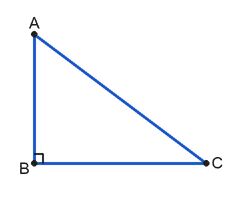
    A triangle ABC is right angled at B; find the value of sec⁡A⋅cosec⁡C−tan⁡A⋅cot⁡Csin⁡B\dfrac{\sec A \cdot \operatorname{cosec} C - \tan A \cdot \cot C}{\sin B}
    Class 10 Maths Trigonometrical Identities

    Easy
    3 marks
  67. 67

    Question 67

    Find (in each case, given below) the value of x, if :

    (i) sin x = sin 60° cos 30° + cos 60° sin 30°

    (ii) cos x = cos 60° cos 30° – sin 60° sin 30°

    (iii) tan⁡x=tan⁡60∘−tan⁡30∘1+tan⁡60∘tan⁡30∘\tan x = \dfrac{\tan 60^\circ - \tan 30^\circ}{1 + \tan 60^\circ \tan 30^\circ}

    (iv) sin 3x = 2 sin 30° cos 30°

    (v) cos (2x – 6°) = cos² 30° – cos² 60°

    Easy
    3 marks
  68. 68

    Question 68

    In each case, given below, find the value of angle A, where 0° ≤ A ≤ 90°.

    (i) sin (90° – 3A) · cosec 42° = 1

    (ii) cos (90° – A) · sec 77° = 1

    Easy
    3 marks
  69. 69

    Question 69

    Prove that : cos⁡(90∘−θ)cos⁡θcot⁡θ=1−cos⁡2θ\dfrac{\cos(90^\circ - \theta)\cos \theta}{\cot \theta} = 1 - \cos^2 \theta

    Easy
    3 marks
  70. 70

    Question 70

    Evaluate : sin⁡35∘cos⁡55∘+cos⁡35∘sin⁡55∘cosec⁡210∘−tan⁡280∘\dfrac{\sin 35^\circ \cos 55^\circ + \cos 35^\circ \sin 55^\circ}{\operatorname{cosec}^2 10^\circ - \tan^2 80^\circ}

    Easy
    3 marks
  71. 71

    Question 71

    Evaluate : sin⁡234∘+sin⁡256∘+2tan⁡18∘tan⁡72∘−cot⁡230∘\sin^2 34^\circ + \sin^2 56^\circ + 2\tan 18^\circ \tan 72^\circ - \cot^2 30^\circ

    Easy
    3 marks
  72. 72

    Question 72

    Evaluate : cosec⁡257∘−tan⁡233∘+cos⁡44∘cosec⁡46∘−2cos⁡45∘−tan⁡260∘\operatorname{cosec}^2 57^\circ - \tan^2 33^\circ + \cos 44^\circ \operatorname{cosec} 46^\circ - \sqrt{2}\cos 45^\circ - \tan^2 60^\circ

    Easy
    3 marks
  73. 73

    Question 73

    If 2sin⁡θ=32\sin \theta = \sqrt{3} ; then :

    MCQEasy
    1 mark
  74. 74

    Question 74

    If cos 62° 40' = x, the value of 1 + sin² 27°20' is :

    MCQEasy
    1 mark
  75. 75

    Question 75

    sin θ = 0·5 implies tan θ + cot θ is equal to :

    MCQEasy
    1 mark
  76. 76

    Question 76

    If cos 63° 36' = 0·4446, the value of sin 26° 24' is :

    MCQEasy
    1 mark
  77. 77

    Question 77

    Use tables to find sine of :

    (i) 21° (ii) 34° 42' (iii) 47° 32' (iv) 62° 57'

    Easy
    3 marks
  78. 78

    Question 78

    Use tables to find cosine of :

    (i) 2° 4' (ii) 8° 12' (iii) 26° 32' (iv) 65° 41'

    Easy
    3 marks
  79. 79

    Question 79

    Use trigonometrical tables to find tangent of :

    (i) 37° (ii) 42° 18'

    Easy
    3 marks
  80. 80

    Question 80

    Use tables to find the acute angle θ, if the value of sin θ is :

    (i) 0·4848 (ii) 0·3827

    Easy
    3 marks
  81. 81

    Question 81

    Use tables to find the acute angle θ, if the value of cos θ is :

    (i) 0·9848 (ii) 0·9574

    Easy
    3 marks
  82. 82

    Question 82

    Use tables to find the acute angle θ, if the value of tan θ is :

    (i) 0·2419 (ii) 0·4741

    Easy
    3 marks
  83. 83

    Question 83

    For the given figure, which of the following conditions is true :

    Class 10 Maths Trigonometrical Identities

    MCQEasy
    1 mark
  84. 84

    Question 84

    If sin⁡A=45\sin A = \dfrac{4}{5}, the value of 1−cos⁡(90∘−A)1+cos⁡(90∘−A)\sqrt{\dfrac{1 - \cos(90^\circ - A)}{1 + \cos(90^\circ - A)}} is :

    MCQEasy
    1 mark
  85. 85

    Question 85

    (1+tan⁡2A)×cos⁡2A−1(1 + \tan^2 A) \times \cos^2 A - 1 is :

    MCQEasy
    1 mark
  86. 86

    Question 86

    sin⁡Atan⁡A1−cos⁡2A\dfrac{\sin A \tan A}{1 - \cos^2 A} is equal to :

    MCQEasy
    1 mark
  87. 87

    Question 87

    For acute angles α and β, if α > β, then :

    A : cos α > cos β B : tan α > tan β

    C : sin α > sin β D : cot α > cot β

    Which of the above statement/statements is/are true:

    MCQEasy
    1 mark
  88. 88

    Question 88

    If M = x cos A + y sin A and N = x sin A – y cos A, then M² + N² is :

    MCQEasy
    1 mark
  89. 89

    Question 89

    tan⁡60∘−tan⁡30∘1+tan⁡60∘tan⁡30∘\dfrac{\tan 60^\circ - \tan 30^\circ}{1 + \tan 60^\circ \tan 30^\circ} is equal to :

    MCQEasy
    1 mark
  90. 90

    Question 90

    3sin⁡47∘cos⁡43∘−tan⁡50∘cot⁡40∘−2sin⁡245∘3\dfrac{\sin 47^\circ}{\cos 43^\circ} - \dfrac{\tan 50^\circ}{\cot 40^\circ} - 2\sin^2 45^\circ is equal to:

    MCQEasy
    1 mark
  91. 91

    Question 91

    If sin 2x = 2 sin 45° cos 45°; the value of x is :

    MCQEasy
    1 mark
  92. 92

    Question 92

    For acute angle θ; sec⁡2θ=1−tan⁡2θ\sec^2 \theta = 1 - \tan^2 \theta.

    Assertion (A) : sec⁡2θ=1−tan⁡2θ\sec^2 \theta = 1 - \tan^2 \theta is not a trigonometric identity.

    Reason (R) : For an acute angle θ, the trigonometric equation is an identity, if it is satisfied for every value of angle θ.

    MCQEasy
    1 mark
  93. 93

    Question 93

    (1+tan⁡2A)(1−sin⁡A)(1+sin⁡A)(1 + \tan^2 A)(1 - \sin A)(1 + \sin A)

    Assertion (A) : The value of given trigonometric expression is 0.

    Reason (R) : The given expression is equal to sec⁡2A⋅cos⁡2A\sec^2 A \cdot \cos^2 A.

    MCQEasy
    1 mark
  94. 94

    Question 94

    cos⁡A=32\cos A = \dfrac{\sqrt{3}}{2} and sin⁡B=12\sin B = \dfrac{1}{2}

    Assertion (A) : tan⁡(A+B)=3\tan(A + B) = \sqrt{3}

    Reason (R) : cos⁡A=32⇒A=30∘\cos A = \dfrac{\sqrt{3}}{2} \Rightarrow A = 30^\circ; sin⁡B=12⇒B=30∘\sin B = \dfrac{1}{2} \Rightarrow B = 30^\circ

    MCQEasy
    1 mark
  95. 95

    Question 95

    x=(cosec⁡A+cot⁡A)(1−cos⁡A)x = (\operatorname{cosec} A + \cot A)(1 - \cos A).

    Assertion (A) : x = sin A.

    Reason (R) : x=(1sin⁡A+cos⁡Asin⁡A)(1−cos⁡A)=sin⁡2Asin⁡A=sin⁡Ax = \left(\dfrac{1}{\sin A} + \dfrac{\cos A}{\sin A}\right)(1 - \cos A) = \dfrac{\sin^2 A}{\sin A} = \sin A

    MCQEasy
    1 mark
  96. 96

    Question 96

    1−sin⁡Acos⁡A=sec⁡A−tan⁡A\dfrac{1 - \sin A}{\cos A} = \sec A - \tan A.

    Statement (1) : 1−sin⁡Acos⁡A=sec⁡A−tan⁡A⇒1+sin⁡Acos⁡A=sec⁡A+tan⁡A\dfrac{1 - \sin A}{\cos A} = \sec A - \tan A \Rightarrow \dfrac{1 + \sin A}{\cos A} = \sec A + \tan A

    Statement (2) : 1−sin⁡Acos⁡A−1+sin⁡Acos⁡A=2sec⁡A\dfrac{1 - \sin A}{\cos A} - \dfrac{1 + \sin A}{\cos A} = 2\sec A

    MCQEasy
    1 mark
  97. 97

    Question 97

    cos⁡2θ+11+cot⁡2θ=x\cos^2 \theta + \dfrac{1}{1 + \cot^2 \theta} = x.

    Statement (1) : x = 1.

    Statement (2) : x=cos⁡2θ+1cosec⁡2θ=cos⁡2θ+sin⁡2θx = \cos^2 \theta + \dfrac{1}{\operatorname{cosec}^2 \theta} = \cos^2 \theta + \sin^2 \theta

    MCQEasy
    1 mark
  98. 98

    Question 98

    sin⁡2θcos⁡2θ−1cos⁡2θ=x\dfrac{\sin^2 \theta}{\cos^2 \theta} - \dfrac{1}{\cos^2 \theta} = x.

    Statement (1) : x = 1.

    Statement (2) : x=sin⁡2θ−1cos⁡2θ=−cos⁡2θcos⁡2θ=−1x = \dfrac{\sin^2 \theta - 1}{\cos^2 \theta} = \dfrac{-\cos^2 \theta}{\cos^2 \theta} = -1

    MCQEasy
    1 mark
  99. 99

    Question 99

    sin A = cos A and tan⁡2A+cot⁡2A+2\tan^2 A + \cot^2 A + 2.

    Statement (1) : A = 45°, tan⁡2A+cot⁡2A+2=4\tan^2 A + \cot^2 A + 2 = 4

    Statement (2) : sin A = cos A ⇒ A = 45°

    MCQEasy
    1 mark
  100. 100

    Question 100

    Prove that : 1cos⁡A+sin⁡A+1cos⁡A−sin⁡A=2cos⁡A2cos⁡2A−1\dfrac{1}{\cos A + \sin A} + \dfrac{1}{\cos A - \sin A} = \dfrac{2\cos A}{2\cos^2 A - 1}

    Easy
    3 marks
  101. 101

    Question 101

    Prove that : 1−sin⁡2A1+cos⁡A=cos⁡A1 - \dfrac{\sin^2 A}{1 + \cos A} = \cos A

    Easy
    3 marks
  102. 102

    Question 102

    Prove that : cos⁡A1+sin⁡A+tan⁡A=sec⁡A\dfrac{\cos A}{1 + \sin A} + \tan A = \sec A

    Easy
    3 marks
  103. 103

    Question 103

    Prove that : sin⁡A1−cos⁡A−cot⁡A=cosec⁡A\dfrac{\sin A}{1 - \cos A} - \cot A = \operatorname{cosec} A

    Easy
    3 marks
  104. 104

    Question 104

    Prove that : 1−cos⁡A1+cos⁡A=sin⁡A1+cos⁡A\sqrt{\dfrac{1 - \cos A}{1 + \cos A}} = \dfrac{\sin A}{1 + \cos A}

    Easy
    3 marks
  105. 105

    Question 105

    Prove that : 1+(sec⁡A−tan⁡A)2cosec⁡A(sec⁡A−tan⁡A)=2tan⁡A\dfrac{1 + (\sec A - \tan A)^2}{\operatorname{cosec} A(\sec A - \tan A)} = 2\tan A

    Medium
    3 marks
  106. 106

    Question 106

    Prove that : (cosec⁡A−cot⁡A)2+1sec⁡A(cosec⁡A−cot⁡A)=2cot⁡A\dfrac{(\operatorname{cosec} A - \cot A)^2 + 1}{\sec A(\operatorname{cosec} A - \cot A)} = 2\cot A

    Medium
    3 marks
  107. 107

    Question 107

    Prove that : cot⁡2A(sec⁡A−11+sin⁡A)+sec⁡2A(sin⁡A−11+sec⁡A)=0\cot^2 A\left(\dfrac{\sec A - 1}{1 + \sin A}\right) + \sec^2 A\left(\dfrac{\sin A - 1}{1 + \sec A}\right) = 0

    Medium
    3 marks
  108. 108

    Question 108

    Prove that : (1−2sin⁡2A)2cos⁡4A−sin⁡4A=2cos⁡2A−1\dfrac{(1 - 2\sin^2 A)^2}{\cos^4 A - \sin^4 A} = 2\cos^2 A - 1

    Easy
    3 marks
  109. 109

    Question 109

    Prove that : sec⁡4A(1−sin⁡4A)−2tan⁡2A=1\sec^4 A(1 - \sin^4 A) - 2\tan^2 A = 1

    Easy
    3 marks
  110. 110

    Question 110

    Prove that : (1+tan⁡A+sec⁡A)(1+cot⁡A−cosec⁡A)=2(1 + \tan A + \sec A)(1 + \cot A - \operatorname{cosec} A) = 2

    Medium
    3 marks
  111. 111

    Question 111

    If x = a cos θ and y = b cot θ, show that : a2x2−b2y2=1\dfrac{a^2}{x^2} - \dfrac{b^2}{y^2} = 1

    Easy
    3 marks
  112. 112

    Question 112

    If sec A + tan A = p, show that : sin⁡A=p2−1p2+1\sin A = \dfrac{p^2 - 1}{p^2 + 1}

    Medium
    3 marks
  113. 113

    Question 113

    (i) If 2 sin A – 1 = 0, show that : sin 3A = 3 sin A – 4 sin³ A

    (ii) If 4 cos² A – 3 = 0, show that : cos 3A = 4 cos³ A – 3 cos A

    Easy
    3 marks
  114. 114

    Question 114

    Evaluate :

    (i) 2(tan⁡35∘cot⁡55∘)2+(cot⁡55∘tan⁡35∘)2−3(sec⁡40∘cosec⁡50∘)2\left(\dfrac{\tan 35^\circ}{\cot 55^\circ}\right)^2 + \left(\dfrac{\cot 55^\circ}{\tan 35^\circ}\right)^2 - 3\left(\dfrac{\sec 40^\circ}{\operatorname{cosec} 50^\circ}\right)

    (ii) sec⁡26∘sin⁡64∘+cosec⁡33∘sec⁡57∘\sec 26^\circ \sin 64^\circ + \dfrac{\operatorname{cosec} 33^\circ}{\sec 57^\circ}

    (iii) 5sin⁡66∘cos⁡24∘−2cot⁡85∘tan⁡5∘\dfrac{5\sin 66^\circ}{\cos 24^\circ} - \dfrac{2\cot 85^\circ}{\tan 5^\circ}

    (iv) 3 cos 80° cosec 10° + 2 cos 59° cosec 31°

    Easy
    3 marks
  115. 115

    Question 115

    Prove that :

    (i) tan (55° + x) = cot (35° – x)

    (ii) sec (70° – θ) = cosec (20° + θ)

    (iii) sin (28° + A) = cos (62° – A)

    (iv) 11+cos⁡(90∘−A)+11−cos⁡(90∘−A)=2cosec⁡2(90∘−A)\dfrac{1}{1 + \cos(90^\circ - A)} + \dfrac{1}{1 - \cos(90^\circ - A)} = 2\operatorname{cosec}^2(90^\circ - A)

    Easy
    3 marks
  116. 116

    Question 116

    If A and B are complementary angles, prove that :

    (i) cot B + cos B = sec A cos B (1 + sin B)

    (ii) cot A cot B – sin A cos B – cos A sin B = 0

    (iii) cosec² A + cosec² B = cosec² A cosec² B

    (iv) sin⁡A+sin⁡Bsin⁡A−sin⁡B+cos⁡B−cos⁡Acos⁡B+cos⁡A=22sin⁡2A−1\dfrac{\sin A + \sin B}{\sin A - \sin B} + \dfrac{\cos B - \cos A}{\cos B + \cos A} = \dfrac{2}{2\sin^2 A - 1}

    Medium
    3 marks
  117. 117

    Question 117

    Prove that : 1sin⁡A−cos⁡A−1sin⁡A+cos⁡A=2cos⁡A2sin⁡2A−1\dfrac{1}{\sin A - \cos A} - \dfrac{1}{\sin A + \cos A} = \dfrac{2\cos A}{2\sin^2 A - 1}

    Easy
    3 marks
  118. 118

    Question 118

    Prove that : cot⁡2Acosec⁡A−1−1=cosec⁡A\dfrac{\cot^2 A}{\operatorname{cosec} A - 1} - 1 = \operatorname{cosec} A

    Easy
    3 marks
  119. 119

    Question 119

    Prove that : cos⁡A1+sin⁡A=sec⁡A−tan⁡A\dfrac{\cos A}{1 + \sin A} = \sec A - \tan A

    Easy
    3 marks
  120. 120

    Question 120

    Prove that : cos⁡A(1+cot⁡A)+sin⁡A(1+tan⁡A)=sec⁡A+cosec⁡A\cos A(1 + \cot A) + \sin A(1 + \tan A) = \sec A + \operatorname{cosec} A

    Easy
    3 marks
  121. 121

    Question 121

    Prove that : sec⁡2A+cosec⁡2A=tan⁡A+cot⁡A\sqrt{\sec^2 A + \operatorname{cosec}^2 A} = \tan A + \cot A

    Easy
    3 marks
  122. 122

    Question 122

    Prove that : (sin⁡A+cos⁡A)(sec⁡A+cosec⁡A)=2+sec⁡Acosec⁡A(\sin A + \cos A)(\sec A + \operatorname{cosec} A) = 2 + \sec A\operatorname{cosec} A

    Easy
    3 marks
  123. 123

    Question 123

    Prove that : (tan⁡A+cot⁡A)×(cosec⁡A−sin⁡A)×(sec⁡A−cos⁡A)=1(\tan A + \cot A) \times (\operatorname{cosec} A - \sin A) \times (\sec A - \cos A) = 1

    Easy
    3 marks
  124. 124

    Question 124

    Prove that : cot⁡2A−cot⁡2B=cos⁡2A−cos⁡2Bsin⁡2Asin⁡2B=cosec⁡2A−cosec⁡2B\cot^2 A - \cot^2 B = \dfrac{\cos^2 A - \cos^2 B}{\sin^2 A \sin^2 B} = \operatorname{cosec}^2 A - \operatorname{cosec}^2 B

    Medium
    3 marks
  125. 125

    Question 125

    Prove that : cot⁡A−12−sec⁡2A=cot⁡A1+tan⁡A\dfrac{\cot A - 1}{2 - \sec^2 A} = \dfrac{\cot A}{1 + \tan A}

    Easy
    3 marks
  126. 126

    Question 126

    If 4 cos² A – 3 = 0 and 0° ≤ A ≤ 90°, then prove that :

    (i) sin 3A = 3 sin A – 4 sin³ A

    (ii) cos 3A = 4 cos³ A – 3 cos A

    Easy
    3 marks
  127. 127

    Question 127

    Find A, if 0° ≤ A ≤ 90° and :

    (i) 2 cos² A – 1 = 0

    (ii) sin 3A – 1 = 0

    (iii) 4 sin² A – 3 = 0

    (iv) cos² A – cos A = 0

    (v) 2 cos² A + cos A – 1 = 0

    Easy
    3 marks
  128. 128

    Question 128

    If 0° < A < 90°; find A, if :

    (i) cos⁡A1−sin⁡A+cos⁡A1+sin⁡A=4\dfrac{\cos A}{1 - \sin A} + \dfrac{\cos A}{1 + \sin A} = 4

    (ii) sin⁡Asec⁡A−1+sin⁡Asec⁡A+1=2\dfrac{\sin A}{\sec A - 1} + \dfrac{\sin A}{\sec A + 1} = 2

    Medium
    3 marks
  129. 129

    Question 129

    Prove that : (cosec⁡A−sin⁡A)(sec⁡A−cos⁡A)sec⁡2A=tan⁡A(\operatorname{cosec} A - \sin A)(\sec A - \cos A)\sec^2 A = \tan A

    Easy
    3 marks
  130. 130

    Question 130

    Prove that : (sin⁡θ+cos⁡θ)(tan⁡θ+cot⁡θ)=sec⁡θ+cosec⁡θ(\sin \theta + \cos \theta)(\tan \theta + \cot \theta) = \sec \theta + \operatorname{cosec} \theta

    Easy
    3 marks
  131. 131

    Question 131

    Evaluate without using trigonometric tables, sin⁡228∘+sin⁡262∘+tan⁡238∘−cot⁡252∘+14sec⁡230∘\sin^2 28^\circ + \sin^2 62^\circ + \tan^2 38^\circ - \cot^2 52^\circ + \dfrac{1}{4}\sec^2 30^\circ.

    Easy
    3 marks
Inside Ch 21

What Class 10 Maths Ch 21 covers

The sections of the chapter, in the order the book takes them. Every question above comes from one of these.

  1. 01Trigonometry
  2. 02Trigonometrical Ratios
  3. 03Relations Between Different Trigonometrical Ratios
  4. 04Trigonometric Identities
  5. 05Trigonometrical Ratios of Complementary Angles
  6. 06Using the Trigonometrical Tables
From the board papers

Ch 21 in past ICSE papers

The same chapter as the board has actually asked it. These are worded differently from the textbook exercise, which is the point of reading them.

  1. 1

    Board paper question 1

    Without using trigonometrical tables, evaluate:

    cosec⁡257∘−tan⁡233∘+cos⁡44∘cosec⁡46∘−2cos⁡45∘−tan⁡260∘\operatorname{cosec}^2 57^\circ - \tan^2 33^\circ + \cos 44^\circ \operatorname{cosec} 46^\circ - \sqrt{2}\cos 45^\circ - \tan^2 60^\circ
    MediumAsked 2016
    4 marks
    Solve with AI
    Written solution

    Solution:

    Concept: For complementary angles (two angles adding up to 90∘90^\circ), each ratio of one angle equals the co-ratio of the other: sin⁡(90∘−θ)=cos⁡θ\sin(90^\circ - \theta) = \cos \theta, cot⁡(90∘−θ)=tan⁡θ\cot(90^\circ - \theta) = \tan \theta, cosec⁡(90∘−θ)=sec⁡θ\operatorname{cosec}(90^\circ - \theta) = \sec \theta, and so on. The three basic identities are sin⁡2θ+cos⁡2θ=1\sin^2 \theta + \cos^2 \theta = 1, 1+tan⁡2θ=sec⁡2θ1 + \tan^2 \theta = \sec^2 \theta and 1+cot⁡2θ=cosec⁡2θ1 + \cot^2 \theta = \operatorname{cosec}^2 \theta.; we also need the standard values cos⁡45∘=12\cos 45^\circ = \dfrac{1}{\sqrt{2}} and tan⁡60∘=3\tan 60^\circ = \sqrt{3}.

    Step 1 — Change cosec 57° into a ratio of 33°.

    Since 57∘+33∘=90∘57^\circ + 33^\circ = 90^\circ, we write 57∘57^\circ as 90∘−33∘90^\circ - 33^\circ and use cosec⁡(90∘−θ)=sec⁡θ\operatorname{cosec}(90^\circ - \theta) = \sec \theta.

    cosec⁡57∘=cosec⁡(90∘−33∘)\operatorname{cosec} 57^\circ = \operatorname{cosec}(90^\circ - 33^\circ)

    =sec⁡33∘= \sec 33^\circ

    Step 2 — Simplify the first two terms.

    Now both terms use the same angle 33∘33^\circ, so we can use the identity sec⁡2θ−tan⁡2θ=1\sec^2 \theta - \tan^2 \theta = 1, which comes from 1+tan⁡2θ=sec⁡2θ1 + \tan^2 \theta = \sec^2 \theta.

    cosec⁡257∘−tan⁡233∘=sec⁡233∘−tan⁡233∘\operatorname{cosec}^2 57^\circ - \tan^2 33^\circ = \sec^2 33^\circ - \tan^2 33^\circ

    =1= 1

    Step 3 — Change sin 46° into a ratio of 44°.

    Since 44∘+46∘=90∘44^\circ + 46^\circ = 90^\circ, we write 46∘46^\circ as 90∘−44∘90^\circ - 44^\circ and use sin⁡(90∘−θ)=cos⁡θ\sin(90^\circ - \theta) = \cos \theta.

    sin⁡46∘=sin⁡(90∘−44∘)\sin 46^\circ = \sin(90^\circ - 44^\circ)

    =cos⁡44∘= \cos 44^\circ

    Step 4 — Simplify the third term.

    We write cosec⁡46∘\operatorname{cosec} 46^\circ as 1sin⁡46∘\dfrac{1}{\sin 46^\circ} and then replace sin⁡46∘\sin 46^\circ by cos⁡44∘\cos 44^\circ from Step 3.

    cos⁡44∘cosec⁡46∘=cos⁡44∘sin⁡46∘\cos 44^\circ \operatorname{cosec} 46^\circ = \dfrac{\cos 44^\circ}{\sin 46^\circ}

    =cos⁡44∘cos⁡44∘= \dfrac{\cos 44^\circ}{\cos 44^\circ}

    =1= 1

    Step 5 — Use the standard values.

    We put cos⁡45∘=12\cos 45^\circ = \dfrac{1}{\sqrt{2}} and tan⁡60∘=3\tan 60^\circ = \sqrt{3} in the last two terms.

    2cos⁡45∘=2×12\sqrt{2}\cos 45^\circ = \sqrt{2} \times \dfrac{1}{\sqrt{2}}

    =1= 1

    tan⁡260∘=(3)2\tan^2 60^\circ = (\sqrt{3})^2

    =3= 3

    Step 6 — Put the four values together.

    We replace each part of the expression by its value, keeping the signs exactly as given.

    cosec⁡257∘−tan⁡233∘+cos⁡44∘cosec⁡46∘−2cos⁡45∘−tan⁡260∘=1+1−1−3\operatorname{cosec}^2 57^\circ - \tan^2 33^\circ + \cos 44^\circ \operatorname{cosec} 46^\circ - \sqrt{2}\cos 45^\circ - \tan^2 60^\circ = 1 + 1 - 1 - 3

    =−2= -2

    Watch out: The last two terms are SUBTRACTED, so they give −1-1 and −3-3; a sign slip here gives 2 or 0 instead of −2-2.

    Therefore, the value of the expression is −2-2.

  2. 2

    Board paper question 2

    Prove that cos⁡A1+sin⁡A+tan⁡A=sec⁡A\frac{\cos A}{1 + \sin A} + \tan A = \sec A.

    MediumAsked 2016
    3 marks
    Solve with AI
    Written solution

    Solution:

    Concept: Every ratio can be written using only sin⁡θ\sin \theta and cos⁡θ\cos \theta: tan⁡θ=sin⁡θcos⁡θ\tan \theta = \dfrac{\sin \theta}{\cos \theta}, cot⁡θ=cos⁡θsin⁡θ\cot \theta = \dfrac{\cos \theta}{\sin \theta}, sec⁡θ=1cos⁡θ\sec \theta = \dfrac{1}{\cos \theta} and cosec⁡θ=1sin⁡θ\operatorname{cosec} \theta = \dfrac{1}{\sin \theta}, so any expression can be turned into sin and cos. We also use sin⁡2A+cos⁡2A=1\sin^2 A + \cos^2 A = 1.

    To prove: cos⁡A1+sin⁡A+tan⁡A=sec⁡A\dfrac{\cos A}{1 + \sin A} + \tan A = \sec A

    Method: We start from the left-hand side and change it, one step at a time, until it becomes the other side.

    LHS=cos⁡A1+sin⁡A+tan⁡A\text{LHS} = \dfrac{\cos A}{1 + \sin A} + \tan A

    Step 1 — Write tan A using sin A and cos A.

    We replace tan⁡A\tan A by sin⁡Acos⁡A\dfrac{\sin A}{\cos A}, so both terms are fractions in sin and cos.

    =cos⁡A1+sin⁡A+sin⁡Acos⁡A= \dfrac{\cos A}{1 + \sin A} + \dfrac{\sin A}{\cos A}

    Step 2 — Add the two fractions.

    The common denominator is cos⁡A(1+sin⁡A)\cos A(1 + \sin A), so we multiply each numerator by the other denominator.

    =cos⁡A⋅cos⁡A+sin⁡A(1+sin⁡A)cos⁡A(1+sin⁡A)= \dfrac{\cos A \cdot \cos A + \sin A(1 + \sin A)}{\cos A(1 + \sin A)}

    Step 3 — Multiply out the numerator.

    We expand cos⁡A⋅cos⁡A\cos A \cdot \cos A and sin⁡A(1+sin⁡A)\sin A(1 + \sin A).

    =cos⁡2A+sin⁡A+sin⁡2Acos⁡A(1+sin⁡A)= \dfrac{\cos^2 A + \sin A + \sin^2 A}{\cos A(1 + \sin A)}

    Step 4 — Use the identity sin²A + cos²A = 1.

    The numerator contains cos⁡2A+sin⁡2A\cos^2 A + \sin^2 A, which equals 1.

    =1+sin⁡Acos⁡A(1+sin⁡A)= \dfrac{1 + \sin A}{\cos A(1 + \sin A)}

    Step 5 — Cancel the common factor.

    Now (1+sin⁡A)(1 + \sin A) is a factor of both the numerator and the denominator, so it cancels.

    =1cos⁡A= \dfrac{1}{\cos A}

    Step 6 — Write the result as sec A.

    Since 1cos⁡A=sec⁡A\dfrac{1}{\cos A} = \sec A, the LHS has become the RHS.

    =sec⁡A= \sec A

    Watch out: Cancel only a common FACTOR of the whole numerator and the whole denominator, never a single term of a sum. Here (1+sin⁡A)(1 + \sin A) may cancel only after Step 4 has made the numerator exactly 1+sin⁡A1 + \sin A.

    Therefore, LHS = RHS, so the identity is proved.

  3. 3

    Board paper question 3

    Evaluate without using trigonometric tables,

    sin⁡228∘+sin⁡262∘+tan⁡238∘−cot⁡252∘+14sec⁡230∘\sin^2 28^\circ + \sin^2 62^\circ + \tan^2 38^\circ - \cot^2 52^\circ + \frac{1}{4}\sec^2 30^\circ

    MediumAsked 2017
    3 marks
    Solve with AI
    Written solution

    Solution:

    Concept: For complementary angles (two angles adding up to 90∘90^\circ), each ratio of one angle equals the co-ratio of the other: sin⁡(90∘−θ)=cos⁡θ\sin(90^\circ - \theta) = \cos \theta, cot⁡(90∘−θ)=tan⁡θ\cot(90^\circ - \theta) = \tan \theta, cosec⁡(90∘−θ)=sec⁡θ\operatorname{cosec}(90^\circ - \theta) = \sec \theta, and so on. We also use sin⁡2θ+cos⁡2θ=1\sin^2 \theta + \cos^2 \theta = 1 and the standard value sec⁡30∘=23\sec 30^\circ = \dfrac{2}{\sqrt{3}}.

    Step 1 — Change sin 62° into a ratio of 28°.

    Since 28∘+62∘=90∘28^\circ + 62^\circ = 90^\circ, we write 62∘62^\circ as 90∘−28∘90^\circ - 28^\circ and use sin⁡(90∘−θ)=cos⁡θ\sin(90^\circ - \theta) = \cos \theta.

    sin⁡62∘=sin⁡(90∘−28∘)\sin 62^\circ = \sin(90^\circ - 28^\circ)

    =cos⁡28∘= \cos 28^\circ

    Step 2 — Simplify the first two terms.

    Both terms now use 28∘28^\circ, so the identity sin⁡2θ+cos⁡2θ=1\sin^2 \theta + \cos^2 \theta = 1 applies.

    sin⁡228∘+sin⁡262∘=sin⁡228∘+cos⁡228∘\sin^2 28^\circ + \sin^2 62^\circ = \sin^2 28^\circ + \cos^2 28^\circ

    =1= 1

    Step 3 — Change cot 52° into a ratio of 38°.

    Since 38∘+52∘=90∘38^\circ + 52^\circ = 90^\circ, we write 52∘52^\circ as 90∘−38∘90^\circ - 38^\circ and use cot⁡(90∘−θ)=tan⁡θ\cot(90^\circ - \theta) = \tan \theta.

    cot⁡52∘=cot⁡(90∘−38∘)\cot 52^\circ = \cot(90^\circ - 38^\circ)

    =tan⁡38∘= \tan 38^\circ

    Step 4 — Simplify the next two terms.

    The two terms are now the same, and one is subtracted from the other.

    tan⁡238∘−cot⁡252∘=tan⁡238∘−tan⁡238∘\tan^2 38^\circ - \cot^2 52^\circ = \tan^2 38^\circ - \tan^2 38^\circ

    =0= 0

    Step 5 — Find the last term.

    We use the standard value sec⁡30∘=23\sec 30^\circ = \dfrac{2}{\sqrt{3}} and square it.

    14sec⁡230∘=14×(23)2\dfrac{1}{4}\sec^2 30^\circ = \dfrac{1}{4} \times \left(\dfrac{2}{\sqrt{3}}\right)^2

    =14×43= \dfrac{1}{4} \times \dfrac{4}{3}

    =13= \dfrac{1}{3}

    Step 6 — Add the three results.

    We put the values of Steps 2, 4 and 5 into the expression.

    sin⁡228∘+sin⁡262∘+tan⁡238∘−cot⁡252∘+14sec⁡230∘=1+0+13\sin^2 28^\circ + \sin^2 62^\circ + \tan^2 38^\circ - \cot^2 52^\circ + \dfrac{1}{4}\sec^2 30^\circ = 1 + 0 + \dfrac{1}{3}

    =43= \dfrac{4}{3}

    Watch out: sec⁡230∘\sec^2 30^\circ means (sec⁡30∘)2=43(\sec 30^\circ)^2 = \dfrac{4}{3}, not sec⁡900∘\sec 900^\circ or 2sec⁡30∘2 \sec 30^\circ.

    Therefore, the value of the expression is 43\dfrac{4}{3}.

  4. 4

    Board paper question 4

    Prove that

    sin⁡θ−2sin⁡3θ2cos⁡3θ−cos⁡θ=tan⁡θ\frac{\sin\theta - 2\sin^3\theta}{2\cos^3\theta - \cos\theta} = \tan\theta

    MediumAsked 2017
    3 marks
    Solve with AI
    Written solution

    Solution:

    Concept: Taking out a common factor turns a sum into a product, so that equal factors can cancel. We also use sin⁡2θ=1−cos⁡2θ\sin^2 \theta = 1 - \cos^2 \theta, which comes from sin⁡2θ+cos⁡2θ=1\sin^2 \theta + \cos^2 \theta = 1.

    To prove: sin⁡θ−2sin⁡3θ2cos⁡3θ−cos⁡θ=tan⁡θ\dfrac{\sin \theta - 2\sin^3 \theta}{2\cos^3 \theta - \cos \theta} = \tan \theta

    Method: We start from the left-hand side and change it, one step at a time, until it becomes the other side.

    LHS=sin⁡θ−2sin⁡3θ2cos⁡3θ−cos⁡θ\text{LHS} = \dfrac{\sin \theta - 2\sin^3 \theta}{2\cos^3 \theta - \cos \theta}

    Step 1 — Take out the common factors.

    Every term of the numerator contains sin⁡θ\sin \theta and every term of the denominator contains cos⁡θ\cos \theta, so we take these out.

    =sin⁡θ(1−2sin⁡2θ)cos⁡θ(2cos⁡2θ−1)= \dfrac{\sin \theta(1 - 2\sin^2 \theta)}{\cos \theta(2\cos^2 \theta - 1)}

    Step 2 — Write sin²θ in terms of cos²θ.

    To make the two brackets look alike, we replace sin⁡2θ\sin^2 \theta by 1−cos⁡2θ1 - \cos^2 \theta in the numerator.

    =sin⁡θ[1−2(1−cos⁡2θ)]cos⁡θ(2cos⁡2θ−1)= \dfrac{\sin \theta[1 - 2(1 - \cos^2 \theta)]}{\cos \theta(2\cos^2 \theta - 1)}

    Step 3 — Remove the inner bracket.

    We multiply −2-2 into (1−cos⁡2θ)(1 - \cos^2 \theta).

    =sin⁡θ(1−2+2cos⁡2θ)cos⁡θ(2cos⁡2θ−1)= \dfrac{\sin \theta(1 - 2 + 2\cos^2 \theta)}{\cos \theta(2\cos^2 \theta - 1)}

    Step 4 — Simplify the numerator's bracket.

    Since 1−2=−11 - 2 = -1, the bracket becomes 2cos⁡2θ−12\cos^2 \theta - 1, the same as the bracket below.

    =sin⁡θ(2cos⁡2θ−1)cos⁡θ(2cos⁡2θ−1)= \dfrac{\sin \theta(2\cos^2 \theta - 1)}{\cos \theta(2\cos^2 \theta - 1)}

    Step 5 — Cancel the common factor.

    The factor (2cos⁡2θ−1)(2\cos^2 \theta - 1) is in both the numerator and the denominator, so it cancels.

    =sin⁡θcos⁡θ= \dfrac{\sin \theta}{\cos \theta}

    Step 6 — Write the result as tan θ.

    Since sin⁡θcos⁡θ=tan⁡θ\dfrac{\sin \theta}{\cos \theta} = \tan \theta, the LHS has become the RHS.

    =tan⁡θ= \tan \theta

    Watch out: The identity holds only where 2cos⁡2θ−1≠02\cos^2 \theta - 1 \ne 0 (that is, θ≠45∘\theta \ne 45^\circ), because we cancel that factor.

    Therefore, LHS = RHS, so the identity is proved.

  5. 5

    Board paper question 5

    Prove that sec⁡2θ+cosec⁡2θ=tan⁡θ+cot⁡θ\sqrt{\sec^2\theta + \operatorname{cosec}^2\theta} = \tan\theta + \cot\theta

    MediumAsked 2018
    3 marks
    Solve with AI
    Written solution

    Solution:

    Concept: Use sec⁡2θ=1+tan⁡2θ\sec^2 \theta = 1 + \tan^2 \theta and cosec⁡2θ=1+cot⁡2θ\operatorname{cosec}^2 \theta = 1 + \cot^2 \theta, which turn the expression under the root into a perfect square, a2+2ab+b2=(a+b)2a^2 + 2ab + b^2 = (a + b)^2, because tan⁡θ×cot⁡θ=1\tan \theta \times \cot \theta = 1.

    To prove: sec⁡2θ+cosec⁡2θ=tan⁡θ+cot⁡θ\sqrt{\sec^2 \theta + \operatorname{cosec}^2 \theta} = \tan \theta + \cot \theta

    Method: We start from the left-hand side and change it, one step at a time, until it becomes the other side.

    LHS=sec⁡2θ+cosec⁡2θ\text{LHS} = \sqrt{\sec^2 \theta + \operatorname{cosec}^2 \theta}

    Step 1 — Replace the squares of sec and cosec.

    We use sec⁡2θ=1+tan⁡2θ\sec^2 \theta = 1 + \tan^2 \theta and cosec⁡2θ=1+cot⁡2θ\operatorname{cosec}^2 \theta = 1 + \cot^2 \theta.

    =(1+tan⁡2θ)+(1+cot⁡2θ)= \sqrt{(1 + \tan^2 \theta) + (1 + \cot^2 \theta)}

    Step 2 — Collect the numbers.

    The two 1's add to 2.

    =tan⁡2θ+2+cot⁡2θ= \sqrt{\tan^2 \theta + 2 + \cot^2 \theta}

    Step 3 — Write 2 as 2 tan θ cot θ.

    Because tan⁡θcot⁡θ=1\tan \theta \cot \theta = 1, we may write 2=2tan⁡θcot⁡θ2 = 2\tan \theta \cot \theta; this is the middle term of a perfect square.

    =tan⁡2θ+2tan⁡θcot⁡θ+cot⁡2θ= \sqrt{\tan^2 \theta + 2\tan \theta \cot \theta + \cot^2 \theta}

    Step 4 — Recognise the perfect square.

    With a=tan⁡θa = \tan \theta and b=cot⁡θb = \cot \theta, the expression is a2+2ab+b2=(a+b)2a^2 + 2ab + b^2 = (a + b)^2.

    =(tan⁡θ+cot⁡θ)2= \sqrt{(\tan \theta + \cot \theta)^2}

    Step 5 — Take the square root.

    For an acute angle θ\theta, tan⁡θ+cot⁡θ\tan \theta + \cot \theta is positive, so the square root is tan⁡θ+cot⁡θ\tan \theta + \cot \theta itself. This is the RHS.

    =tan⁡θ+cot⁡θ= \tan \theta + \cot \theta

    Watch out: x2=x\sqrt{x^2} = x only when x is positive; that is why we note that tan⁡θ+cot⁡θ>0\tan \theta + \cot \theta > 0 for an acute angle.

    Therefore, LHS = RHS, so the identity is proved.

  6. 6

    Board paper question 6

    Prove that (1+cot⁡θ−cosec⁡θ)(1+tan⁡θ+sec⁡θ)=2(1 + \cot\theta - \operatorname{cosec}\theta)(1 + \tan\theta + \sec\theta) = 2

    MediumAsked 2018
    4 marks
    Solve with AI
    Written solution

    Solution:

    Concept: Every ratio can be written using only sin⁡θ\sin \theta and cos⁡θ\cos \theta: tan⁡θ=sin⁡θcos⁡θ\tan \theta = \dfrac{\sin \theta}{\cos \theta}, cot⁡θ=cos⁡θsin⁡θ\cot \theta = \dfrac{\cos \theta}{\sin \theta}, sec⁡θ=1cos⁡θ\sec \theta = \dfrac{1}{\cos \theta} and cosec⁡θ=1sin⁡θ\operatorname{cosec} \theta = \dfrac{1}{\sin \theta}, so any expression can be turned into sin and cos. After that, the two numerators have the form (a−1)(a+1)=a2−1(a - 1)(a + 1) = a^2 - 1, with a=sin⁡θ+cos⁡θa = \sin \theta + \cos \theta.

    To prove: (1+cot⁡θ−cosec⁡θ)(1+tan⁡θ+sec⁡θ)=2(1 + \cot \theta - \operatorname{cosec} \theta)(1 + \tan \theta + \sec \theta) = 2

    Method: We start from the left-hand side and change it, one step at a time, until it becomes the other side.

    LHS=(1+cot⁡θ−cosec⁡θ)(1+tan⁡θ+sec⁡θ)\text{LHS} = (1 + \cot \theta - \operatorname{cosec} \theta)(1 + \tan \theta + \sec \theta)

    Step 1 — Write every ratio using sin θ and cos θ.

    We replace cot, cosec, tan and sec by their forms in sin and cos.

    =(1+cos⁡θsin⁡θ−1sin⁡θ)(1+sin⁡θcos⁡θ+1cos⁡θ)= \left(1 + \dfrac{\cos \theta}{\sin \theta} - \dfrac{1}{\sin \theta}\right)\left(1 + \dfrac{\sin \theta}{\cos \theta} + \dfrac{1}{\cos \theta}\right)

    Step 2 — Make each bracket one fraction.

    The first bracket has denominator sin⁡θ\sin \theta and the second has denominator cos⁡θ\cos \theta.

    =sin⁡θ+cos⁡θ−1sin⁡θ×cos⁡θ+sin⁡θ+1cos⁡θ= \dfrac{\sin \theta + \cos \theta - 1}{\sin \theta} \times \dfrac{\cos \theta + \sin \theta + 1}{\cos \theta}

    Step 3 — Multiply and group.

    We multiply the two fractions and keep sin⁡θ+cos⁡θ\sin \theta + \cos \theta together as one quantity.

    =[(sin⁡θ+cos⁡θ)−1][(sin⁡θ+cos⁡θ)+1]sin⁡θcos⁡θ= \dfrac{[(\sin \theta + \cos \theta) - 1][(\sin \theta + \cos \theta) + 1]}{\sin \theta \cos \theta}

    Step 4 — Use the difference of two squares.

    The numerator has the form (a−1)(a+1)(a - 1)(a + 1), and this product equals a2−1a^2 - 1.

    =(sin⁡θ+cos⁡θ)2−1sin⁡θcos⁡θ= \dfrac{(\sin \theta + \cos \theta)^2 - 1}{\sin \theta \cos \theta}

    Step 5 — Expand the square.

    We use (a+b)2=a2+2ab+b2(a + b)^2 = a^2 + 2ab + b^2 on (sin⁡θ+cos⁡θ)2(\sin \theta + \cos \theta)^2.

    =sin⁡2θ+2sin⁡θcos⁡θ+cos⁡2θ−1sin⁡θcos⁡θ= \dfrac{\sin^2 \theta + 2\sin \theta \cos \theta + \cos^2 \theta - 1}{\sin \theta \cos \theta}

    Step 6 — Use sin²θ + cos²θ = 1.

    The numerator contains sin⁡2θ+cos⁡2θ\sin^2 \theta + \cos^2 \theta, which equals 1.

    =1+2sin⁡θcos⁡θ−1sin⁡θcos⁡θ= \dfrac{1 + 2\sin \theta \cos \theta - 1}{\sin \theta \cos \theta}

    Step 7 — Simplify the numerator.

    The +1+1 and −1-1 cancel.

    =2sin⁡θcos⁡θsin⁡θcos⁡θ= \dfrac{2\sin \theta \cos \theta}{\sin \theta \cos \theta}

    Step 8 — Cancel sin θ cos θ.

    The numerator is exactly twice the denominator, so the fraction equals 2, which is the RHS.

    =2= 2

    Watch out: Keep sin⁡θ+cos⁡θ\sin \theta + \cos \theta in a bracket in Step 3; multiplying out all nine terms works but is long and error-prone.

    Therefore, LHS = RHS, so the identity is proved.

All 22 board paper questions for this chapter, solved the same way.

Common questions

Class 10 Maths Ch 21 questions students ask

How many questions are there in Class 10 Maths Ch 21?

131 questions. Every one is solved step by step on this page.

Are these Class 10 Maths solutions free?

Yes. Every question and its full working is free to read, with no account needed.

Can I download the Class 10 Maths Ch 21 solutions as a PDF?

There is no PDF to download. Every solution is on this page instead, which means it is searchable, always the current syllabus, and readable on a phone. Use your browser's print option if you want it on paper.