
Question 305 marksMedium
(a) Define the term isomerism. State the main cause of isomerism.
(b) Draw the chain isomers of hexane ().
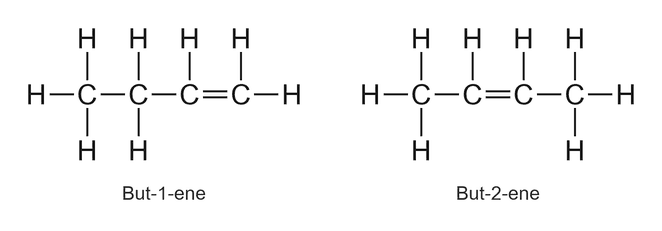
(c) Draw position isomers of butene ().
Confirming your payment
Sign up now and get 250 free tokens.
Organic Chemistry · Question 30 of 150
(a) Define the term isomerism. State the main cause of isomerism.
(b) Draw the chain isomers of hexane ().
(c) Draw position isomers of butene ().
Solution:
Concept: Isomers have the same molecular formula but different structural formulae, so their properties differ.
Step 1 — (a) Define isomerism and give its cause.
Isomerism is the existence of two or more compounds with the same molecular formula but different structural formulae (and so different properties).
Its main cause is the different way of linking the atoms: a different arrangement of the carbon chain, or a different position of the functional group or multiple bond.
Step 2 — (b) Draw the chain isomers of hexane, C₆H₁₄.
Six carbons can be arranged in five ways: hexane, 2-methylpentane, 3-methylpentane, 2,2-dimethylbutane and 2,3-dimethylbutane:
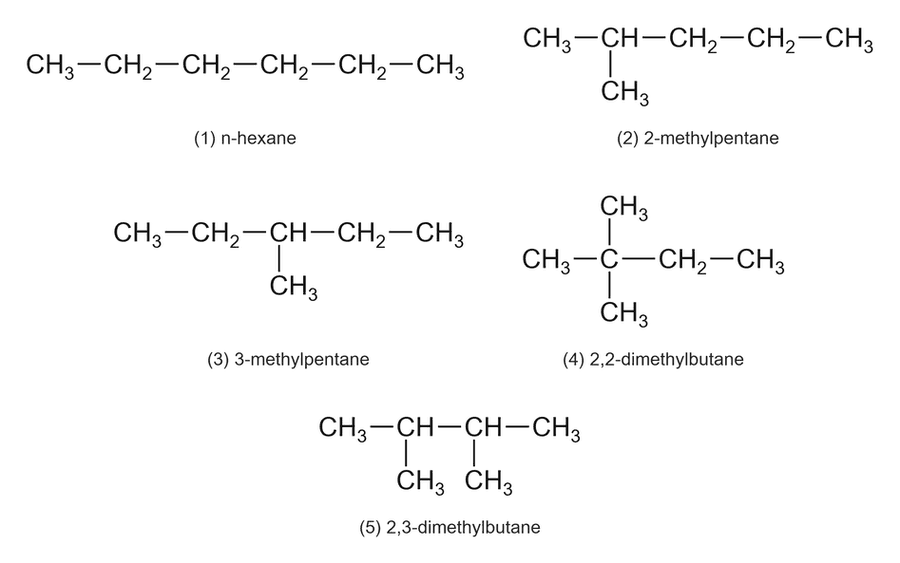
Each has 6 C and 14 H atoms; only the shape of the carbon skeleton changes.
Step 3 — (c) Draw the position isomers of butene, C₄H₈.
The double bond can be at C-1 or at C-2 of the four-carbon chain: but-1-ene, , and but-2-ene, :
Watch out: 2-methylpentane drawn from the other end is still 2-methylpentane, not "4-methylpentane"; do not count it twice.
Therefore, (a) isomerism is the same molecular formula with different structures, caused by different linking of atoms; (b) hexane has 5 chain isomers; (c) butene has the position isomers but-1-ene and but-2-ene.