
Question 511 markMCQAsked 2026Easy
Assertion (A): In the electrolysis of acidified water, the volume of hydrogen liberated is twice the volume of oxygen formed.
Reason (R): Water has hydrogen and oxygen in the ratio of 1:2 by volume.
Confirming your payment
Sign up now and get 250 free tokens.
Previous Year Questions · Question 51 of 60
Assertion (A): In the electrolysis of acidified water, the volume of hydrogen liberated is twice the volume of oxygen formed.
Reason (R): Water has hydrogen and oxygen in the ratio of 1:2 by volume.
(A) (A) is true but (R) is false.
(B) (A) is false but (R) is true.
(C) Both (A) and (R) are true and (R) is the correct explanation of (A).
(D) Both (A) and (R) are true, but (R) is not the correct explanation of (A).
Answer: (A) (A) is true but (R) is false.
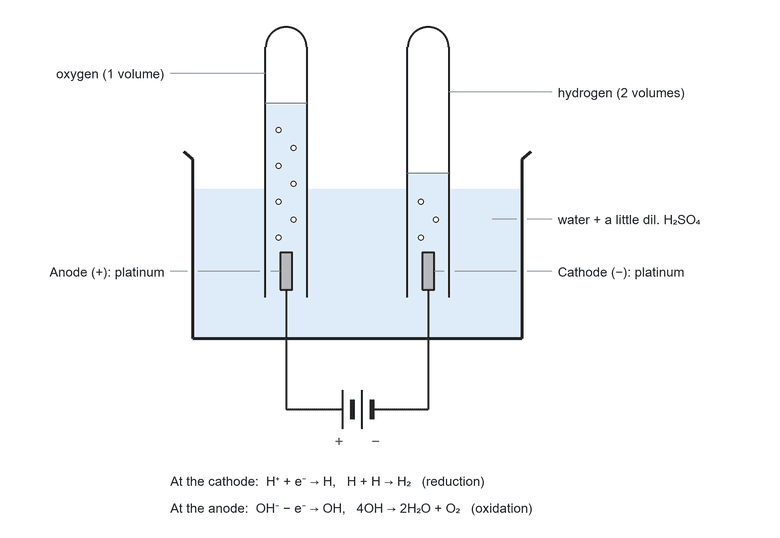
Concept: In an Assertion–Reason item, judge the Assertion (A) true or false, then the Reason (R), and only if both are true ask whether R tells why A is true. Water is H₂O: two volumes of hydrogen combine with one volume of oxygen, and electrolysis gives them back in the same ratio.
Step 1 — Judge the assertion.
Four electrons are given up at the anode to make one oxygen molecule, and the same four electrons make two hydrogen molecules at the cathode:
Equal volumes of gases hold equal numbers of molecules, so the volume of hydrogen is twice the volume of oxygen. A is true.
Step 2 — Judge the reason.
Water has hydrogen and oxygen in the ratio 2 : 1 by volume, not 1 : 2, so R as printed is false.
Watch out: Read the order of the ratio: 'hydrogen and oxygen in the ratio 1 : 2' puts oxygen as the larger, which is wrong.
Why the other options are wrong:
Therefore, the assertion is true but the reason is false, option (A).