Solution:
Concept: Each item of Column A is matched with one statement of Column B. Ionic compounds have high melting and boiling points, covalent ones low; count the shared pairs in a molecule; oxidation is the loss of electrons and reduction the gain of electrons.
Step 1 — (a) Match sodium chloride.
Sodium chloride is electrovalent; strong electrostatic forces between its ions give it high melting and boiling points, so (a) matches 2.
Step 2 — (b) Match methane.
Methane traps heat (infrared radiation) in the atmosphere, so it is a greenhouse gas: (b) matches 3. Methane also has low melting and boiling points, but that statement is needed for (c).
Step 3 — (c) Match hydrogen chloride gas.
Hydrogen chloride is a covalent compound made of molecules with weak forces between them, so it has low melting and boiling points: (c) matches 4.
Step 4 — (d) Match oxidation reaction.
In statement 5 zinc loses two electrons, which is oxidation:
Zn→Zn2++2e−
So (d) matches 5. Statement 6 shows sulphur gaining two electrons, which is reduction, so it is not used.
Step 5 — (e) Match water.
In water, oxygen shares one pair with each of the two hydrogen atoms, so water has two shared pairs of electrons: (e) matches 1.
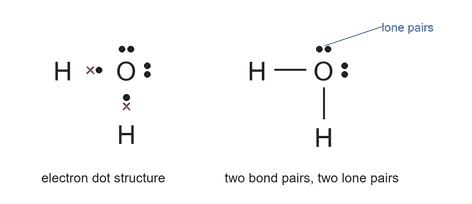
Watch out: Statement 5 is printed as 'Zn − 2e⁻ ⟶ Zn²⁺', which says the same thing as Zn → Zn²⁺ + 2e⁻: zinc loses two electrons.
Therefore, (a) → 2, (b) → 3, (c) → 4, (d) → 5, (e) → 1 (statement 6 is not used).
