
Question 71 markMCQAsked 2022Easy
The gas formed, when calcium bisulphite reacts with dilute :
Confirming your payment
Sign up now and get 250 free tokens.
Previous Year Questions · Question 7 of 28
The gas formed, when calcium bisulphite reacts with dilute :
(A) Sulphur trioxide
(B) Hydrogen
(C) Sulphur dioxide
(D) Hydrogen sulphide
Answer: (C) Sulphur dioxide
Concept: A dilute acid decomposes a sulphite or a bisulphite (hydrogen sulphite) and sets sulphur dioxide free.
Step 1 — Write the reaction.
Calcium bisulphite is calcium hydrogen sulphite. The dilute acid sets free sulphurous acid, which breaks up into water and sulphur dioxide.
Step 2 — Identify the gas.
The gas is colourless, smells of burning sulphur and turns acidified potassium dichromate paper from orange to green, so it is sulphur dioxide.
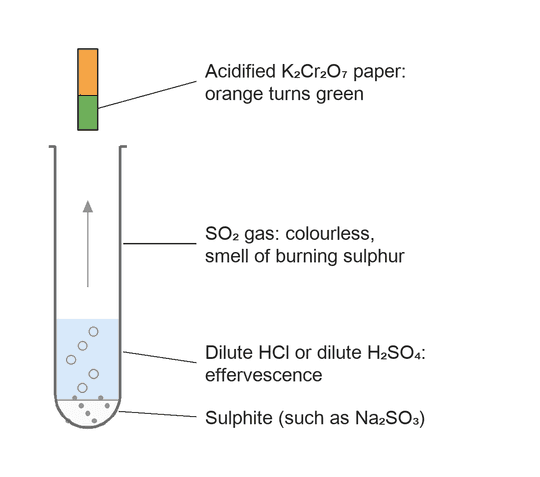
Note: In the laboratory this test is normally done with dilute HCl or dilute sulphuric acid, because nitric acid is an oxidising agent and can oxidise some of the sulphur dioxide to sulphate. The gas the reaction gives is still sulphur dioxide, as keyed.
Why the other options are wrong:
Therefore, the gas formed is sulphur dioxide, option (C).