
Question 443 marksMedium
Why are enzymes called biocatalysts? What is the effect of increase of temperature and substrate concentration on the activity of enzymes?
Confirming your payment
Sign up now and get 250 free tokens.
Enzymes · Question 44 of 59
Why are enzymes called biocatalysts? What is the effect of increase of temperature and substrate concentration on the activity of enzymes?
Solution:
Concept: Enzymes are catalysts made by living cells; their rate depends on temperature and substrate concentration.
Step 1 — What is asked: We must answer each part of the question in turn.
Step 2 — Biocatalysts: Enzymes speed up reactions by lowering the activation energy and remain unchanged at the end, so they are catalysts; they are made by living cells and work in them, so they are called biocatalysts.
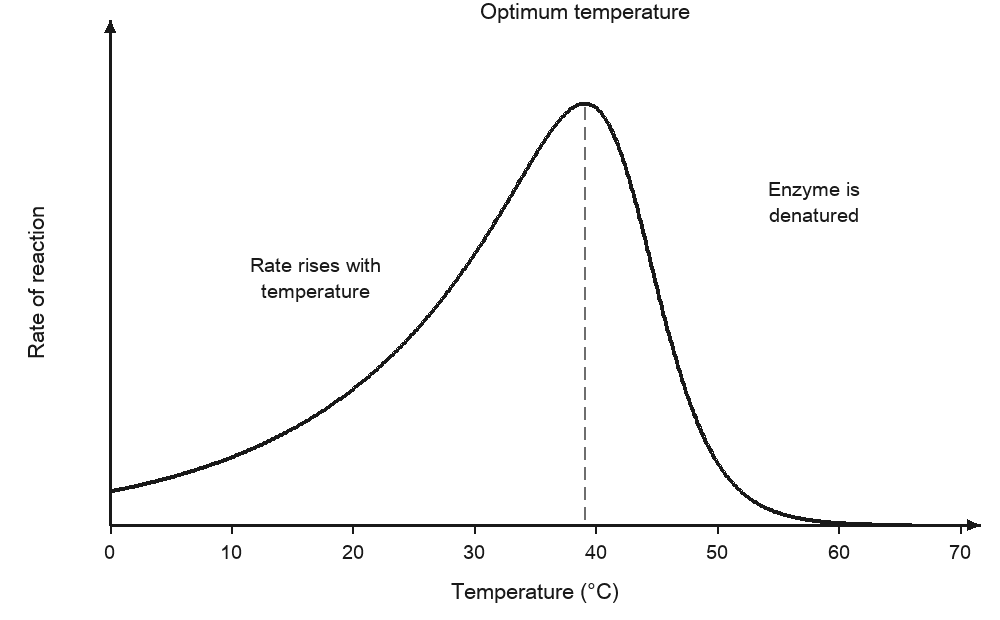
Step 3 — Temperature: The rate rises with temperature (roughly doubling per 10 °C) up to the optimum (about 37–40 °C for body enzymes); above it the enzyme is denatured and the rate falls sharply.
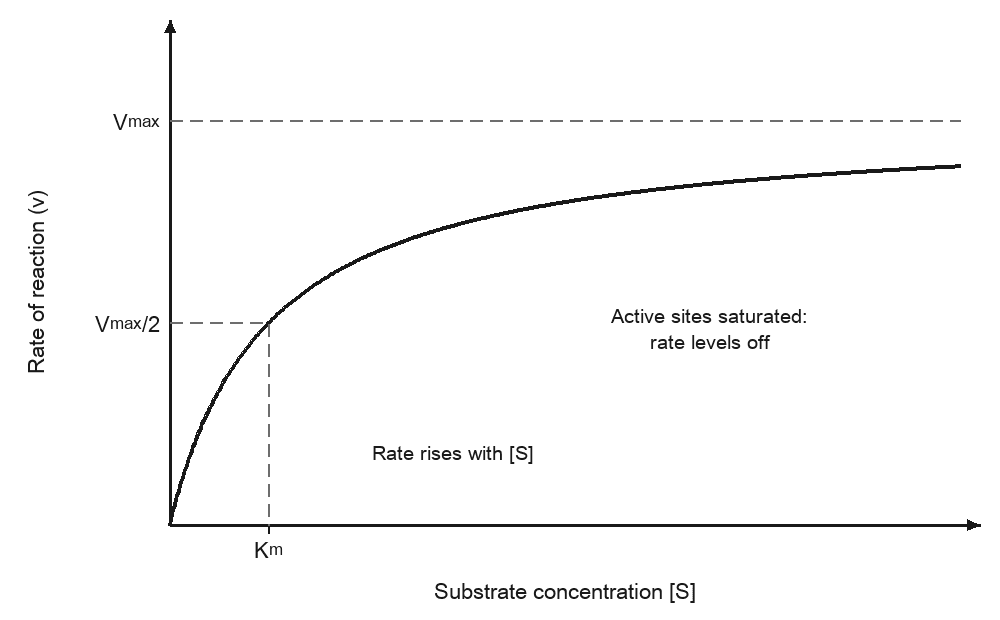
Step 4 — Substrate concentration: At constant enzyme concentration, the rate rises as substrate is added, then levels off at when all active sites are saturated.
Therefore, enzymes are biological catalysts; their activity rises with temperature up to an optimum and then falls, and rises with substrate concentration until saturation.