Solution:
Concept: An IUPAC name is built as locants + substituents (in alphabetical order) + root word + suffix. The root word counts the carbons of the longest chain that contains the functional group or multiple bond (meth 1, eth 2, prop 3, but 4, pent 5, hex 6, hept 7). The chain is numbered from the end that gives the lowest number to the functional group (a –CHO or –COOH carbon is always C-1), then to the double or triple bond, then to the branches. The suffix shows the family: -ane, -ene, -yne, -ol, -al, -oic acid.
Step 1 — Alkanes: (a), (b), (d), (h), (r).
For an alkane we find the longest chain, then number it so the branches get the lowest locants:
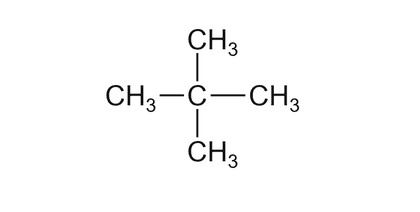
- (a) The central carbon carries four CH3 groups: the longest chain is 3 C with two methyls on C-2 → 2,2-dimethylpropane.
- (b) CH3−CH(CH3)−CH2−CH3: 4 C chain; from the branched end the methyl is on C-2 → 2-methylbutane.
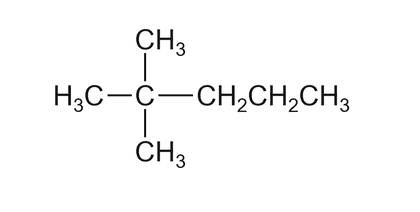
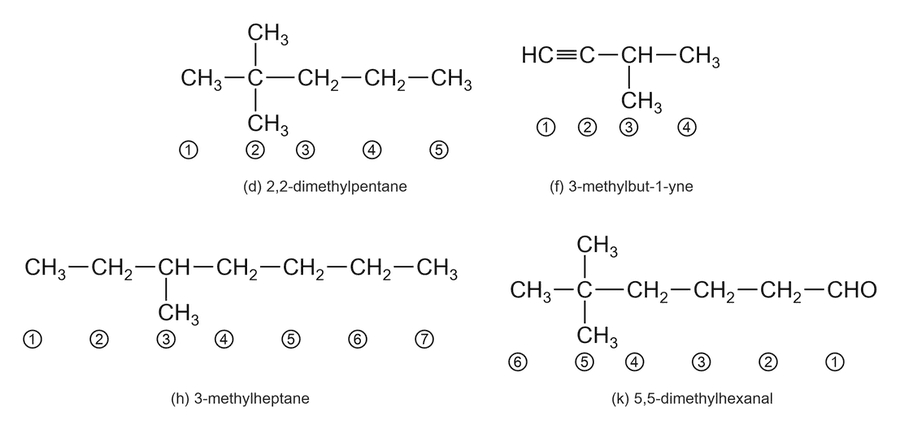
- (d) H3C−C(CH3)2−CH2CH2CH3: 5 C chain with both methyls on C-2 → 2,2-dimethylpentane.
- (h) The CH3 drawn on the first CH2 is part of the main chain: CH3−CH2−CH(CH3)−CH2−CH2−CH2−CH3 has 7 C with a methyl on C-3 → 3-methylheptane.
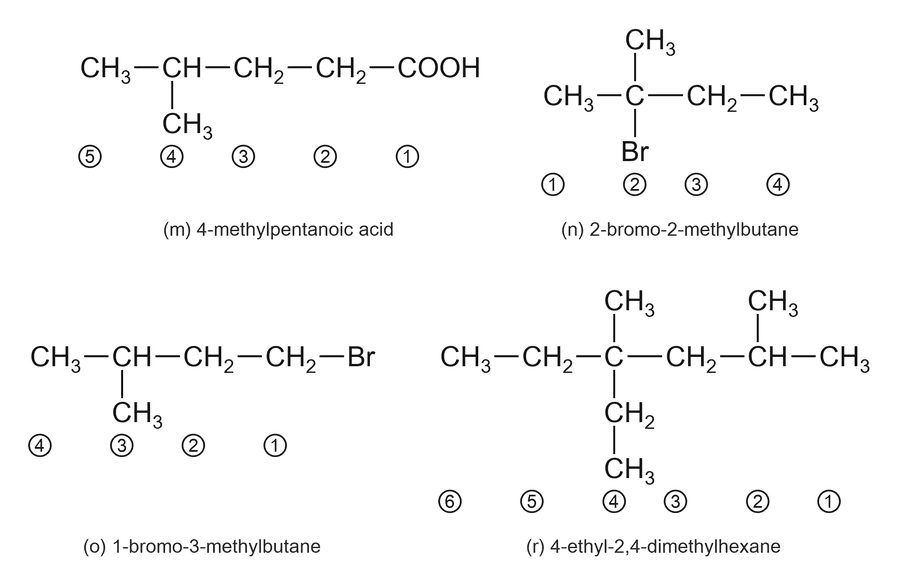
- (r) Longest chain 6 C. From the right the branches are at 2, 4, 4; from the left at 3, 3, 5. At the first point of difference 2 < 3, so we number from the right: ethyl on C-4, methyls on C-2 and C-4 → 4-ethyl-2,4-dimethylhexane (ethyl before methyl, alphabetically).
Step 2 — Alkenes and alkynes: (c), (e), (f), (i), (j), (p).
Here the chain must contain the multiple bond, and it is numbered to give that bond the lowest locant:
- (c) CH2=CH−CH3: 3 C, double bond from C-1 → propene (prop-1-ene).
- (e) CH3−C≡C−CH2CH3: 5 C, triple bond starts at C-2 → pent-2-yne.
- (f) HC≡C−CH(CH3)2: the chain through the triple bond has 4 C (the second CH3 is a branch); triple bond at C-1, methyl at C-3 → 3-methylbut-1-yne.
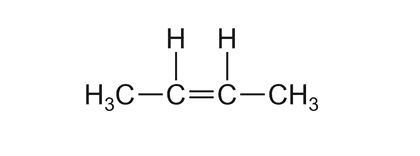
- (i) CH3−CH=CH−CH3: 4 C, double bond at C-2 → but-2-ene.
- (j) CH3−C≡C−CH2CH2CH2CH3: 7 C, triple bond at C-2 → hept-2-yne.
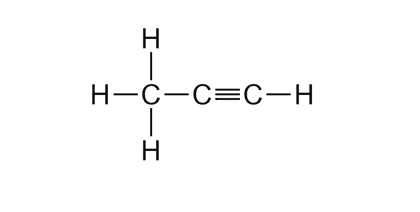
- (p) CH3−C≡CH: 3 C, triple bond from C-1 → propyne (prop-1-yne).
Step 3 — Halogen compounds: (g), (n), (o), (v).
A halogen is named as a prefix (chloro-, bromo-) with its locant, like a branch:
- (g) 5 C chain with Cl on two carbons: from the left the locants are 2, 3; from the right 3, 4. The lower set wins → 2,3-dichloropentane.
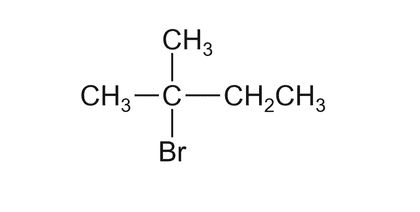
- (n) 4 C chain; Br and a methyl both on C-2; bromo comes before methyl → 2-bromo-2-methylbutane.
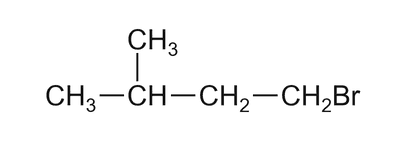
- (o) 4 C chain numbered from the CH2Br end: Br on C-1, methyl on C-3 → 1-bromo-3-methylbutane.
- (v) ClCH2−CH2Cl: 2 C, one Cl on each carbon → 1,2-dichloroethane.
Step 4 — Oxygen compounds: (k), (l), (m), (q), (s), (t), (u).
The functional group sets the suffix and the start of the numbering:
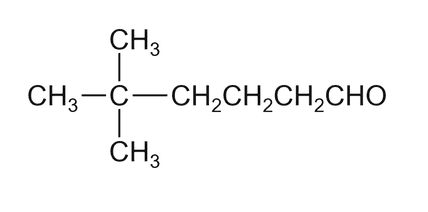
- (k) The –CHO carbon is C-1: OHC−CH2−CH2−CH2−C(CH3)2−CH3 has 6 C with two methyls on C-5 → 5,5-dimethylhexanal.
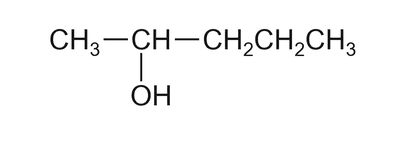
- (l) CH3−CH(OH)−CH2CH2CH3: 5 C, numbered from the end nearer –OH, so –OH is on C-2 → pentan-2-ol.
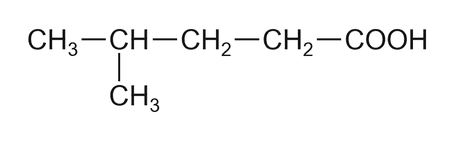
- (m) The –COOH carbon is C-1: HOOC−CH2−CH2−CH(CH3)−CH3 has 5 C with a methyl on C-4 → 4-methylpentanoic acid.
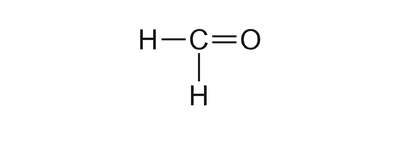
- (q) HCHO: a one-carbon aldehyde → methanal.
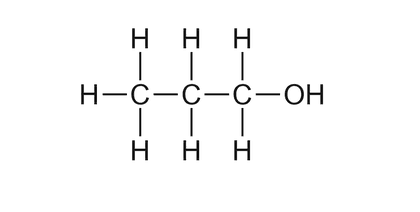
- (s) CH3CH2CH2OH: 3 C, –OH on C-1 → propan-1-ol.
- (t) CH3COOH: a 2 C carboxylic acid → ethanoic acid.
- (u) CH3CHO: a 2 C aldehyde → ethanal.
Watch out: A branch drawn at the end of a chain (as in (h)) is part of the main chain; always look for the longest chain before naming the branches.
Therefore, (a) 2,2-dimethylpropane, (b) 2-methylbutane, (c) propene, (d) 2,2-dimethylpentane, (e) pent-2-yne, (f) 3-methylbut-1-yne, (g) 2,3-dichloropentane, (h) 3-methylheptane, (i) but-2-ene, (j) hept-2-yne, (k) 5,5-dimethylhexanal, (l) pentan-2-ol, (m) 4-methylpentanoic acid, (n) 2-bromo-2-methylbutane, (o) 1-bromo-3-methylbutane, (p) propyne, (q) methanal, (r) 4-ethyl-2,4-dimethylhexane, (s) propan-1-ol, (t) ethanoic acid, (u) ethanal, (v) 1,2-dichloroethane.