Answer: (B) (2)
Concept: In an assertion–reason item, judge the assertion (A) and the reason (R) separately as true or false, and only then decide whether R correctly explains A.
Step 1 — Judge the assertion.
In a smaller atom the shared pair is closer to the nucleus and is attracted more strongly, so the electronegativity is greater: F (64 pm) has 4.0 against Cl (99 pm) with 3.0. A is true.
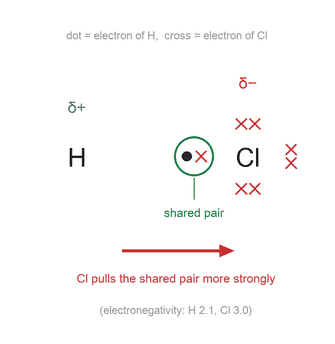
Step 2 — Judge the reason.
R is the definition of electronegativity, so R is true.
Step 3 — Decide whether R explains A.
A definition says what electronegativity is; it does not say why size affects it. So R is not the correct explanation of A, and the answer is code (2).
Watch out: A true definition is not automatically the explanation; ask whether R gives the cause of A.
Why the other options are wrong:
- (A) (1): R only defines electronegativity; it does not explain the effect of size.
- (C) (3): R is true, because it is the definition of electronegativity.
- (D) (4): A is true, because a smaller atom pulls the shared pair more strongly.
Therefore, both A and R are true but R does not explain A, code (2), option (B).
