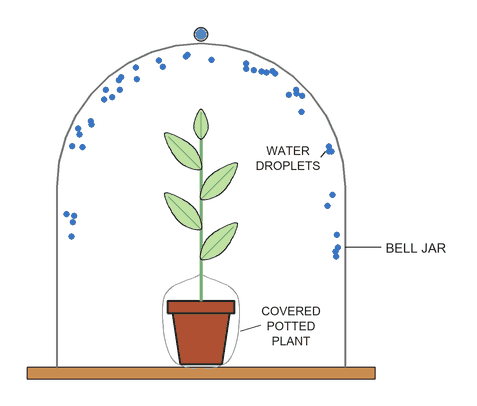
Solution:
Concept: The leaves give out water vapour, which condenses into droplets on the inner wall of the bell jar.
Step 1 — (a) Name the process.
Transpiration.
Step 2 — (b) Explain it.
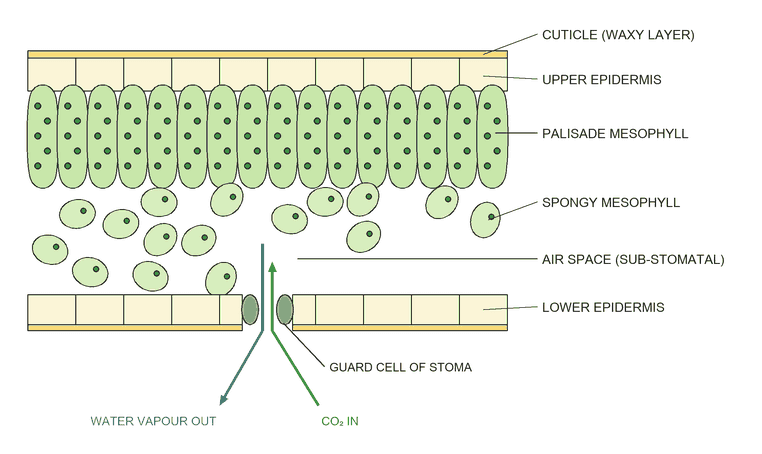
Water absorbed by the roots rises through the stem to the leaves. It evaporates from the wet surfaces of the mesophyll cells into the intercellular spaces, and the water vapour diffuses out through the stomata. Inside the closed jar the air becomes saturated, and the vapour condenses into droplets on the cool glass.
Step 3 — (c) Why the pot is covered.
The plastic sheet stops water vapour escaping from the pot and soil, so the droplets can come only from the plant.
Step 4 — (d) A control.
A similar bell jar in the same sunlight without a plant (only a covered pot of soil). No droplets appear, which shows the water came from the plant.
Step 5 — (e) Two benefits.
Any two: the cooling effect on hot days; the suction force for the ascent of sap and absorption of water; the distribution of water and mineral salts.
Step 6 — (f) Three adaptations to reduce it.
Any three: sunken stomata covered by hairs (Nerium); fewer stomata; thick cuticle (banyan); narrow, rolled or folded leaves; leaves changed into spines (cactus).
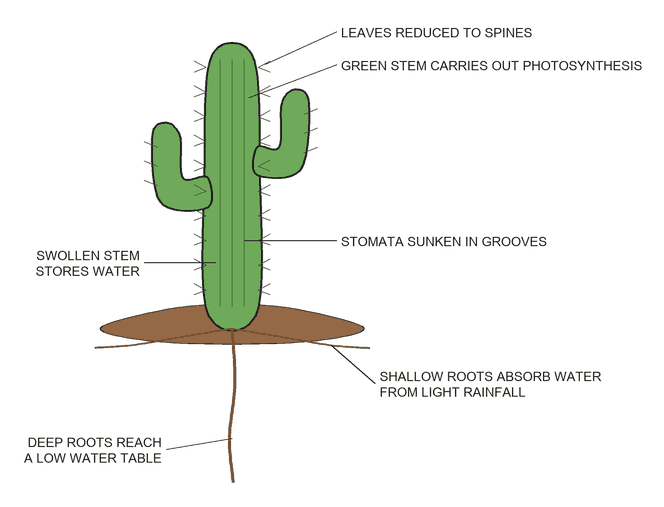
Therefore, (a) transpiration; (c) to keep out vapour from the soil; (d) a jar without a plant; (e) cooling and suction force; (f) sunken stomata, thick cuticle, leaves reduced to spines.