Solution:
Concept: Each part asks for a fixed set of names; give exactly the number asked for.
Step 1 — (a) Constituents of chromatin.
DNA and histones (the proteins round which DNA is wound).
Step 2 — (b) Kinds of nucleic acids.
DNA (deoxyribonucleic acid) and RNA (ribonucleic acid).
Step 3 — (c) Components of a nucleotide.
Pentose sugar, phosphate group and nitrogenous base.
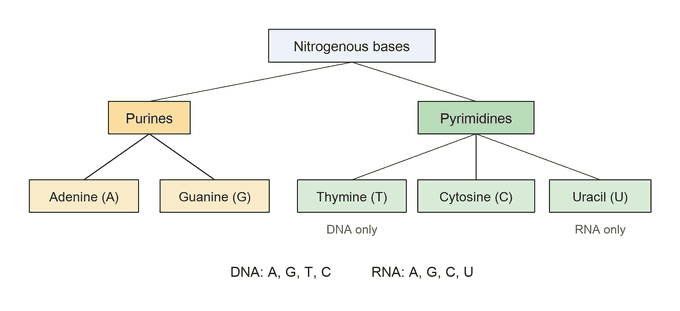
Step 4 — (d) Nitrogenous bases.
Adenine, guanine, cytosine and thymine, the four bases of DNA (RNA has uracil instead of thymine).
Step 5 — (e) Kinds of nitrogenous bases.
Purines (adenine, guanine) and pyrimidines (thymine, cytosine, uracil).
Step 6 — (f) Components of a nucleosome.
DNA and a core of histone proteins (the histone octamer).
Step 7 — (g) Kinds of cell division.
Mitosis (gives identical diploid cells) and meiosis (gives haploid gametes).
Step 8 — (h) Phases of karyokinesis.
Prophase, metaphase, anaphase and telophase, in this order.
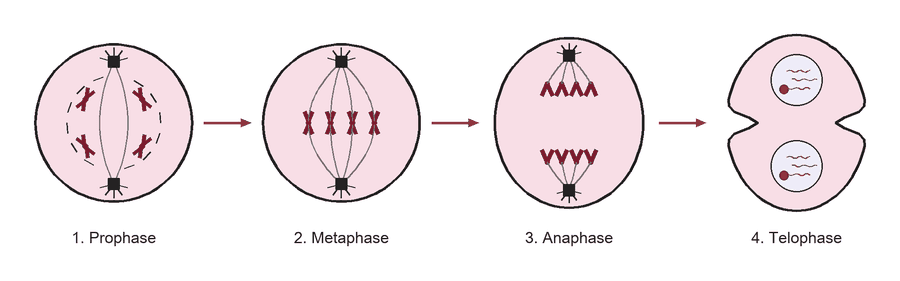
Step 9 — (i) Steps of mitosis.
Karyokinesis (division of the nucleus) followed by cytokinesis (division of the cytoplasm).
Step 10 — (j) Haploid cells of the human body.
Sperms and ova (eggs), made by meiosis, with 23 chromosomes each.
Therefore, the names are as listed in (a) to (j) above, for example (h) prophase, metaphase, anaphase and telophase, and (j) sperms and ova.
