Solution:
Concept: Biodegradable waste can be broken down by microorganisms; non-biodegradable waste cannot.
Step 1 — Part (i): identify the categories.
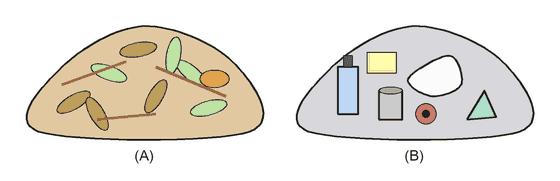
Heap (A) has leaves, twigs and peels, which microorganisms can break down: it is biodegradable waste. Heap (B) has bottles, cans, polythene and glass, which microorganisms cannot break down: it is non-biodegradable waste.
Step 2 — Part (ii): which can be composted.
Compost is made when microorganisms break waste down into manure. Only biodegradable waste can be broken down this way, so category (A) is used.
Step 3 — Part (iii): managing category (B).
Recycling of plastic, metal and glass into new articles, with incineration of the part that cannot be recycled. Reducing and reusing such articles also helps.

Therefore, (i) (A) biodegradable, (B) non-biodegradable; (ii) category (A); (iii) recycling.