Solution:
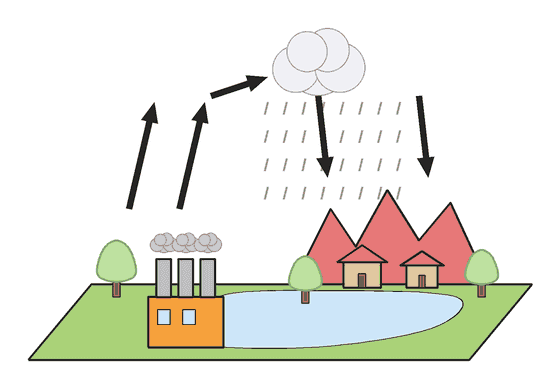
Concept: Gases from factory chimneys rise, dissolve in the clouds and come down as rain on the land, houses and water. This is acid rain.
Step 1 — Part (i): identify and define it.
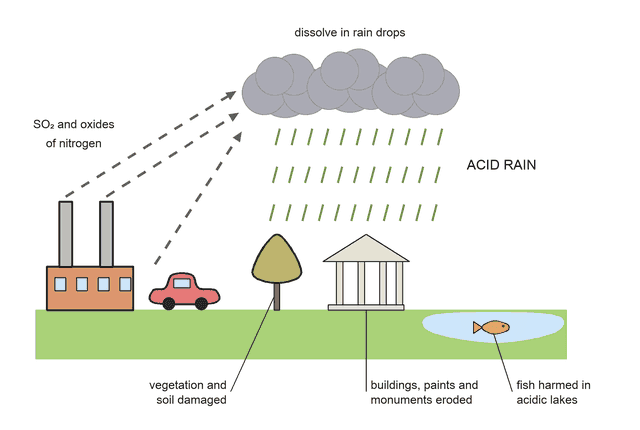
The pollution is acid rain. Gases such as sulphur dioxide (SO2) and oxides of nitrogen released into the air dissolve in the rain drops, so the rain falling on earth is far more acidic than clean rain (pH about 5.6).
Step 2 — Part (ii): four main sources.
The acid-forming gases come mainly from these four sources:
- Industries and factories
- Thermal power plants burning coal
- Automobiles (vehicle exhaust)
- Burning of fuels in homes and burning of garbage
All four burn fuel, and so they give out the acid-forming gases.
Step 3 — Part (iii): two harmful effects.
Acid rain harms living organisms in two main ways:
- Lakes and rivers become more acidic, so fish and other aquatic animals are harmed.
- Vegetation is damaged: leaves are injured and the soil is polluted.
Therefore, (i) acid rain; (ii) industries, thermal power plants, automobiles and burning of fuels; (iii) aquatic life harmed and vegetation damaged.