
Question 571 markMCQAsked 2026Medium
Metallic and non-metallic elements can both be extracted by electrolysis. Which of the following will undergo reduction at the electrode?
Confirming your payment
Sign up now and get 250 free tokens.
Previous Year Questions · Question 57 of 60
Metallic and non-metallic elements can both be extracted by electrolysis. Which of the following will undergo reduction at the electrode?
(A) Bromine
(B) Chlorine
(C) Hydrogen
(D) Oxygen
Answer: (C) Hydrogen
Concept: Oxidation is the loss of electrons and reduction is the gain of electrons. In electrolysis oxidation always happens at the anode and reduction at the cathode, at the same time. Hydrogen is formed when H⁺ ions gain electrons; the halogens and oxygen are formed when negative ions lose electrons.
Step 1 — Hydrogen (cathode).
Hydrogen is formed at the cathode when ions gain electrons, which is reduction:
Step 2 — The other three (anode).
Bromine and chlorine come from and ions, and oxygen from ions, by LOSS of electrons at the anode, which is oxidation.
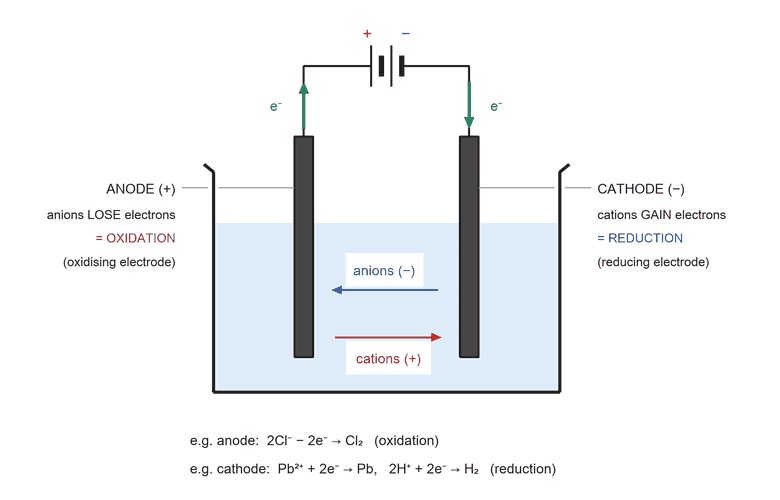
Watch out: Non-metals come from negative ions at the anode (oxidation); hydrogen is the exception, coming from H⁺ at the cathode.
Why the other options are wrong:
Therefore, the element formed by reduction is hydrogen, option (C).