Differentiate between the following pairs based on the criteria given in the brackets
Question 182 marksAsked 2023Medium
Differentiate between the following pairs based on the criteria given in the brackets:
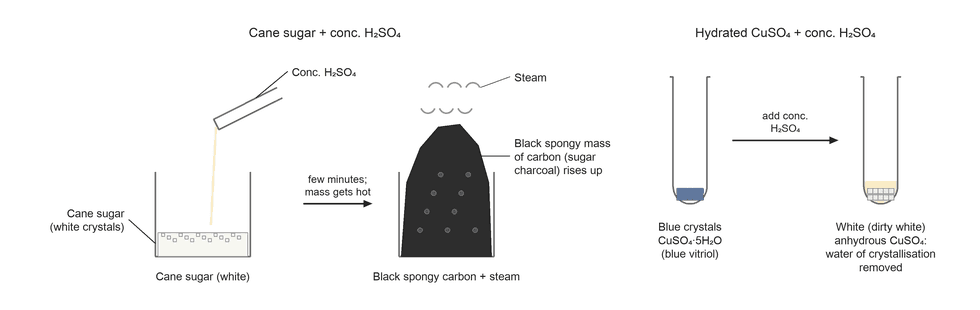
(a) Cane sugar and hydrated copper sulphate [using concentrated H2SO4]
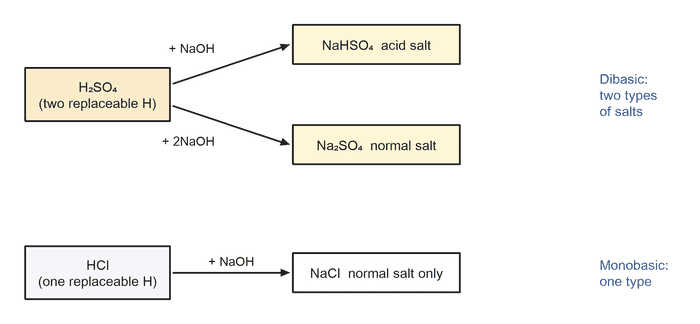
(b) Sulphuric acid and hydrochloric acid [type of salts formed]
Solution:
Concept: (a) Concentrated sulphuric acid is a dehydrating agent with both substances, but what is seen differs: sugar is charred to carbon, while copper sulphate only loses its water of crystallisation. (b) The basicity of an acid is the number of hydrogen ions that one molecule of it can give (the number of replaceable hydrogen atoms). Sulphuric acid has two, so it is dibasic; hydrochloric acid has one, so it is monobasic.
Step 1 — (a) Cane sugar with conc. sulphuric acid.
The acid removes all the hydrogen and oxygen of the sugar as water. The white sugar turns yellow, brown and then black, and a black, spongy mass of carbon (sugar charcoal) rises up; steam is given off and the mass gets hot.
Here the acid removes only the water of crystallisation. The blue crystals turn white (dirty white anhydrous copper sulphate); no black carbon is formed.
CuSO4⋅5H2Oconc. H2SO4CuSO4+5H2O
Step 3 — (b) Sulphuric acid: two types of salt.
Sulphuric acid is dibasic (two replaceable hydrogen atoms), so it forms an acid salt when one hydrogen is replaced and a normal salt when both are replaced.
Hydrochloric acid is monobasic (one replaceable hydrogen atom), so it forms only one type of salt, the normal salt.
NaOH+HCl→NaCl+H2O
Watch out: In (a) both changes are dehydration; the difference asked for is what you SEE (black spongy carbon versus blue to white).
Therefore, (a) cane sugar chars to a black spongy mass of carbon, while blue hydrated copper sulphate turns white; (b) sulphuric acid (dibasic) forms two types of salts, acid and normal, while hydrochloric acid (monobasic) forms only one, the normal salt.