
Question 491 markMCQAsked 2026Easy
Assertion (A): Noble gases are unreactive under standard conditions.
Reason (R): Noble gases have complete valence shells making them stable and less likely to gain or lose electrons.
Confirming your payment
Sign up now and get 250 free tokens.
Previous Year Questions · Question 49 of 54
Assertion (A): Noble gases are unreactive under standard conditions.
Reason (R): Noble gases have complete valence shells making them stable and less likely to gain or lose electrons.
(A) (A) is true but (R) is false.
(B) (A) is false but (R) is true.
(C) Both (A) and (R) are true and (R) is the correct explanation of (A).
(D) Both (A) and (R) are true but (R) is not the correct explanation of (A).
Answer: (C) Both (A) and (R) are true and (R) is the correct explanation of (A).
Concept: In an assertion–reason item, judge the assertion (A) and the reason (R) separately as true or false, and only then decide whether R correctly explains A.
Step 1 — Judge the Assertion.
Noble gases hardly react under standard conditions. The Assertion is true.
Step 2 — Judge the Reason.
Their outermost shells are complete (a duplet in helium, an octet in the others), so they have very high ionisation potentials and zero electron affinity. The Reason is true.
Step 3 — Decide whether R explains A.
An element reacts by losing, gaining or sharing electrons to reach a stable arrangement. Because a noble gas already has a complete valence shell, it has no tendency to lose or gain electrons, which is exactly why it is unreactive. The Reason explains the Assertion.
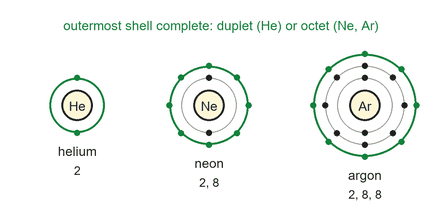
Watch out: A few heavier noble gases (such as xenon) do form compounds under special conditions, but 'under standard conditions' keeps the Assertion true.
Why the other options are wrong:
Therefore, both are true and the Reason correctly explains the Assertion, option (C).