Solution:
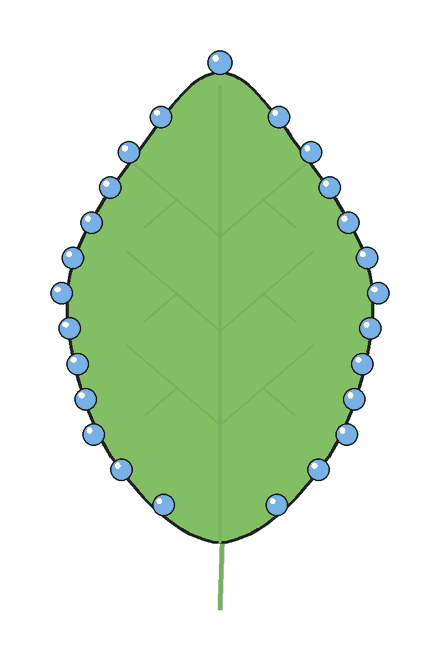
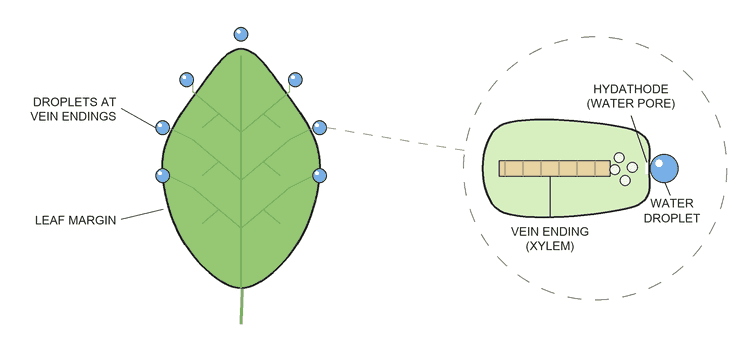
Concept: Guttation is the loss of water as liquid droplets from the margins (edges) of leaves, through special pores called hydathodes at the ends of the veins.
Step 1 — (a) Name the process.
Drops of liquid water along the edges of leaves early in the morning are pushed out of the leaf itself, so the process is guttation.
Step 2 — (b) Explain the process.
In guttation, water is lost as liquid droplets along the margins of the leaves. It comes out through special pores called hydathodes, present at the tips of the veins on the leaf margin. The fluid is mainly water with some dissolved mineral salts.
Step 3 — (c) Give the reason.
It happens in warm, humid conditions, usually at night or early in the morning. The humid air slows transpiration, but the roots go on absorbing water from the moist soil. Root pressure builds up in the xylem and forces out the extra water through the hydathodes as droplets.

Watch out: These droplets are not dew: dew condenses from the air onto any surface, while guttation drops come out of the leaf at the vein endings.
Therefore, (a) the process is guttation; (b) water is lost as liquid droplets through hydathodes at the leaf margins; (c) in warm, humid conditions transpiration is low while the roots keep absorbing water, so root pressure forces the excess water out.