
Question 61 markAsked 2016Medium
Give scientific reasons for the following statements:
When an ovum gets fertilized, menstrual cycle stops temporarily in a woman.
Confirming your payment
Sign up now and get 250 free tokens.
Previous Year Questions · Question 6 of 72
Give scientific reasons for the following statements:
When an ovum gets fertilized, menstrual cycle stops temporarily in a woman.
Solution:
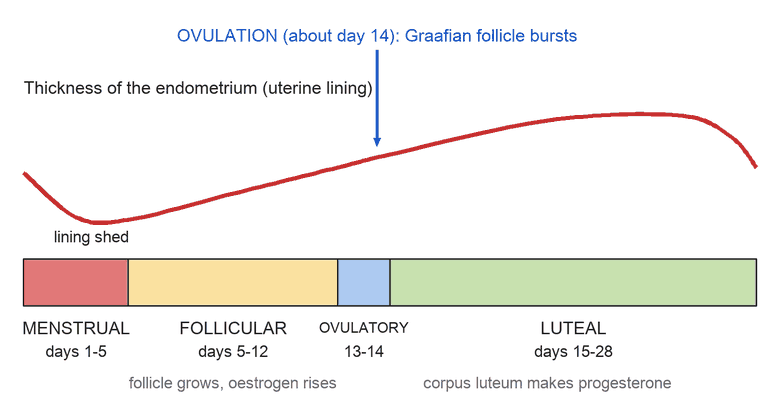
Concept: Menstruation is the shedding of the thick inner lining of the uterus (endometrium) with some blood. The lining stays in place only as long as there is enough progesterone in the blood.
Step 1 — What normally happens.
If the egg is not fertilised, the corpus luteum shrinks after about two weeks and stops making progesterone. Without progesterone the endometrium breaks down and is shed, which is menstruation.
Step 2 — What changes after fertilisation.
When the ovum is fertilised, the young embryo sends a hormonal signal that keeps the corpus luteum alive, so it goes on secreting progesterone.
Step 3 — Effect on the uterus.
Progesterone keeps the endometrium thick and rich in blood vessels, so the lining is not shed and the embryo can implant and grow in it. No new egg is released either.
Step 4 — Why the stop lasts.
Later the placenta itself makes progesterone, so the cycle stays stopped for the whole pregnancy and starts again some time after birth.
Watch out: It is the continued supply of progesterone, not the embryo's weight, that keeps the lining from being shed.
Therefore, menstruation stops during pregnancy because the corpus luteum (and later the placenta) keeps secreting progesterone, which keeps the uterine lining from breaking down.