Solution:
Concept: Diabetes mellitus is a disorder in which the blood sugar stays high because the pancreas makes too little insulin or the body's cells respond poorly to it; the extra sugar is passed in the urine.
Step 1 — Part (a): the disorder.
A high blood sugar found at a check-up points to diabetes mellitus.
Step 2 — Part (b): the hormone.
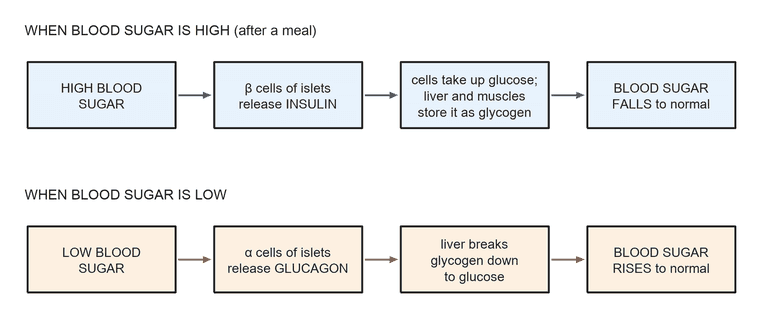
The hormone concerned is insulin, which normally lowers the blood sugar.
Note: in an adult like Mohit, the usual form (type 2) comes mainly from the body's cells responding poorly to insulin, helped by an inactive life; the hormone involved is still insulin.
Step 3 — Part (c): the organ.
Insulin is made by the pancreas, in the beta cells of its islets of Langerhans.
Step 4 — Part (d): one symptom.
Any one of these: passing a lot of urine often (with sugar in it); great thirst from the water lost in urine; tiredness and weakness, with loss of weight.
Step 5 — Part (e): one lifestyle change.
Regular physical exercise (a daily walk, yoga or a sport) instead of a sedentary routine helps, because working muscles use up glucose and respond better to insulin. A balanced diet with less sugar and refined food also helps.
Watch out: Hyperglycaemia is a SIGN (high blood sugar), not the name of the disorder; the disorder is diabetes mellitus.
Therefore, (a) diabetes mellitus, (b) insulin, (c) pancreas, (d) frequent urination, (e) regular exercise.