
Question 382 marksAsked 2024Easy
Distinguish between Diabetes mellitus and Diabetes insipidus (endocrine gland concerned).
Confirming your payment
Sign up now and get 250 free tokens.
Previous Year Questions · Question 38 of 56
Distinguish between Diabetes mellitus and Diabetes insipidus (endocrine gland concerned).
Solution:
Concept: Both disorders make a person pass a lot of urine, but different hormones from different glands are involved. Diabetes mellitus is a disorder in which the blood sugar stays high because the pancreas makes too little insulin or the body's cells respond poorly to it; the extra sugar is passed in the urine.
Step 1 — Name the gland and hormone for each.
We compare the two on the basis asked for, the endocrine gland concerned, and add the hormone.
| Basis | Diabetes mellitus | Diabetes insipidus |
|---|---|---|
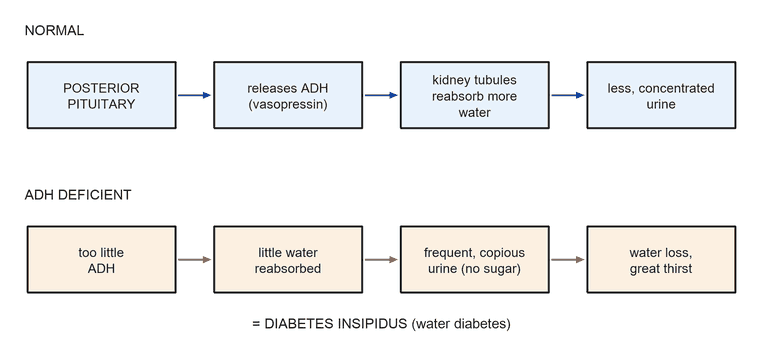
| Endocrine gland concerned | Pancreas (beta cells of the islets of Langerhans) | Pituitary gland (posterior lobe) |
| Hormone involved | Insulin | ADH (vasopressin) |
| Urine | Contains sugar | Watery, no sugar |
Watch out: The question asks for the GLAND; naming only the hormone is not enough.
Therefore, diabetes mellitus concerns the pancreas (islets of Langerhans, insulin), while diabetes insipidus concerns the pituitary gland (posterior lobe, ADH).