
Question 101 markMCQMedium
In a Quincke's tube, sound from a source enters at one end and splits between a fixed tube A and a sliding U-shaped tube B; the two parts meet again at a detector, as shown. The detector shows maximum loudness at one setting. Tube B is then pulled out slowly, and the loudness first falls to a minimum after B has moved out by . The speed of sound in the air of the tube is . (Hypothetical data.)
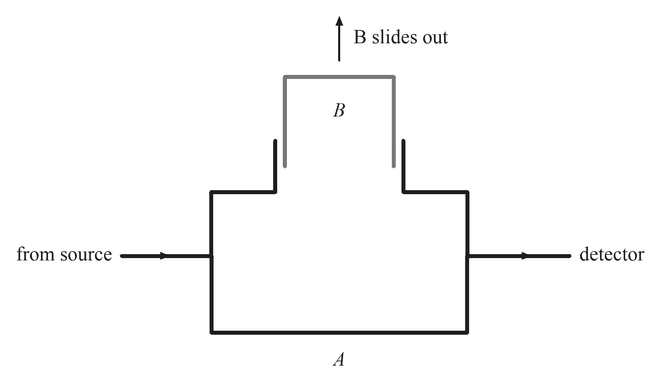
The frequency of the source is