
Question 353 marksMedium
Galileo studied balls rolling on inclines. A ball is released from rest at A, at a height above the lowest point O. It rolls down the first incline to O and then up a second incline, as shown in the figure. Ignore all energy losses due to friction and air resistance.
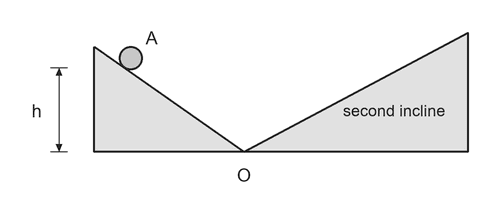
(a) How high does the ball rise on the second incline?
(b) What happens as the second incline is made less and less steep, and finally horizontal?
(c) What law of motion did Galileo conclude from this?