
Question 661 markMCQEasy
Out of the following, the correct displacement-time graph for uniform motion is :
Confirming your payment
Sign up now and get 250 free tokens.
Motion in One Dimension · Question 66 of 143
Out of the following, the correct displacement-time graph for uniform motion is :
(A) 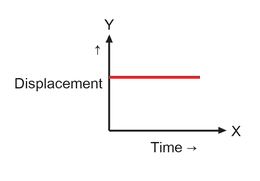
(B) 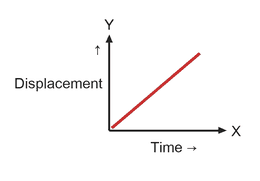
(C) 
(D) 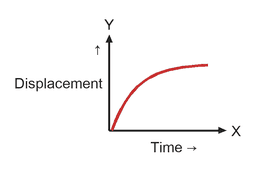
Answer: (B) straight line inclined to the time axis
Concept: In a displacement-time graph the slope (change in displacement ÷ change in time) gives the velocity. A line parallel to the time axis means rest, a straight inclined line means uniform velocity, and a curve means the velocity is changing.
Step 1 — Recall what uniform motion means.
In uniform motion a body covers equal displacements in equal intervals of time, so its displacement is directly proportional to the time.
Step 2 — Pick the matching shape.
A quantity proportional to time gives a straight line inclined to the time axis, starting from the origin. Graph (B) has this shape.
Why the other options are wrong:
Therefore, the correct displacement-time graph for uniform motion is the inclined straight line, option (B).