Confirming your payment

Skip to content

Sign up now and get .

Opening your dashboard

Class 9 Maths Chapter 25: Complementary Angles Solutions

51 textbook questions with step-by-step answers, free to read, for ICSE 2026-27.

AI Tutor

Get talked through Ch 25, not just shown the answer

Reading a finished solution is not the same as being able to do it. The AI tutor takes one question at a time and works it with you, in your own words, until you can.

  • Ask it out loud, in your own words
  • It gives you the next step, not the answer
  • Stuck on part (ii)? Start there
Ch 25 solutions

51 questions with solutions

1–3 marks · Mixed difficulty

The first 17 solutions are on this page. This chapter is a long one, so the rest open on their own page to keep this one quick to load.

  1. 1

    Question 1

    If sin⁡A=cos⁡A\sin A = \cos A, the measurement of angle A is :

    MCQEasy
    1 mark
    Solve with AI
    Answer
    • (A) 0°

    • (B) 30°

    • (C) 45°

      Correct
    • (D) 60°

    Answer: (C) 45°

    Concept: Sine divided by cosine is tangent: tan⁡A=sin⁡Acos⁡A\tan A = \dfrac{\sin A}{\cos A}.

    Standard values: tan⁡45∘=1\tan 45^\circ = 1, and sin⁡45∘\sin 45^\circ and cos⁡45∘\cos 45^\circ are both 12\dfrac{1}{\sqrt{2}}.

    Step 1 — Turn the equation into one ratio.

    For an acute angle, cos⁡A\cos A is not 0, so we may divide both sides of sin⁡A=cos⁡A\sin A = \cos A by cos⁡A\cos A. Sine divided by cosine is the tangent.

    sin⁡Acos⁡A=1tan⁡A=1\begin{aligned} \dfrac{\sin A}{\cos A} &= 1 \\ \tan A &= 1 \end{aligned}

    Step 2 — Find the angle.

    We know that tan⁡45∘=1\tan 45^\circ = 1, so the angle is 45°.

    tan⁡45∘=1\tan 45^\circ = 1

    Step 3 — Check the answer.

    Both sin⁡45∘\sin 45^\circ and cos⁡45∘\cos 45^\circ equal 12\dfrac{1}{\sqrt{2}}, so they are equal.

    sin⁡45∘=cos⁡45∘\sin 45^\circ = \cos 45^\circ

    Watch out: Dividing by cos⁡A\cos A is allowed only because cos⁡A\cos A is not 0 for an acute angle.

    Why the other options are wrong:

    • (A) 0°: At 0°, sin⁡0∘=0\sin 0^\circ = 0 and cos⁡0∘=1\cos 0^\circ = 1; the two ratios are not equal.
    • (B) 30°: At 30°, sin⁡30∘=12\sin 30^\circ = \dfrac{1}{2} and cos⁡30∘=32\cos 30^\circ = \dfrac{\sqrt{3}}{2}; they are not equal.
    • (D) 60°: At 60°, sin⁡60∘=32\sin 60^\circ = \dfrac{\sqrt{3}}{2} and cos⁡60∘=12\cos 60^\circ = \dfrac{1}{2}; they are not equal.

    Therefore, A = 45°, option (C).

  2. 2

    Question 2

    If sin⁡A=cos⁡B\sin A = \cos B and A≠BA \neq B then the relation between angles A and B is :

    MCQEasy
    1 mark
    Solve with AI
    Answer
    • (A) A + B = 180°

    • (B) A − B = 90°

    • (C) B − A = 90°

    • (D) A + B = 90°

      Correct

    Answer: (D) A + B = 90°

    Concept: Two angles are complementary when they add up to 90°. For an acute angle θ\theta, each ratio of its complement 90∘−θ90^\circ - \theta is the co-ratio of θ\theta: sin⁡(90∘−θ)=cos⁡θ\sin(90^\circ - \theta) = \cos\theta and cos⁡(90∘−θ)=sin⁡θ\cos(90^\circ - \theta) = \sin\theta; tan⁡(90∘−θ)=cot⁡θ\tan(90^\circ - \theta) = \cot\theta and cot⁡(90∘−θ)=tan⁡θ\cot(90^\circ - \theta) = \tan\theta; sec⁡(90∘−θ)=cosec⁡θ\sec(90^\circ - \theta) = \operatorname{cosec}\theta and cosec⁡(90∘−θ)=sec⁡θ\operatorname{cosec}(90^\circ - \theta) = \sec\theta.

    Step 1 — Write cos B as a sine.

    In this chapter A and B are acute angles. The cosine of an angle is the sine of its complement.

    cos⁡B=sin⁡(90∘−B)\cos B = \sin(90^\circ - B)

    Step 2 — Compare the angles.

    Now sin⁡A=sin⁡(90∘−B)\sin A = \sin(90^\circ - B). Both A and 90∘−B90^\circ - B are acute, and two acute angles with equal sines are equal, so we can compare the angles.

    A=90∘−BA+B=90∘\begin{aligned} A &= 90^\circ - B \\ A + B &= 90^\circ \end{aligned}

    Step 3 — Read the condition A ≠ B.

    The condition A≠BA \ne B only says the two angles are different, for example A=30∘A = 30^\circ and B=60∘B = 60^\circ (then sin⁡30∘\sin 30^\circ and cos⁡60∘\cos 60^\circ are both 12\dfrac{1}{2}). It does not change the relation.

    Watch out: Equal sines give equal angles only when both angles are acute, as they are in this chapter.

    Why the other options are wrong:

    • (A): A sum of 180° is impossible here, because two acute angles add up to less than 180°; it is the condition for supplementary angles, not complementary ones.
    • (B): A difference A−BA - B of 90° would make A equal to 90∘+B90^\circ + B, more than 90°; but A is an acute angle here, so it cannot happen.
    • (C): A difference B−AB - A of 90° would make B equal to 90∘+A90^\circ + A, more than 90°; but B is an acute angle here, so it cannot happen.

    Therefore, A + B = 90°, option (D).

  3. 3

    Question 3

    If A + B = 90°, the value of cos⁡Asin⁡B×tan⁡Bcot⁡A\dfrac{\cos A}{\sin B} \times \dfrac{\tan B}{\cot A} is :

    MCQEasy
    1 mark
    Solve with AI
    Answer
    • (A) 1

      Correct
    • (B) 2

    • (C) sin⁡A\sin A

    • (D) cos⁡B\cos B

    Answer: (A) 1

    Concept: Two angles are complementary when they add up to 90°. For an acute angle θ\theta, each ratio of its complement 90∘−θ90^\circ - \theta is the co-ratio of θ\theta: sin⁡(90∘−θ)=cos⁡θ\sin(90^\circ - \theta) = \cos\theta and cos⁡(90∘−θ)=sin⁡θ\cos(90^\circ - \theta) = \sin\theta; tan⁡(90∘−θ)=cot⁡θ\tan(90^\circ - \theta) = \cot\theta and cot⁡(90∘−θ)=tan⁡θ\cot(90^\circ - \theta) = \tan\theta; sec⁡(90∘−θ)=cosec⁡θ\sec(90^\circ - \theta) = \operatorname{cosec}\theta and cosec⁡(90∘−θ)=sec⁡θ\operatorname{cosec}(90^\circ - \theta) = \sec\theta.

    Step 1 — Write A in terms of B.

    Since A+B=90∘A + B = 90^\circ, the angle A is the complement of B.

    A=90∘−BA = 90^\circ - B

    Step 2 — Change the ratios of A.

    Each ratio of A is the co-ratio of B, because A is the complement of B.

    cos⁡A=cos⁡(90∘−B)=sin⁡B\begin{aligned} \cos A &= \cos(90^\circ - B) \\ &= \sin B \end{aligned} cot⁡A=cot⁡(90∘−B)=tan⁡B\begin{aligned} \cot A &= \cot(90^\circ - B) \\ &= \tan B \end{aligned}

    Step 3 — Simplify.

    Now each fraction has the same ratio on the top and the bottom, so each fraction is 1.

    cos⁡Asin⁡B×tan⁡Bcot⁡A=sin⁡Bsin⁡B×tan⁡Btan⁡B=1×1=1\begin{aligned} \dfrac{\cos A}{\sin B} \times \dfrac{\tan B}{\cot A} &= \dfrac{\sin B}{\sin B} \times \dfrac{\tan B}{\tan B} \\ &= 1 \times 1 \\ &= 1 \end{aligned}

    Watch out: The two fractions are multiplied, not added, so the result is 1×11 \times 1.

    Why the other options are wrong:

    • (B) 2: 2 would come from adding the two fractions (1+11 + 1). They are multiplied, so the value is 1×1=11 \times 1 = 1.
    • (C) sin⁡A\sin A: Every ratio cancels, so no ratio is left over. Also, sin⁡A\sin A is less than 1 for an acute angle A, so it is not equal to the value 1.
    • (D) cos⁡B\cos B: Every ratio cancels, so no ratio is left over. Also, cos⁡B\cos B is less than 1 for an acute angle B, so it is not equal to the value 1.

    Therefore, the value is 1, option (A).

  4. 4

    Question 4

    The value of cosec⁡40∘cos⁡50∘+sin⁡50∘sec⁡40∘\operatorname{cosec} 40^\circ \cos 50^\circ + \sin 50^\circ \sec 40^\circ is :

    MCQEasy
    1 mark
    Solve with AI
    Answer
    • (A) 1

    • (B) 2

      Correct
    • (C) 3

    • (D) 0

    Answer: (B) 2

    Concept: Two angles are complementary when they add up to 90°. For an acute angle θ\theta, each ratio of its complement 90∘−θ90^\circ - \theta is the co-ratio of θ\theta: sin⁡(90∘−θ)=cos⁡θ\sin(90^\circ - \theta) = \cos\theta and cos⁡(90∘−θ)=sin⁡θ\cos(90^\circ - \theta) = \sin\theta; tan⁡(90∘−θ)=cot⁡θ\tan(90^\circ - \theta) = \cot\theta and cot⁡(90∘−θ)=tan⁡θ\cot(90^\circ - \theta) = \tan\theta; sec⁡(90∘−θ)=cosec⁡θ\sec(90^\circ - \theta) = \operatorname{cosec}\theta and cosec⁡(90∘−θ)=sec⁡θ\operatorname{cosec}(90^\circ - \theta) = \sec\theta.

    The reciprocal ratios are cosec⁡θ=1sin⁡θ\operatorname{cosec}\theta = \dfrac{1}{\sin\theta}, sec⁡θ=1cos⁡θ\sec\theta = \dfrac{1}{\cos\theta} and cot⁡θ=1tan⁡θ\cot\theta = \dfrac{1}{\tan\theta}. So a ratio multiplied by its reciprocal is always 1; for example, sin⁡θcosec⁡θ=1\sin\theta \operatorname{cosec}\theta = 1 and tan⁡θcot⁡θ=1\tan\theta \cot\theta = 1.

    Step 1 — Change the 50° ratios.

    The angles 40° and 50° are complementary. So the ratios of 50° become co-ratios of 40°.

    cos⁡50∘=cos⁡(90∘−40∘)=sin⁡40∘\begin{aligned} \cos 50^\circ &= \cos(90^\circ - 40^\circ) \\ &= \sin 40^\circ \end{aligned} sin⁡50∘=sin⁡(90∘−40∘)=cos⁡40∘\begin{aligned} \sin 50^\circ &= \sin(90^\circ - 40^\circ) \\ &= \cos 40^\circ \end{aligned}

    Step 2 — Simplify each product.

    Each product is now a ratio times its reciprocal: cosec⁡40∘sin⁡40∘=1\operatorname{cosec} 40^\circ \sin 40^\circ = 1 and cos⁡40∘sec⁡40∘=1\cos 40^\circ \sec 40^\circ = 1.

    cosec⁡40∘cos⁡50∘+sin⁡50∘sec⁡40∘=cosec⁡40∘sin⁡40∘+cos⁡40∘sec⁡40∘=1+1=2\begin{aligned} \operatorname{cosec} 40^\circ \cos 50^\circ + \sin 50^\circ \sec 40^\circ &= \operatorname{cosec} 40^\circ \sin 40^\circ + \cos 40^\circ \sec 40^\circ \\ &= 1 + 1 \\ &= 2 \end{aligned}

    Why the other options are wrong:

    • (A) 1: Each of the two products is 1, so their sum is 2; 1 counts only one of them.
    • (C) 3: There are only two products and each is 1, so no step gives 3.
    • (D) 0: 0 would come from subtracting the two products (1−11 - 1), but they are added.

    Therefore, the value is 2, option (B).

  5. 5

    Question 5

    In a triangle ABC, sec⁡A+C2\sec \dfrac{A + C}{2} is equal to :

    Class 9 Maths Complementary Angles

    MCQEasy
    1 mark
    Solve with AI
    Answer
    • (A) 0

    • (B) sec⁡B2\sec \dfrac{B}{2}

    • (C) cosec⁡B\operatorname{cosec} B

    • (D) cosec⁡B2\operatorname{cosec} \dfrac{B}{2}

      Correct

    Answer: (D) cosec⁡B2\operatorname{cosec} \dfrac{B}{2}

    Concept: The three angles of a triangle add up to 180°, so in triangle ABC, A+B+C=180∘A + B + C = 180^\circ.

    Two angles are complementary when they add up to 90°. For an acute angle θ\theta, each ratio of its complement 90∘−θ90^\circ - \theta is the co-ratio of θ\theta: sin⁡(90∘−θ)=cos⁡θ\sin(90^\circ - \theta) = \cos\theta and cos⁡(90∘−θ)=sin⁡θ\cos(90^\circ - \theta) = \sin\theta; tan⁡(90∘−θ)=cot⁡θ\tan(90^\circ - \theta) = \cot\theta and cot⁡(90∘−θ)=tan⁡θ\cot(90^\circ - \theta) = \tan\theta; sec⁡(90∘−θ)=cosec⁡θ\sec(90^\circ - \theta) = \operatorname{cosec}\theta and cosec⁡(90∘−θ)=sec⁡θ\operatorname{cosec}(90^\circ - \theta) = \sec\theta.

    Step 1 — Use the angle sum.

    The angles of a triangle add up to 180°, so A + C is 180° minus B. Halving both sides gives the angle we need.

    A+C=180∘−BA+C2=90∘−B2\begin{aligned} A + C &= 180^\circ - B \\ \dfrac{A + C}{2} &= 90^\circ - \dfrac{B}{2} \end{aligned}

    Step 2 — Change sec to cosec.

    The angle A+C2\dfrac{A + C}{2} is the complement of B2\dfrac{B}{2}, so its secant is the cosecant of B2\dfrac{B}{2}.

    sec⁡A+C2=sec⁡(90∘−B2)=cosec⁡B2\begin{aligned} \sec \dfrac{A + C}{2} &= \sec\left(90^\circ - \dfrac{B}{2}\right) \\ &= \operatorname{cosec} \dfrac{B}{2} \end{aligned}

    Watch out: The complement changes the ratio (sec becomes cosec) but the angle is still B2\dfrac{B}{2}.

    Why the other options are wrong:

    • (A) 0: The secant is 1cos⁡\dfrac{1}{\cos}, and the cosine of an acute angle is at most 1, so the secant is at least 1, never 0.
    • (B) sec⁡B2\sec \dfrac{B}{2}: The complement turns sec into cosec. sec⁡B2\sec \dfrac{B}{2} equals cosec⁡B2\operatorname{cosec} \dfrac{B}{2} only in the special case B=90∘B = 90^\circ, so it is not true for every triangle.
    • (C) cosec⁡B\operatorname{cosec} B: The angle must be B2\dfrac{B}{2}, not B. For example, with B=60∘B = 60^\circ, cosec⁡60∘\operatorname{cosec} 60^\circ is about 1.15 while cosec⁡30∘=2\operatorname{cosec} 30^\circ = 2.

    Therefore, sec⁡A+C2=cosec⁡B2\sec \dfrac{A + C}{2} = \operatorname{cosec} \dfrac{B}{2}, option (D).

  6. 6

    Question 6

    Evaluate :

    cos⁡22∘sin⁡68∘\dfrac{\cos 22^\circ}{\sin 68^\circ}

    Easy
    3 marks
    Solve with AI
    Written solution

    Solution:

    Concept: Two angles are complementary when they add up to 90°. For an acute angle θ\theta, each ratio of its complement 90∘−θ90^\circ - \theta is the co-ratio of θ\theta: sin⁡(90∘−θ)=cos⁡θ\sin(90^\circ - \theta) = \cos\theta and cos⁡(90∘−θ)=sin⁡θ\cos(90^\circ - \theta) = \sin\theta; tan⁡(90∘−θ)=cot⁡θ\tan(90^\circ - \theta) = \cot\theta and cot⁡(90∘−θ)=tan⁡θ\cot(90^\circ - \theta) = \tan\theta; sec⁡(90∘−θ)=cosec⁡θ\sec(90^\circ - \theta) = \operatorname{cosec}\theta and cosec⁡(90∘−θ)=sec⁡θ\operatorname{cosec}(90^\circ - \theta) = \sec\theta.

    Step 1 — Spot the complementary angles.

    The two angles, 22° and 68°, add up to 90°, so they are complementary.

    22∘+68∘=90∘22^\circ + 68^\circ = 90^\circ

    Step 2 — Change the top ratio into its co-ratio.

    We write 22° as 90∘−68∘90^\circ - 68^\circ. A ratio of an angle equals the co-ratio of its complement, so cos⁡22∘\cos 22^\circ becomes sin⁡68∘\sin 68^\circ.

    cos⁡22∘=cos⁡(90∘−68∘)=sin⁡68∘\begin{aligned} \cos 22^\circ &= \cos(90^\circ - 68^\circ) \\ &= \sin 68^\circ \end{aligned}

    Step 3 — Simplify the fraction.

    Now the top and the bottom are the same ratio of the same angle, so they cancel.

    cos⁡22∘sin⁡68∘=sin⁡68∘sin⁡68∘=1\begin{aligned} \dfrac{\cos 22^\circ}{\sin 68^\circ} &= \dfrac{\sin 68^\circ}{\sin 68^\circ} \\ &= 1 \end{aligned}

    Watch out: Change only ONE ratio of each complementary pair into its co-ratio. Changing both just swaps them, and nothing cancels.

    Therefore, cos⁡22∘sin⁡68∘=1\dfrac{\cos 22^\circ}{\sin 68^\circ} = 1.

  7. 7

    Question 7

    Evaluate :

    tan⁡47∘cot⁡43∘\dfrac{\tan 47^\circ}{\cot 43^\circ}

    Easy
    3 marks
    Solve with AI
    Written solution

    Solution:

    Concept: Two angles are complementary when they add up to 90°. For an acute angle θ\theta, each ratio of its complement 90∘−θ90^\circ - \theta is the co-ratio of θ\theta: sin⁡(90∘−θ)=cos⁡θ\sin(90^\circ - \theta) = \cos\theta and cos⁡(90∘−θ)=sin⁡θ\cos(90^\circ - \theta) = \sin\theta; tan⁡(90∘−θ)=cot⁡θ\tan(90^\circ - \theta) = \cot\theta and cot⁡(90∘−θ)=tan⁡θ\cot(90^\circ - \theta) = \tan\theta; sec⁡(90∘−θ)=cosec⁡θ\sec(90^\circ - \theta) = \operatorname{cosec}\theta and cosec⁡(90∘−θ)=sec⁡θ\operatorname{cosec}(90^\circ - \theta) = \sec\theta.

    Step 1 — Spot the complementary angles.

    The two angles, 47° and 43°, add up to 90°, so they are complementary.

    47∘+43∘=90∘47^\circ + 43^\circ = 90^\circ

    Step 2 — Change the top ratio into its co-ratio.

    We write 47° as 90∘−43∘90^\circ - 43^\circ. A ratio of an angle equals the co-ratio of its complement, so tan⁡47∘\tan 47^\circ becomes cot⁡43∘\cot 43^\circ.

    tan⁡47∘=tan⁡(90∘−43∘)=cot⁡43∘\begin{aligned} \tan 47^\circ &= \tan(90^\circ - 43^\circ) \\ &= \cot 43^\circ \end{aligned}

    Step 3 — Simplify the fraction.

    Now the top and the bottom are the same ratio of the same angle, so they cancel.

    tan⁡47∘cot⁡43∘=cot⁡43∘cot⁡43∘=1\begin{aligned} \dfrac{\tan 47^\circ}{\cot 43^\circ} &= \dfrac{\cot 43^\circ}{\cot 43^\circ} \\ &= 1 \end{aligned}

    Watch out: Change only ONE ratio of each complementary pair into its co-ratio. Changing both just swaps them, and nothing cancels.

    Therefore, tan⁡47∘cot⁡43∘=1\dfrac{\tan 47^\circ}{\cot 43^\circ} = 1.

  8. 8

    Question 8

    Evaluate :

    sec⁡75∘cosec⁡15∘\dfrac{\sec 75^\circ}{\operatorname{cosec} 15^\circ}

    Easy
    3 marks
    Solve with AI
    Written solution

    Solution:

    Concept: Two angles are complementary when they add up to 90°. For an acute angle θ\theta, each ratio of its complement 90∘−θ90^\circ - \theta is the co-ratio of θ\theta: sin⁡(90∘−θ)=cos⁡θ\sin(90^\circ - \theta) = \cos\theta and cos⁡(90∘−θ)=sin⁡θ\cos(90^\circ - \theta) = \sin\theta; tan⁡(90∘−θ)=cot⁡θ\tan(90^\circ - \theta) = \cot\theta and cot⁡(90∘−θ)=tan⁡θ\cot(90^\circ - \theta) = \tan\theta; sec⁡(90∘−θ)=cosec⁡θ\sec(90^\circ - \theta) = \operatorname{cosec}\theta and cosec⁡(90∘−θ)=sec⁡θ\operatorname{cosec}(90^\circ - \theta) = \sec\theta.

    Step 1 — Spot the complementary angles.

    The two angles, 75° and 15°, add up to 90°, so they are complementary.

    75∘+15∘=90∘75^\circ + 15^\circ = 90^\circ

    Step 2 — Change the top ratio into its co-ratio.

    We write 75° as 90∘−15∘90^\circ - 15^\circ. A ratio of an angle equals the co-ratio of its complement, so sec⁡75∘\sec 75^\circ becomes cosec⁡15∘\operatorname{cosec} 15^\circ.

    sec⁡75∘=sec⁡(90∘−15∘)=cosec⁡15∘\begin{aligned} \sec 75^\circ &= \sec(90^\circ - 15^\circ) \\ &= \operatorname{cosec} 15^\circ \end{aligned}

    Step 3 — Simplify the fraction.

    Now the top and the bottom are the same ratio of the same angle, so they cancel.

    sec⁡75∘cosec⁡15∘=cosec⁡15∘cosec⁡15∘=1\begin{aligned} \dfrac{\sec 75^\circ}{\operatorname{cosec} 15^\circ} &= \dfrac{\operatorname{cosec} 15^\circ}{\operatorname{cosec} 15^\circ} \\ &= 1 \end{aligned}

    Watch out: Change only ONE ratio of each complementary pair into its co-ratio. Changing both just swaps them, and nothing cancels.

    Therefore, sec⁡75∘cosec⁡15∘=1\dfrac{\sec 75^\circ}{\operatorname{cosec} 15^\circ} = 1.

  9. 9

    Question 9

    Evaluate :

    cos⁡55∘sin⁡35∘+cot⁡35∘tan⁡55∘\dfrac{\cos 55^\circ}{\sin 35^\circ} + \dfrac{\cot 35^\circ}{\tan 55^\circ}

    Easy
    3 marks
    Solve with AI
    Written solution

    Solution:

    Concept: Two angles are complementary when they add up to 90°. For an acute angle θ\theta, each ratio of its complement 90∘−θ90^\circ - \theta is the co-ratio of θ\theta: sin⁡(90∘−θ)=cos⁡θ\sin(90^\circ - \theta) = \cos\theta and cos⁡(90∘−θ)=sin⁡θ\cos(90^\circ - \theta) = \sin\theta; tan⁡(90∘−θ)=cot⁡θ\tan(90^\circ - \theta) = \cot\theta and cot⁡(90∘−θ)=tan⁡θ\cot(90^\circ - \theta) = \tan\theta; sec⁡(90∘−θ)=cosec⁡θ\sec(90^\circ - \theta) = \operatorname{cosec}\theta and cosec⁡(90∘−θ)=sec⁡θ\operatorname{cosec}(90^\circ - \theta) = \sec\theta.

    Step 1 — Spot the complementary angles.

    The angles 55° and 35° add up to 90°, so they are complementary.

    55∘+35∘=90∘55^\circ + 35^\circ = 90^\circ

    Step 2 — Change the 55° ratios.

    We write each ratio of 55° as the co-ratio of 35°.

    cos⁡55∘=cos⁡(90∘−35∘)=sin⁡35∘\begin{aligned} \cos 55^\circ &= \cos(90^\circ - 35^\circ) \\ &= \sin 35^\circ \end{aligned} tan⁡55∘=tan⁡(90∘−35∘)=cot⁡35∘\begin{aligned} \tan 55^\circ &= \tan(90^\circ - 35^\circ) \\ &= \cot 35^\circ \end{aligned}

    Step 3 — Simplify.

    Each fraction now has the same ratio on the top and the bottom, so each fraction is 1.

    cos⁡55∘sin⁡35∘+cot⁡35∘tan⁡55∘=sin⁡35∘sin⁡35∘+cot⁡35∘cot⁡35∘=1+1=2\begin{aligned} \dfrac{\cos 55^\circ}{\sin 35^\circ} + \dfrac{\cot 35^\circ}{\tan 55^\circ} &= \dfrac{\sin 35^\circ}{\sin 35^\circ} + \dfrac{\cot 35^\circ}{\cot 35^\circ} \\ &= 1 + 1 \\ &= 2 \end{aligned}

    Watch out: Change only ONE ratio of each complementary pair into its co-ratio. Changing both just swaps them, and nothing cancels.

    Therefore, cos⁡55∘sin⁡35∘+cot⁡35∘tan⁡55∘=2\dfrac{\cos 55^\circ}{\sin 35^\circ} + \dfrac{\cot 35^\circ}{\tan 55^\circ} = 2.

  10. 10

    Question 10

    Evaluate :

    sin⁡240∘−cos⁡250∘\sin^2 40^\circ - \cos^2 50^\circ

    Easy
    3 marks
    Solve with AI
    Written solution

    Solution:

    Concept: Two angles are complementary when they add up to 90°. For an acute angle θ\theta, each ratio of its complement 90∘−θ90^\circ - \theta is the co-ratio of θ\theta: sin⁡(90∘−θ)=cos⁡θ\sin(90^\circ - \theta) = \cos\theta and cos⁡(90∘−θ)=sin⁡θ\cos(90^\circ - \theta) = \sin\theta; tan⁡(90∘−θ)=cot⁡θ\tan(90^\circ - \theta) = \cot\theta and cot⁡(90∘−θ)=tan⁡θ\cot(90^\circ - \theta) = \tan\theta; sec⁡(90∘−θ)=cosec⁡θ\sec(90^\circ - \theta) = \operatorname{cosec}\theta and cosec⁡(90∘−θ)=sec⁡θ\operatorname{cosec}(90^\circ - \theta) = \sec\theta.

    Step 1 — Spot the complementary angles.

    The angles 40° and 50° add up to 90°, so they are complementary.

    40∘+50∘=90∘40^\circ + 50^\circ = 90^\circ

    Step 2 — Change the ratio of 50°.

    We write 50° as 90∘−40∘90^\circ - 40^\circ, so its ratio becomes the co-ratio of 40°.

    cos⁡50∘=cos⁡(90∘−40∘)=sin⁡40∘\begin{aligned} \cos 50^\circ &= \cos(90^\circ - 40^\circ) \\ &= \sin 40^\circ \end{aligned}

    Step 3 — Square and subtract.

    Squaring both sides of that result changes the squared term too; the two terms are then equal and cancel.

    sin⁡240∘−cos⁡250∘=sin⁡240∘−sin⁡240∘=0\begin{aligned} \sin^2 40^\circ - \cos^2 50^\circ &= \sin^2 40^\circ - \sin^2 40^\circ \\ &= 0 \end{aligned}

    Watch out: A power stays with its ratio. Here cos⁡250∘\cos^2 50^\circ is the square of cos⁡50∘\cos 50^\circ, so it becomes the square of sin⁡40∘\sin 40^\circ.

    Therefore, sin⁡240∘−cos⁡250∘=0\sin^2 40^\circ - \cos^2 50^\circ = 0.

  11. 11

    Question 11

    Evaluate :

    sec⁡218∘−cosec⁡272∘\sec^2 18^\circ - \operatorname{cosec}^2 72^\circ

    Easy
    3 marks
    Solve with AI
    Written solution

    Solution:

    Concept: Two angles are complementary when they add up to 90°. For an acute angle θ\theta, each ratio of its complement 90∘−θ90^\circ - \theta is the co-ratio of θ\theta: sin⁡(90∘−θ)=cos⁡θ\sin(90^\circ - \theta) = \cos\theta and cos⁡(90∘−θ)=sin⁡θ\cos(90^\circ - \theta) = \sin\theta; tan⁡(90∘−θ)=cot⁡θ\tan(90^\circ - \theta) = \cot\theta and cot⁡(90∘−θ)=tan⁡θ\cot(90^\circ - \theta) = \tan\theta; sec⁡(90∘−θ)=cosec⁡θ\sec(90^\circ - \theta) = \operatorname{cosec}\theta and cosec⁡(90∘−θ)=sec⁡θ\operatorname{cosec}(90^\circ - \theta) = \sec\theta.

    Step 1 — Spot the complementary angles.

    The angles 18° and 72° add up to 90°, so they are complementary.

    18∘+72∘=90∘18^\circ + 72^\circ = 90^\circ

    Step 2 — Change the ratio of 72°.

    We write 72° as 90∘−18∘90^\circ - 18^\circ, so its ratio becomes the co-ratio of 18°.

    cosec⁡72∘=cosec⁡(90∘−18∘)=sec⁡18∘\begin{aligned} \operatorname{cosec} 72^\circ &= \operatorname{cosec}(90^\circ - 18^\circ) \\ &= \sec 18^\circ \end{aligned}

    Step 3 — Square and subtract.

    Squaring both sides of that result changes the squared term too; the two terms are then equal and cancel.

    sec⁡218∘−cosec⁡272∘=sec⁡218∘−sec⁡218∘=0\begin{aligned} \sec^2 18^\circ - \operatorname{cosec}^2 72^\circ &= \sec^2 18^\circ - \sec^2 18^\circ \\ &= 0 \end{aligned}

    Watch out: A power stays with its ratio. Here cosec⁡272∘\operatorname{cosec}^2 72^\circ is the square of cosec⁡72∘\operatorname{cosec} 72^\circ, so it becomes the square of sec⁡18∘\sec 18^\circ.

    Therefore, sec⁡218∘−cosec⁡272∘=0\sec^2 18^\circ - \operatorname{cosec}^2 72^\circ = 0.

  12. 12

    Question 12

    Evaluate :

    sin⁡15∘cos⁡15∘−cos⁡75∘sin⁡75∘\sin 15^\circ \cos 15^\circ - \cos 75^\circ \sin 75^\circ

    Easy
    3 marks
    Solve with AI
    Written solution

    Solution:

    Concept: Two angles are complementary when they add up to 90°. For an acute angle θ\theta, each ratio of its complement 90∘−θ90^\circ - \theta is the co-ratio of θ\theta: sin⁡(90∘−θ)=cos⁡θ\sin(90^\circ - \theta) = \cos\theta and cos⁡(90∘−θ)=sin⁡θ\cos(90^\circ - \theta) = \sin\theta; tan⁡(90∘−θ)=cot⁡θ\tan(90^\circ - \theta) = \cot\theta and cot⁡(90∘−θ)=tan⁡θ\cot(90^\circ - \theta) = \tan\theta; sec⁡(90∘−θ)=cosec⁡θ\sec(90^\circ - \theta) = \operatorname{cosec}\theta and cosec⁡(90∘−θ)=sec⁡θ\operatorname{cosec}(90^\circ - \theta) = \sec\theta.

    Step 1 — Spot the complementary angles.

    The angles 15° and 75° add up to 90°, so they are complementary.

    15∘+75∘=90∘15^\circ + 75^\circ = 90^\circ

    Step 2 — Change the 75° ratios.

    We write each ratio of 75° as the co-ratio of 15°.

    cos⁡75∘=cos⁡(90∘−15∘)=sin⁡15∘\begin{aligned} \cos 75^\circ &= \cos(90^\circ - 15^\circ) \\ &= \sin 15^\circ \end{aligned} sin⁡75∘=sin⁡(90∘−15∘)=cos⁡15∘\begin{aligned} \sin 75^\circ &= \sin(90^\circ - 15^\circ) \\ &= \cos 15^\circ \end{aligned}

    Step 3 — Subtract.

    The two products are now the same, so their difference is 0.

    sin⁡15∘cos⁡15∘−cos⁡75∘sin⁡75∘=sin⁡15∘cos⁡15∘−sin⁡15∘cos⁡15∘=0\begin{aligned} \sin 15^\circ \cos 15^\circ - \cos 75^\circ \sin 75^\circ &= \sin 15^\circ \cos 15^\circ - \sin 15^\circ \cos 15^\circ \\ &= 0 \end{aligned}

    Watch out: Change only ONE ratio of each complementary pair into its co-ratio. Changing both just swaps them, and nothing cancels.

    Therefore, sin⁡15∘cos⁡15∘−cos⁡75∘sin⁡75∘=0\sin 15^\circ \cos 15^\circ - \cos 75^\circ \sin 75^\circ = 0.

  13. 13

    Question 13

    Evaluate :

    sin⁡42∘sin⁡48∘−cos⁡42∘cos⁡48∘\sin 42^\circ \sin 48^\circ - \cos 42^\circ \cos 48^\circ

    Easy
    3 marks
    Solve with AI
    Written solution

    Solution:

    Concept: Two angles are complementary when they add up to 90°. For an acute angle θ\theta, each ratio of its complement 90∘−θ90^\circ - \theta is the co-ratio of θ\theta: sin⁡(90∘−θ)=cos⁡θ\sin(90^\circ - \theta) = \cos\theta and cos⁡(90∘−θ)=sin⁡θ\cos(90^\circ - \theta) = \sin\theta; tan⁡(90∘−θ)=cot⁡θ\tan(90^\circ - \theta) = \cot\theta and cot⁡(90∘−θ)=tan⁡θ\cot(90^\circ - \theta) = \tan\theta; sec⁡(90∘−θ)=cosec⁡θ\sec(90^\circ - \theta) = \operatorname{cosec}\theta and cosec⁡(90∘−θ)=sec⁡θ\operatorname{cosec}(90^\circ - \theta) = \sec\theta.

    Step 1 — Spot the complementary angles.

    The angles 42° and 48° add up to 90°, so they are complementary.

    42∘+48∘=90∘42^\circ + 48^\circ = 90^\circ

    Step 2 — Change the 48° ratios.

    We write each ratio of 48° as the co-ratio of 42°.

    sin⁡48∘=sin⁡(90∘−42∘)=cos⁡42∘\begin{aligned} \sin 48^\circ &= \sin(90^\circ - 42^\circ) \\ &= \cos 42^\circ \end{aligned} cos⁡48∘=cos⁡(90∘−42∘)=sin⁡42∘\begin{aligned} \cos 48^\circ &= \cos(90^\circ - 42^\circ) \\ &= \sin 42^\circ \end{aligned}

    Step 3 — Subtract.

    Both products are now sin⁡42∘cos⁡42∘\sin 42^\circ \cos 42^\circ (the order of a product does not matter), so they cancel.

    sin⁡42∘sin⁡48∘−cos⁡42∘cos⁡48∘=sin⁡42∘cos⁡42∘−cos⁡42∘sin⁡42∘=0\begin{aligned} \sin 42^\circ \sin 48^\circ - \cos 42^\circ \cos 48^\circ &= \sin 42^\circ \cos 42^\circ - \cos 42^\circ \sin 42^\circ \\ &= 0 \end{aligned}

    Watch out: Change the 48° ratios in BOTH products; then each product is sin⁡42∘cos⁡42∘\sin 42^\circ \cos 42^\circ.

    Therefore, sin⁡42∘sin⁡48∘−cos⁡42∘cos⁡48∘=0\sin 42^\circ \sin 48^\circ - \cos 42^\circ \cos 48^\circ = 0.

  14. 14

    Question 14

    Evaluate :

    sin⁡(90∘−A)sin⁡A−cos⁡(90∘−A)cos⁡A\sin(90^\circ - A) \sin A - \cos(90^\circ - A) \cos A

    Easy
    3 marks
    Solve with AI
    Written solution

    Solution:

    Concept: Two angles are complementary when they add up to 90°. For an acute angle θ\theta, each ratio of its complement 90∘−θ90^\circ - \theta is the co-ratio of θ\theta: sin⁡(90∘−θ)=cos⁡θ\sin(90^\circ - \theta) = \cos\theta and cos⁡(90∘−θ)=sin⁡θ\cos(90^\circ - \theta) = \sin\theta; tan⁡(90∘−θ)=cot⁡θ\tan(90^\circ - \theta) = \cot\theta and cot⁡(90∘−θ)=tan⁡θ\cot(90^\circ - \theta) = \tan\theta; sec⁡(90∘−θ)=cosec⁡θ\sec(90^\circ - \theta) = \operatorname{cosec}\theta and cosec⁡(90∘−θ)=sec⁡θ\operatorname{cosec}(90^\circ - \theta) = \sec\theta.

    Step 1 — Use the complement rules.

    The angle 90∘−A90^\circ - A is the complement of A, so its ratios are the co-ratios of A.

    sin⁡(90∘−A)=cos⁡Acos⁡(90∘−A)=sin⁡A\begin{aligned} \sin(90^\circ - A) &= \cos A \\ \cos(90^\circ - A) &= \sin A \end{aligned}

    Step 2 — Substitute and subtract.

    Both products are now cos⁡Asin⁡A\cos A \sin A, so they cancel.

    sin⁡(90∘−A)sin⁡A−cos⁡(90∘−A)cos⁡A=cos⁡Asin⁡A−sin⁡Acos⁡A=0\begin{aligned} \sin(90^\circ - A) \sin A - \cos(90^\circ - A) \cos A &= \cos A \sin A - \sin A \cos A \\ &= 0 \end{aligned}

    Watch out: Note that sin⁡(90∘−A)\sin(90^\circ - A) is cos⁡A\cos A, not sin⁡90∘−sin⁡A\sin 90^\circ - \sin A; the bracket is one angle.

    Therefore, sin⁡(90∘−A)sin⁡A−cos⁡(90∘−A)cos⁡A=0\sin(90^\circ - A) \sin A - \cos(90^\circ - A) \cos A = 0.

  15. 15

    Question 15

    Evaluate :

    sin⁡235∘−cos⁡255∘\sin^2 35^\circ - \cos^2 55^\circ

    Easy
    3 marks
    Solve with AI
    Written solution

    Solution:

    Concept: Two angles are complementary when they add up to 90°. For an acute angle θ\theta, each ratio of its complement 90∘−θ90^\circ - \theta is the co-ratio of θ\theta: sin⁡(90∘−θ)=cos⁡θ\sin(90^\circ - \theta) = \cos\theta and cos⁡(90∘−θ)=sin⁡θ\cos(90^\circ - \theta) = \sin\theta; tan⁡(90∘−θ)=cot⁡θ\tan(90^\circ - \theta) = \cot\theta and cot⁡(90∘−θ)=tan⁡θ\cot(90^\circ - \theta) = \tan\theta; sec⁡(90∘−θ)=cosec⁡θ\sec(90^\circ - \theta) = \operatorname{cosec}\theta and cosec⁡(90∘−θ)=sec⁡θ\operatorname{cosec}(90^\circ - \theta) = \sec\theta.

    Step 1 — Spot the complementary angles.

    The angles 35° and 55° add up to 90°, so they are complementary.

    35∘+55∘=90∘35^\circ + 55^\circ = 90^\circ

    Step 2 — Change the ratio of 55°.

    We write 55° as 90∘−35∘90^\circ - 35^\circ, so its ratio becomes the co-ratio of 35°.

    cos⁡55∘=cos⁡(90∘−35∘)=sin⁡35∘\begin{aligned} \cos 55^\circ &= \cos(90^\circ - 35^\circ) \\ &= \sin 35^\circ \end{aligned}

    Step 3 — Square and subtract.

    Squaring both sides of that result changes the squared term too; the two terms are then equal and cancel.

    sin⁡235∘−cos⁡255∘=sin⁡235∘−sin⁡235∘=0\begin{aligned} \sin^2 35^\circ - \cos^2 55^\circ &= \sin^2 35^\circ - \sin^2 35^\circ \\ &= 0 \end{aligned}

    Watch out: A power stays with its ratio. Here cos⁡255∘\cos^2 55^\circ is the square of cos⁡55∘\cos 55^\circ, so it becomes the square of sin⁡35∘\sin 35^\circ.

    Therefore, sin⁡235∘−cos⁡255∘=0\sin^2 35^\circ - \cos^2 55^\circ = 0.

  16. 16

    Question 16

    Evaluate :

    cot⁡54∘tan⁡36∘+tan⁡20∘cot⁡70∘−2\dfrac{\cot 54^\circ}{\tan 36^\circ} + \dfrac{\tan 20^\circ}{\cot 70^\circ} - 2

    Easy
    3 marks
    Solve with AI
    Written solution

    Solution:

    Concept: Two angles are complementary when they add up to 90°. For an acute angle θ\theta, each ratio of its complement 90∘−θ90^\circ - \theta is the co-ratio of θ\theta: sin⁡(90∘−θ)=cos⁡θ\sin(90^\circ - \theta) = \cos\theta and cos⁡(90∘−θ)=sin⁡θ\cos(90^\circ - \theta) = \sin\theta; tan⁡(90∘−θ)=cot⁡θ\tan(90^\circ - \theta) = \cot\theta and cot⁡(90∘−θ)=tan⁡θ\cot(90^\circ - \theta) = \tan\theta; sec⁡(90∘−θ)=cosec⁡θ\sec(90^\circ - \theta) = \operatorname{cosec}\theta and cosec⁡(90∘−θ)=sec⁡θ\operatorname{cosec}(90^\circ - \theta) = \sec\theta.

    Step 1 — Spot the complementary pairs.

    Each fraction has a complementary pair: 54° with 36°, and 20° with 70°.

    54∘+36∘=90∘54^\circ + 36^\circ = 90^\circ 20∘+70∘=90∘20^\circ + 70^\circ = 90^\circ

    Step 2 — Change one ratio in each fraction.

    We change the ratio of the larger angle in each fraction into the co-ratio of the smaller one.

    cot⁡54∘=cot⁡(90∘−36∘)=tan⁡36∘\begin{aligned} \cot 54^\circ &= \cot(90^\circ - 36^\circ) \\ &= \tan 36^\circ \end{aligned} cot⁡70∘=cot⁡(90∘−20∘)=tan⁡20∘\begin{aligned} \cot 70^\circ &= \cot(90^\circ - 20^\circ) \\ &= \tan 20^\circ \end{aligned}

    Step 3 — Simplify.

    Each fraction is now 1, and then we subtract 2.

    cot⁡54∘tan⁡36∘+tan⁡20∘cot⁡70∘−2=tan⁡36∘tan⁡36∘+tan⁡20∘tan⁡20∘−2=1+1−2=0\begin{aligned} \dfrac{\cot 54^\circ}{\tan 36^\circ} + \dfrac{\tan 20^\circ}{\cot 70^\circ} - 2 &= \dfrac{\tan 36^\circ}{\tan 36^\circ} + \dfrac{\tan 20^\circ}{\tan 20^\circ} - 2 \\ &= 1 + 1 - 2 \\ &= 0 \end{aligned}

    Watch out: Change only ONE ratio of each complementary pair into its co-ratio. Changing both just swaps them, and nothing cancels.

    Therefore, cot⁡54∘tan⁡36∘+tan⁡20∘cot⁡70∘−2=0\dfrac{\cot 54^\circ}{\tan 36^\circ} + \dfrac{\tan 20^\circ}{\cot 70^\circ} - 2 = 0.

  17. 17

    Question 17

    Evaluate :

    cos⁡225∘−sin⁡265∘−tan⁡245∘\cos^2 25^\circ - \sin^2 65^\circ - \tan^2 45^\circ

    Easy
    3 marks
    Solve with AI
    Written solution

    Solution:

    Concept: Two angles are complementary when they add up to 90°. For an acute angle θ\theta, each ratio of its complement 90∘−θ90^\circ - \theta is the co-ratio of θ\theta: sin⁡(90∘−θ)=cos⁡θ\sin(90^\circ - \theta) = \cos\theta and cos⁡(90∘−θ)=sin⁡θ\cos(90^\circ - \theta) = \sin\theta; tan⁡(90∘−θ)=cot⁡θ\tan(90^\circ - \theta) = \cot\theta and cot⁡(90∘−θ)=tan⁡θ\cot(90^\circ - \theta) = \tan\theta; sec⁡(90∘−θ)=cosec⁡θ\sec(90^\circ - \theta) = \operatorname{cosec}\theta and cosec⁡(90∘−θ)=sec⁡θ\operatorname{cosec}(90^\circ - \theta) = \sec\theta.

    Standard values used here: sin⁡30∘=12\sin 30^\circ = \dfrac{1}{2} and cos⁡60∘=12\cos 60^\circ = \dfrac{1}{2}; cos⁡30∘=32\cos 30^\circ = \dfrac{\sqrt{3}}{2} and sin⁡60∘=32\sin 60^\circ = \dfrac{\sqrt{3}}{2}; sin⁡45∘=12\sin 45^\circ = \dfrac{1}{\sqrt{2}} and cos⁡45∘=12\cos 45^\circ = \dfrac{1}{\sqrt{2}}; tan⁡45∘=1\tan 45^\circ = 1; sin⁡90∘=1\sin 90^\circ = 1 and cos⁡0∘=1\cos 0^\circ = 1.

    Step 1 — Spot the complementary angles.

    The angles 25° and 65° add up to 90°, so they are complementary.

    25∘+65∘=90∘25^\circ + 65^\circ = 90^\circ

    Step 2 — Change the 65° ratio.

    We write the sine of 65° as the cosine of its complement, 25°.

    sin⁡65∘=sin⁡(90∘−25∘)=cos⁡25∘\begin{aligned} \sin 65^\circ &= \sin(90^\circ - 25^\circ) \\ &= \cos 25^\circ \end{aligned}

    Step 3 — Use the standard value.

    We also know that tan⁡45∘=1\tan 45^\circ = 1, so its square is also 1.

    tan⁡245∘=12=1\begin{aligned} \tan^2 45^\circ &= 1^2 \\ &= 1 \end{aligned}

    Step 4 — Simplify.

    The first two terms are now equal and cancel, leaving minus 1.

    cos⁡225∘−sin⁡265∘−tan⁡245∘=cos⁡225∘−cos⁡225∘−1=−1\begin{aligned} \cos^2 25^\circ - \sin^2 65^\circ - \tan^2 45^\circ &= \cos^2 25^\circ - \cos^2 25^\circ - 1 \\ &= -1 \end{aligned}

    Watch out: The last term is subtracted, so the answer is −1-1, not 1.

    Therefore, cos⁡225∘−sin⁡265∘−tan⁡245∘=−1\cos^2 25^\circ - \sin^2 65^\circ - \tan^2 45^\circ = -1.

  18. 18

    Question 18

    Evaluate :

    (sin⁡77∘cos⁡13∘)2+(cos⁡77∘sin⁡13∘)2−2cos⁡245∘\left(\dfrac{\sin 77^\circ}{\cos 13^\circ}\right)^2 + \left(\dfrac{\cos 77^\circ}{\sin 13^\circ}\right)^2 - 2\cos^2 45^\circ

    Easy
    3 marks
  19. 19

    Question 19

    Show that :

    tan⁡10∘tan⁡15∘tan⁡75∘tan⁡80∘=1\tan 10^\circ \tan 15^\circ \tan 75^\circ \tan 80^\circ = 1

    Easy
    3 marks
  20. 20

    Question 20

    Show that :

    sin⁡42∘sec⁡48∘+cos⁡42∘cosec⁡48∘=2\sin 42^\circ \sec 48^\circ + \cos 42^\circ \operatorname{cosec} 48^\circ = 2

    Easy
    3 marks
  21. 21

    Question 21

    Express the following in terms of angles between 0° and 45° :

    sin⁡59∘+tan⁡63∘\sin 59^\circ + \tan 63^\circ

    Easy
    3 marks
  22. 22

    Question 22

    Express the following in terms of angles between 0° and 45° :

    cosec⁡68∘+cot⁡72∘\operatorname{cosec} 68^\circ + \cot 72^\circ

    Easy
    3 marks
  23. 23

    Question 23

    Express the following in terms of angles between 0° and 45° :

    cos⁡74∘+sec⁡67∘\cos 74^\circ + \sec 67^\circ

    Easy
    3 marks
  24. 24

    Question 24

    For triangle ABC, show that :

    sin⁡A+B2=cos⁡C2\sin \dfrac{A + B}{2} = \cos \dfrac{C}{2}

    Class 9 Maths Complementary Angles

    Easy
    3 marks
  25. 25

    Question 25

    For triangle ABC, show that :
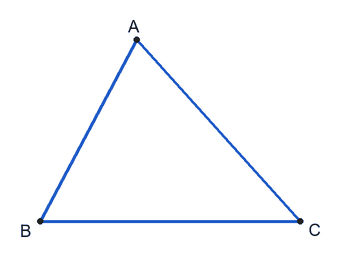
    tan⁡B+C2=cot⁡A2\tan \dfrac{B + C}{2} = \cot \dfrac{A}{2}

    Class 9 Maths Complementary Angles

    Easy
    3 marks
  26. 26

    Question 26

    Evaluate :

    3sin⁡72∘cos⁡18∘−sec⁡32∘cosec⁡58∘3\dfrac{\sin 72^\circ}{\cos 18^\circ} - \dfrac{\sec 32^\circ}{\operatorname{cosec} 58^\circ}

    Easy
    3 marks
  27. 27

    Question 27

    Evaluate :

    3cos⁡80∘cosec⁡10∘+2sin⁡59∘sec⁡31∘3\cos 80^\circ \operatorname{cosec} 10^\circ + 2\sin 59^\circ \sec 31^\circ

    Easy
    3 marks
  28. 28

    Question 28

    Evaluate :

    sin⁡80∘cos⁡10∘+sin⁡59∘sec⁡31∘\dfrac{\sin 80^\circ}{\cos 10^\circ} + \sin 59^\circ \sec 31^\circ

    Easy
    3 marks
  29. 29

    Question 29

    Evaluate :

    tan⁡(55∘−A)−cot⁡(35∘+A)\tan(55^\circ - A) - \cot(35^\circ + A)

    Easy
    3 marks
  30. 30

    Question 30

    Evaluate :

    cosec⁡(65∘+A)−sec⁡(25∘−A)\operatorname{cosec}(65^\circ + A) - \sec(25^\circ - A)

    Easy
    3 marks
  31. 31

    Question 31

    Evaluate :

    2tan⁡57∘cot⁡33∘−cot⁡70∘tan⁡20∘−2cos⁡45∘2\dfrac{\tan 57^\circ}{\cot 33^\circ} - \dfrac{\cot 70^\circ}{\tan 20^\circ} - \sqrt{2}\cos 45^\circ

    Easy
    3 marks
  32. 32

    Question 32

    Evaluate :

    cot⁡241∘tan⁡249∘−2sin⁡275∘cos⁡215∘\dfrac{\cot^2 41^\circ}{\tan^2 49^\circ} - 2\dfrac{\sin^2 75^\circ}{\cos^2 15^\circ}

    Easy
    3 marks
  33. 33

    Question 33

    Evaluate :

    cos⁡70∘sin⁡20∘+cos⁡59∘sin⁡31∘−8sin⁡230∘\dfrac{\cos 70^\circ}{\sin 20^\circ} + \dfrac{\cos 59^\circ}{\sin 31^\circ} - 8\sin^2 30^\circ

    Easy
    3 marks
  34. 34

    Question 34

    Evaluate :

    14sin⁡30∘+6cos⁡60∘−5tan⁡45∘14\sin 30^\circ + 6\cos 60^\circ - 5\tan 45^\circ

    Easy
    3 marks
  35. 35

    Question 35

    A triangle ABC is right-angled at B; find the value of
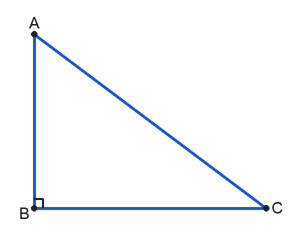
    sec⁡A⋅sin⁡C−tan⁡A⋅tan⁡Csin⁡B\dfrac{\sec A \cdot \sin C - \tan A \cdot \tan C}{\sin B}

    Class 9 Maths Complementary Angles

    Medium
    3 marks
  36. 36

    Question 36

    In each case, given below, find the value of angle A, where 0° ≤ A ≤ 90°.

    sin⁡(90∘−3A)⋅cosec⁡42∘=1\sin(90^\circ - 3A) \cdot \operatorname{cosec} 42^\circ = 1

    Easy
    3 marks
  37. 37

    Question 37

    In each case, given below, find the value of angle A, where 0° ≤ A ≤ 90°.

    cos⁡(90∘−A)⋅sec⁡77∘=1\cos(90^\circ - A) \cdot \sec 77^\circ = 1

    Easy
    3 marks
  38. 38

    Question 38

    Show that :

    tan⁡56∘tan⁡28∘tan⁡34∘tan⁡62∘=1\tan 56^\circ \tan 28^\circ \tan 34^\circ \tan 62^\circ = 1

    Easy
    3 marks
  39. 39

    Question 39

    If cos⁡A=sin⁡B\cos A = \sin B, show that A + B = 90°.

    Easy
    3 marks
  40. 40

    Question 40

    If cos⁡47∘sec⁡(90∘−θ)=1\cos 47^\circ \sec(90^\circ - \theta) = 1; find the angle θ such that 0° ≤ θ ≤ 90°

    Easy
    3 marks
  41. 41

    Question 41

    For the triangle ABC, show that
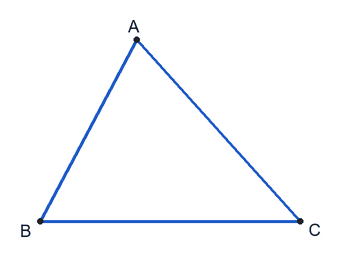
    sin⁡2A2+sin⁡2B+C2=1.\sin^2 \dfrac{A}{2} + \sin^2 \dfrac{B + C}{2} = 1.

    Class 9 Maths Complementary Angles

    Medium
    3 marks
  42. 42

    Question 42

    Prove that :

    sec⁡40∘sin⁡50∘+cos⁡40∘cosec⁡50∘=2.\sec 40^\circ \sin 50^\circ + \cos 40^\circ \operatorname{cosec} 50^\circ = 2.

    Easy
    3 marks
  43. 43

    Question 43

    Prove that :

    sin⁡60∘cos⁡30∘+cosec⁡30∘sec⁡60∘−4cos⁡60∘⋅cosec⁡30∘+2=0.\dfrac{\sin 60^\circ}{\cos 30^\circ} + \dfrac{\operatorname{cosec} 30^\circ}{\sec 60^\circ} - 4\cos 60^\circ \cdot \operatorname{cosec} 30^\circ + 2 = 0.

    Easy
    3 marks
  44. 44

    Question 44

    If sec⁡(90∘−3A)⋅cos⁡48∘=1\sec(90^\circ - 3A) \cdot \cos 48^\circ = 1 and 0 ≤ 3A ≤ 90°; find the value of angle A.

    Easy
    3 marks
  45. 45

    Question 45

    If cos⁡x=cos⁡40∘sin⁡50∘+sin⁡40∘cos⁡50∘\cos x = \cos 40^\circ \sin 50^\circ + \sin 40^\circ \cos 50^\circ, then find the value of angle x.

    Easy
    3 marks
  46. 46

    Question 46

    Show that :

    cos⁡2(45∘+θ)+cos⁡2(45∘−θ)tan⁡(60∘+θ)tan⁡(30∘−θ)=1.\dfrac{\cos^2(45^\circ + \theta) + \cos^2(45^\circ - \theta)}{\tan(60^\circ + \theta)\tan(30^\circ - \theta)} = 1.

    Medium
    3 marks
  47. 47

    Question 47

    If cos⁡α=12\cos \alpha = \dfrac{1}{2}, find the value of 4sin⁡3α−3sin⁡α4\sin^3 \alpha - 3\sin \alpha.

    Easy
    3 marks
  48. 48

    Question 48

    In ΔABC, angle C is 90° then find the value of sin⁡(A+B)\sin(A + B).

    Class 9 Maths Complementary Angles

    Easy
    3 marks
  49. 49

    Question 49

    If sec⁡Asin⁡A=0\sec A \sin A = 0, find the value of cos⁡A\cos A.

    Easy
    3 marks
  50. 50

    Question 50

    Find angle A, if sec⁡2A=cosec⁡(A−48∘)\sec 2A = \operatorname{cosec}(A - 48^\circ).

    Easy
    3 marks
  51. 51

    Question 51

    Find angle A, if cos⁡53∘sec⁡(90∘−A)=1\cos 53^\circ \sec(90^\circ - A) = 1.

    Easy
    3 marks
Inside Ch 25

What Class 9 Maths Ch 25 covers

The sections of the chapter, in the order the book takes them. Every question above comes from one of these.

  1. 01Trigonometrical Ratios of Complementary Angles
  2. 02Complementary Angles for Sine and Cosine
  3. 03Complementary Angles for Tangent and Cotangent
  4. 04Complementary Angles for Secant and Cosecant
Common questions

Class 9 Maths Ch 25 questions students ask

How many questions are there in Class 9 Maths Ch 25?

51 questions. Every one is solved step by step on this page.

Are these Class 9 Maths solutions free?

Yes. Every question and its full working is free to read, with no account needed.

Can I download the Class 9 Maths Ch 25 solutions as a PDF?

There is no PDF to download. Every solution is on this page instead, which means it is searchable, always the current syllabus, and readable on a phone. Use your browser's print option if you want it on paper.