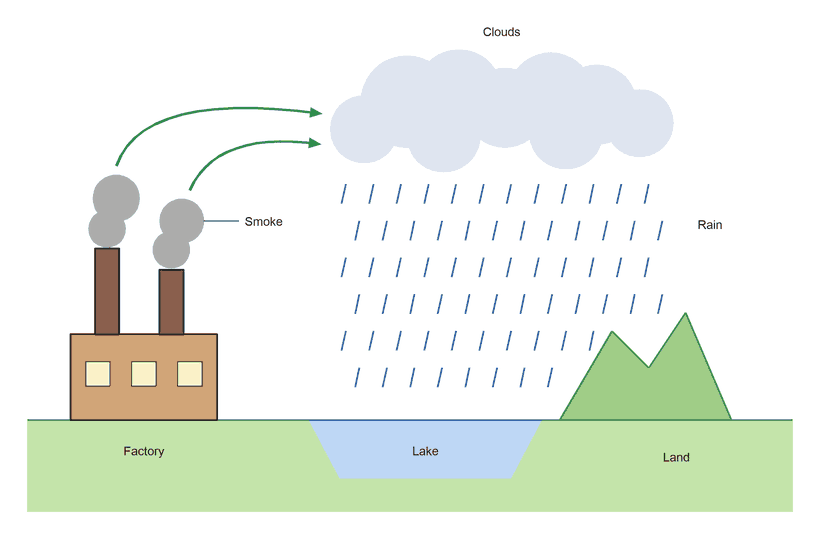
Study the following figure and answer the questions that follow
Question 535 marksMedium
Study the following figure and answer the questions that follow :
(a) What phenomenon is depicted in this figure ?
(b) Mention the cause of it and give the reaction(s) involved.
(c) State any two consequences of the above phenomenon.
(d) List the ways by which you can reduce and/or prevent it from happening.
Solution:
Concept: Smoke from the factory carries acidic oxides of sulphur and nitrogen up to the clouds. They dissolve in the water of the clouds and come down with the rain on to the lake and the land.
Step 1 — (a) Name the phenomenon.
The figure shows smoke rising to the clouds and rain falling from them on land and water, so it depicts acid rain.
Step 2 — (b) Cause and reactions: sulphuric acid.
Burning fossil fuels in factories, power plants and vehicles releases sulphur dioxide, which is oxidised and dissolves in cloud water to form sulphuric acid:
S+O2→SO22SO2+O2→2SO3SO3+H2O→H2SO4
Step 3 — (b) Cause and reactions: nitric acid.
High temperatures in furnaces, engines and lightning form oxides of nitrogen, which give nitric acid:
N2+O2lightning / high temperature2NO2NO+O2→2NO24NO2+2H2O+O2→4HNO3
Step 4 — (c) Two consequences.
Any two of the following:
lakes and rivers become acidic, so fish and other aquatic life die;
soil loses calcium and potassium and its fertility, and forests and crops are damaged;
marble and limestone buildings are corroded, and metals corrode faster.
Step 5 — (d) Ways to reduce or prevent it.
Acid rain is reduced by releasing less sulphur dioxide and fewer oxides of nitrogen:
use coal and oil with a low sulphur content;
fit scrubbers in factory chimneys to absorb sulphur dioxide;
fit catalytic converters in vehicles and use cleaner fuels such as CNG or electric vehicles;
use solar, wind and hydro energy in place of burning fossil fuels.
Therefore, the figure depicts acid rain, caused by sulphur dioxide and oxides of nitrogen forming sulphuric and nitric acids; it acidifies lakes and soil and damages buildings, and is reduced by low-sulphur fuels, scrubbers, catalytic converters and clean energy.