Solution:
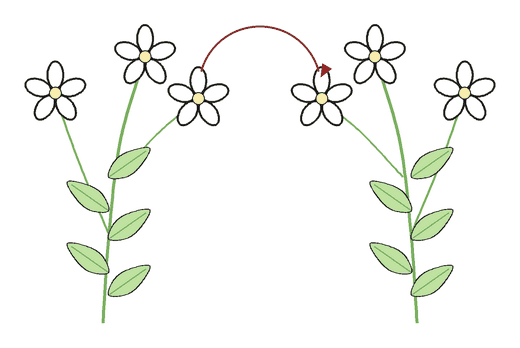
Concept: The arrow carries pollen from a flower of one plant to a flower of another plant of the same kind, so the figure shows cross-pollination.
Step 1 — Part (a).
The process is cross-pollination: the transfer of pollen grains from the anther of a flower of one plant to the stigma of a flower of another plant of the same species.
Step 2 — Part (b).
Its technical term is allogamy.
Step 3 — Part (c).
Two examples are papaya and maize (also sunflower, Salvia, Hibiscus).
Step 4 — Part (d).
An advantage is that the offspring are healthier (and new varieties can arise). A disadvantage is that much pollen is wasted, and pollination is not always certain.
Step 5 — Part (e).
Two agents are insects and wind (also water and birds).
Watch out: Pollination between two flowers of the SAME plant (geitonogamy) is not cross-pollination; here the flowers are on two plants.
Therefore, (a) cross-pollination, (b) allogamy, (c) papaya and maize, (d) healthier offspring; wastage of pollen, (e) insects and wind.