
Question 554 marksMedium
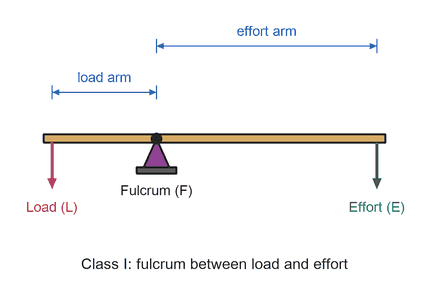
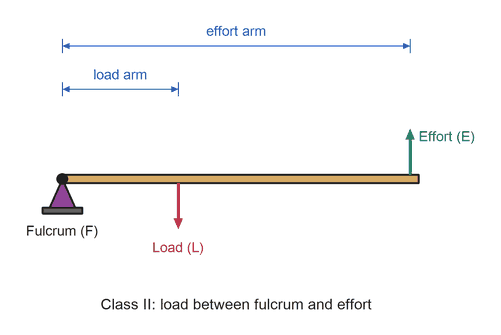
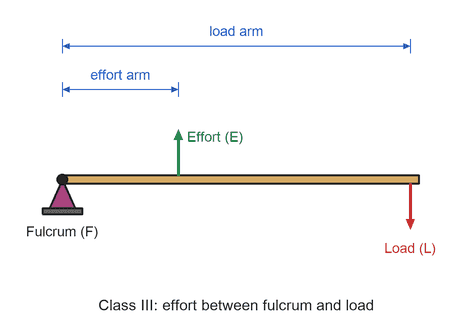
Describe three orders of levers giving an example of each. Draw neat diagrams showing the positions of fulcrum, load and effort in each kind of lever.
Confirming your payment
Sign up now and get 250 free tokens.
Simple Machines · Question 55 of 64
Describe three orders of levers giving an example of each. Draw neat diagrams showing the positions of fulcrum, load and effort in each kind of lever.
Solution:
Concept: Levers are put into three classes by what lies in the middle. In class I the fulcrum is between the load and the effort. In class II the load is between the fulcrum and the effort. In class III the effort is between the fulcrum and the load.
Step 1 — Class I (first order).
The fulcrum is between the load and the effort. The effort arm can be longer than, equal to or shorter than the load arm, so M.A. can be more than, equal to or less than 1. Examples: a see-saw, a pair of scissors, a pair of pliers, a crow bar and a beam balance.
Step 2 — Class II (second order).
The load is between the fulcrum and the effort. The effort is farther from the fulcrum than the load, so the effort arm is always longer and M.A. is always more than 1. Examples: a nut cracker, a wheel barrow, a lemon squeezer and a bottle opener.
Step 3 — Class III (third order).
The effort is between the fulcrum and the load. The effort is nearer the fulcrum than the load, so the effort arm is always shorter and M.A. is always less than 1. Examples: a pair of sugar tongs, forceps and the forearm holding a load. Its use is that the load moves farther and faster than the effort.
Watch out: The class depends only on what lies in the middle, not on the size of the lever.
Therefore, the three orders are class I (fulcrum in the middle), class II (load in the middle) and class III (effort in the middle).