
Question 523 marksMedium
With the help of Venn diagram, show that for all sets , and
(i)
(ii)
(iii)
Confirming your payment
Sign up now and get 250 free tokens.
Sets · Question 52 of 136
With the help of Venn diagram, show that for all sets , and
(i)
(ii)
(iii)
Solution:
Key idea: To compare two set expressions with Venn diagrams, we shade the region for each side in its own diagram. Equal shaded regions mean the sets are equal for all sets; different shaded regions mean they are not equal in general.
Step 1 — Split circle A for (i).
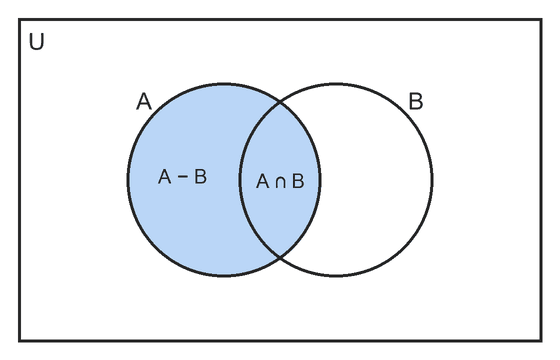
Circle cuts circle into two parts. The part of outside is , and the part of inside is . These two parts do not overlap, and together they fill the whole of circle .
Step 2 — Conclude (i).
Joining the two shaded parts gives back the whole circle , for any sets and .
Step 3 — Shade for (ii).
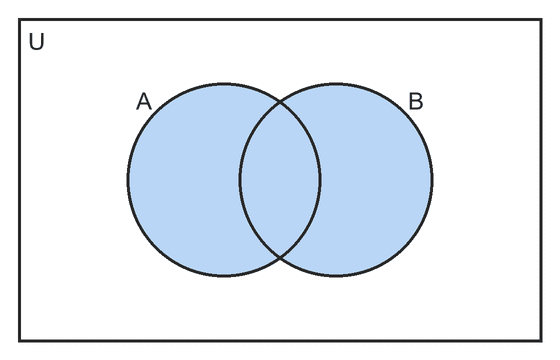
We first shade the left side's bracket, , which is everything inside either circle.
Step 4 — Remove B for (ii).
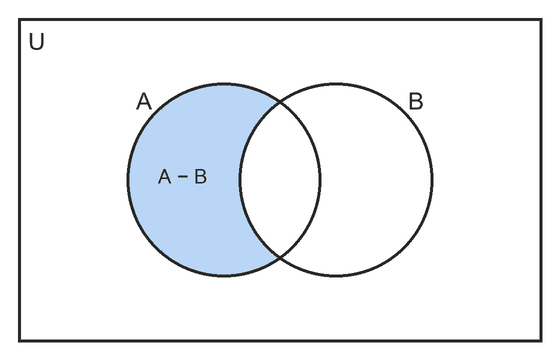
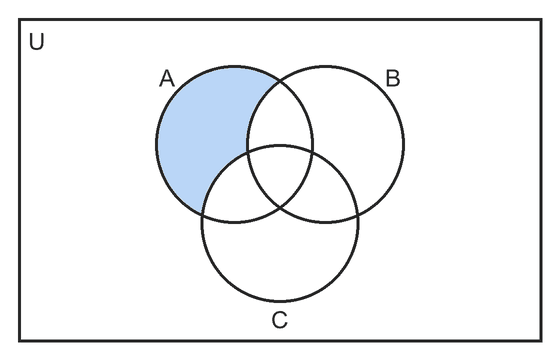
Taking away removes the whole circle , including its overlap with . What is left is the part of outside , which is exactly the region .
Step 5 — Shade the left side for (iii).
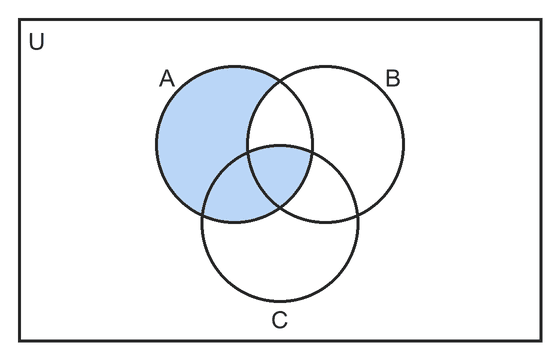
The set is the part of outside . Taking it away from removes only the piece of that lies in but not in . Every other part of , including all of , stays shaded.
Step 6 — Shade the right side for (iii).
The set is the part of outside . Taking away from it as well leaves only the part of that lies outside both and .
Step 7 — Compare the two sides for (iii).
The part of that lies inside is shaded in the first diagram but not in the second. So the two regions are different whenever and have a common element; they are equal only in the special case .
For example, take , and . The left side is then , while the right side is .
Therefore, (i) and (ii) for all sets, while (iii) in general.