
Question 871 markMCQMedium
Which of the following molecules is expected to rotate the plane of polarized light ?
Confirming your payment
Sign up now and get 250 free tokens.
Organic Chemistry: Some Basic Principles and Techniques · Question 87 of 148
Which of the following molecules is expected to rotate the plane of polarized light ?
(A) 
(B) 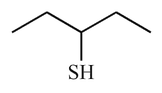
(C) 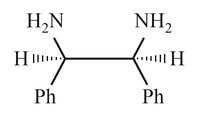
(D) 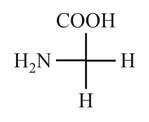
Answer: (A) the Fischer projection with CHO at the top and at the bottom (glyceraldehyde)
Key idea: A molecule rotates plane-polarised light only if it is chiral (not superimposable on its mirror image). A molecule with one chiral carbon is chiral; a molecule with an internal plane of symmetry (such as a meso form) is not.
Step 1 — Identify molecule (A) and its chiral carbon. This is glyceraldehyde, . Its middle carbon carries H, OH, CHO and : four different groups, so it is a chiral carbon.
Step 2 — Decide whether (A) is optically active. The molecule has only this one chiral carbon, so it has no plane of symmetry and is chiral. With OH on the left of the Fischer projection, it is a single enantiomer, L-(S)-glyceraldehyde, so it rotates the plane of polarised light.
Why the other options are wrong:
Therefore, glyceraldehyde (A) rotates the plane of polarised light, option (A).