Solution:
Concept: The rate of an enzyme reaction depends on temperature (with an optimum) and on substrate concentration (with saturation).
Step 1 — What is asked: We must answer each part of the question in turn.
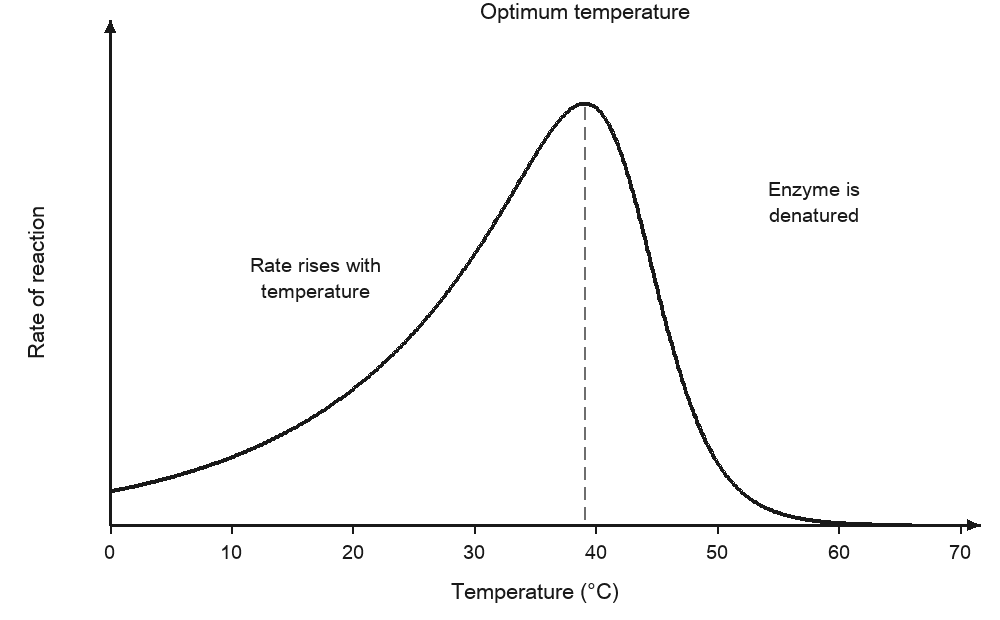
Step 2 — Part (i), 10 °C to about 40 °C: As the temperature rises from 10 °C, molecules move faster and collide more often, so the rate rises (roughly doubling per 10 °C) until the optimum, about 37–40 °C.
Step 3 — Part (i), above the optimum to 60 °C: Beyond the optimum the enzyme starts to be denatured; by about 50–60 °C most body enzymes have lost their shape and the rate falls almost to zero.
Step 4 — Part (ii): As substrate concentration rises, the rate rises at first because more active sites are filled; when all active sites are occupied the enzyme is saturated and the rate stays constant at Vmax.
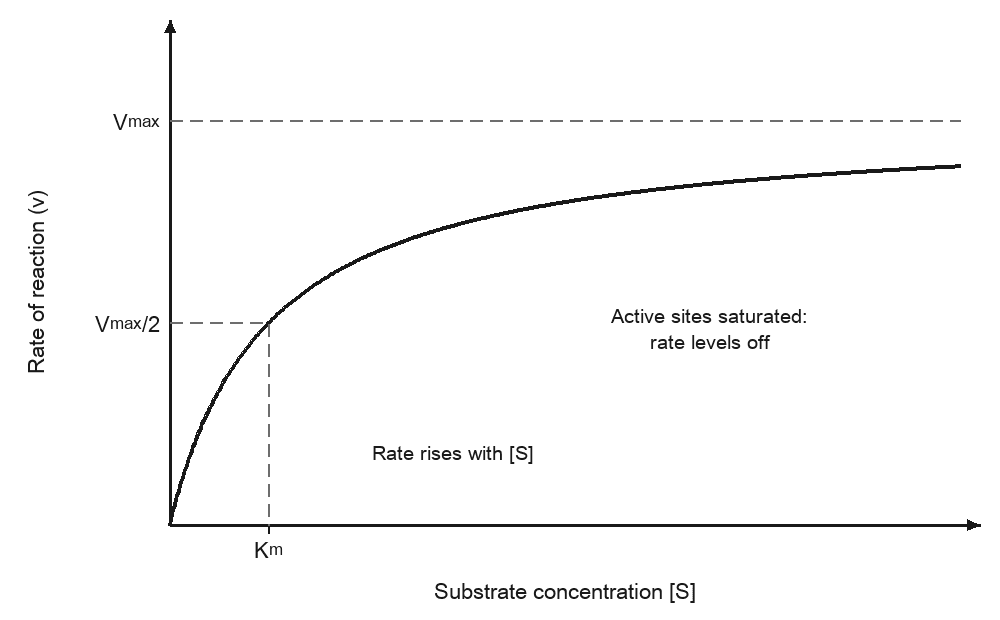
Therefore: (i) the rate rises up to the optimum (about 37–40 °C) and then falls almost to zero by 60 °C; (ii) the rate rises and then levels off at Vmax.
