Answer: (C) (3)
Concept: In an assertion-reason question, first judge the Assertion (A) true or false, then judge the Reason (R) true or false, and only when both are true ask whether R is the reason why A happens.
Step 1 — Judge the Assertion.
Hydrochloric acid is used to make chlorine (by oxidising it) and many chlorides, such as ammonium chloride for dry cells. So A is true.
Step 2 — Judge the Reason.
When hydrochloric acid is added to lead nitrate solution, a white precipitate of lead chloride forms:
Pb(NO3)2+2HCl→PbCl2↓+2HNO3
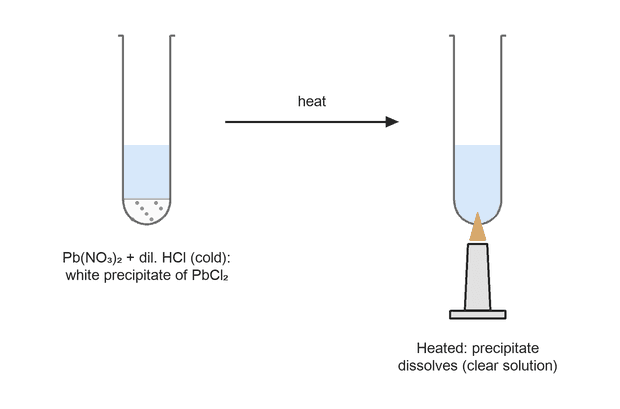
So lead chloride is produced from HCl, and R is false.
Why the other options are wrong:
- (A) (1): code (1) needs R to be true, but R is false.
- (B) (2): code (2) also needs R to be true, but R is false.
- (D) (4): code (4) needs A to be false, but A is true.
Therefore, A is true but R is false: code (3), option (C).
