Question 641 markMCQEasy
The following questions are Assertion-Reason based questions. Choose the answer based on the codes given below.
(1) Both A and R are true and R is the correct explanation of A.
(2) Both A and R are true but R is not the correct explanation of A.
(3) A is true but R is false.
(4) A is false but R is true.
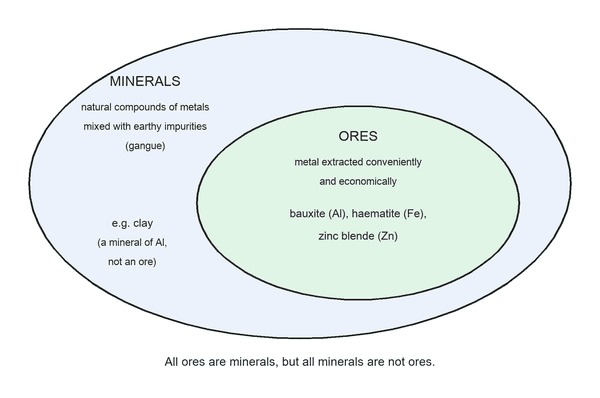
Assertion (A) : Minerals are the substances from which metals can be extracted profitably.
Reason (R) : Ores are those minerals from which metals are extracted commercially and profitably.