
Question 361 markMCQEasy
Cathode is a reducing electrode because :
Confirming your payment
Sign up now and get 250 free tokens.
Electrolysis · Question 36 of 76
Cathode is a reducing electrode because :
(A) it has less number of electrons
(B) it has deficiency of electrons
(C) cations gain electrons from cathode
(D) anions lose electrons to cathode
Answer: (C) cations gain electrons from cathode
Concept: Reduction is gain of electrons. The cathode, joined to the negative terminal, has a supply of electrons and hands them to the cations.
Step 1 — Follow a cation.
Cations such as reach the cathode and take electrons from it:
Step 2 — Name the electrode.
Because the cathode makes the cations gain electrons, it is the reducing electrode.
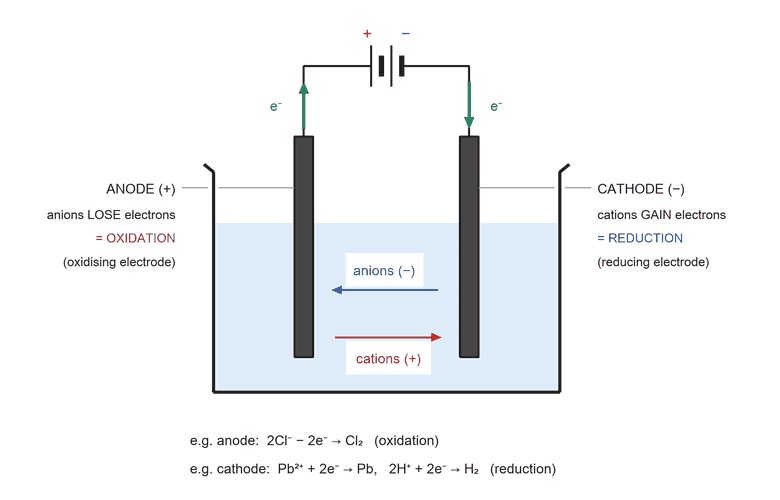
Watch out: The cathode has an EXCESS of electrons; the anode is the electrode that takes electrons away.
Why the other options are wrong:
Therefore, the cathode is a reducing electrode because cations gain electrons from it, option (C).