
Question 391 markMCQEasy
When a metal atom becomes an ion :
Confirming your payment
Sign up now and get 250 free tokens.
Chemical Bonding · Question 39 of 71
When a metal atom becomes an ion :
(A) it loses electrons and is oxidized
(B) it gains electrons and is reduced
(C) it gains electrons and is oxidized
(D) it loses electrons and is reduced
Answer: (A) it loses electrons and is oxidized
Concept: A metal atom has 1, 2 or 3 valence electrons and becomes a positive ion by losing them. Loss of electrons is oxidation.
Step 1 — See what the metal atom does.
A metal atom loses its valence electron(s) to reach a noble gas configuration. For example, sodium loses one electron.
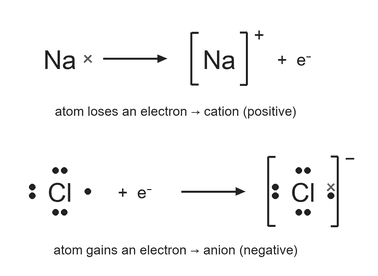
Step 2 — Name the change.
Loss of electrons is oxidation, so the metal atom is oxidised when it becomes an ion.
Watch out: Metals form positive ions because they lose (negative) electrons; they never gain electrons to form ions.
Why the other options are wrong:
Therefore, a metal atom that becomes an ion loses electrons and is oxidised, option (A).