
Question 1414 marksEasy
(a) Define isomerism
(b) Give the IUPAC name of the isomer which has a branched chain.
Confirming your payment
Sign up now and get 250 free tokens.
Organic Chemistry · Question 141 of 150
(a) Define isomerism
(b) Give the IUPAC name of the isomer which has a branched chain.
Solution:
Concept: Isomers have the same molecular formula but their atoms are joined differently. Butane, , has a straight-chain and a branched-chain isomer.
Step 1 — (a) Define isomerism.
Isomerism is the phenomenon in which compounds have the same molecular formula but different structural formulae (and so different properties); such compounds are called isomers.
Step 2 — (b) Find the longest chain of the branched isomer.
The branched isomer is . Its longest chain has 3 carbons, so the parent is propane.
Step 3 — (b) Locate the branch and name it.
The –CH₃ (methyl) branch is on carbon 2, so the name is 2-methylpropane (isobutane):
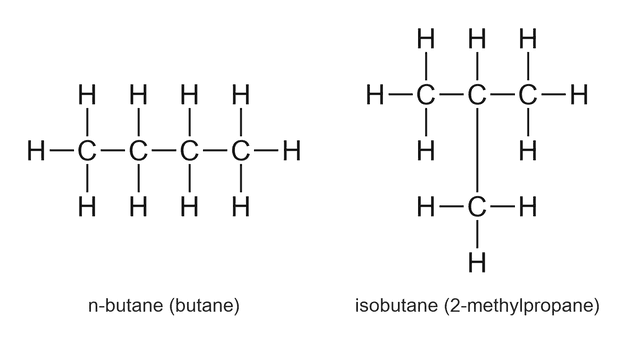
Therefore, (a) isomerism is the same molecular formula with different structures; (b) the branched isomer of C₄H₁₀ is 2-methylpropane.