Answer: (B) (2)
Concept: In an assertion–reason item, judge the Assertion (A) and the Reason (R) separately as true or false; only when both are true do we ask whether R correctly explains A. "R explains A" means R says why A happens; a definition only says what the word means.
Step 1 — Judge the Assertion.
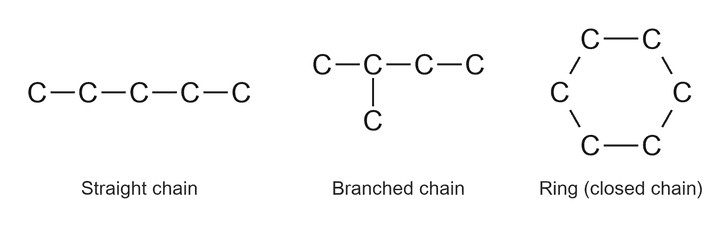
Carbon atoms link to one another to form long chains, branched chains and rings, so carbon shows catenation. A is true.
Step 2 — Judge the Reason.
Catenation is the property of self-linking of atoms by covalent bonds. R is true; it is the definition of catenation.
Step 3 — Decide whether R explains A.
The definition does not say why carbon shows this property (its small size, valency of four and strong C–C bonds). So R does not explain A:
Note: some keys read R as "carbon shows catenation because it self-links" and choose code (1). The printed key, (2), treats R as a bare definition, which is the stricter and better reading.
Why the other options are wrong:
- (A) (1): code (1) says R explains A, but R only defines the term.
- (C) (3): code (3) says R is false, but R is true.
- (D) (4): code (4) says A is false, but A is true.
Therefore, both A and R are true but R does not explain A, option (B).
