Question 781 markMCQEasy
The following questions are Assertion-Reason based questions. Choose the answer based on the codes given below.
(1) Both A and R are true and R is the correct explanation of A.
(2) Both A and R are true but R is not the correct explanation of A.
(3) A is true but R is false.
(4) A is false but R is true.
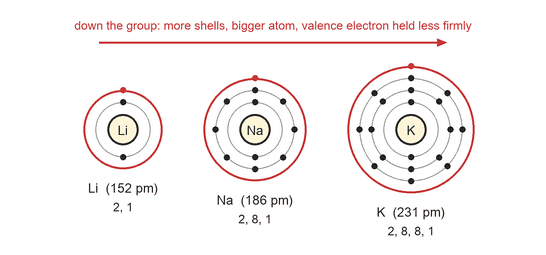
Assertion (A) : Elements in the same vertical column have similar properties.
Reason (R) : Properties depend upon the number of electrons in the valence shell.