
Question 121 markEasy
Mention the phase of heart beat in which both the atrio-ventricular valves are closed.
Confirming your payment
Sign up now and get 250 free tokens.
The Circulatory System · Question 12 of 65
Mention the phase of heart beat in which both the atrio-ventricular valves are closed.
Solution:
Concept: the atrio-ventricular valves (tricuspid and bicuspid) close when the ventricles contract, so that blood cannot return to the atria.
Step 1 — See what the ventricles do.
In ventricular systole the ventricles contract and the blood in them comes under pressure.
Step 2 — Follow the effect on the valves.
The blood tends to flow back into the atria. It pushes the flaps of the tricuspid and bicuspid valves together, the chordae tendineae hold them taut, and both openings close. This sharp closure makes the first heart sound, LUBB.
Step 3 — See where the blood goes.
The only way out is through the open semilunar valves into the pulmonary artery and the aorta. Meanwhile the atria relax (atrial diastole) and fill.
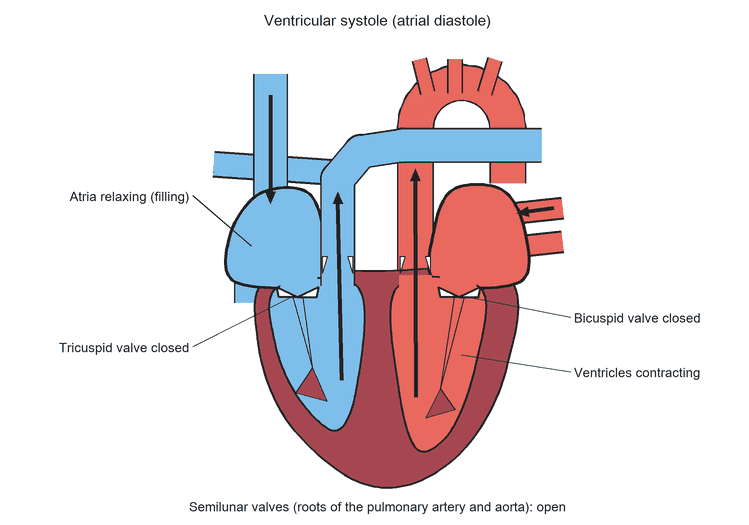
In one heart beat of 0.85 s, ventricular systole lasts 0.30 s.
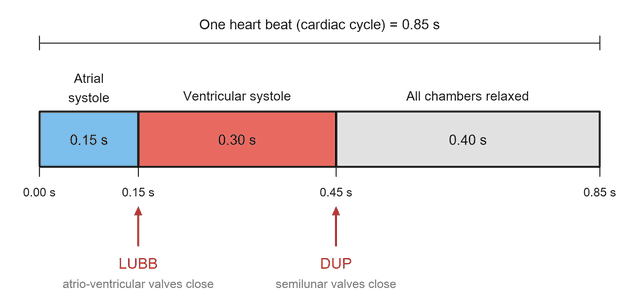
Watch out: In atrial systole the atrio-ventricular valves are open (blood is passing into the ventricles), so it is not the answer.
Therefore, both atrio-ventricular valves are closed during ventricular systole (atrial diastole).