Solution:
Concept: Each row links a gland, its hormone and the effect of that hormone. Start from the entry that is given.
Step 1 — Row 1.
The hormone that regulates basal metabolism is thyroxine: (1) Thyroid, (2) Thyroxine.
Step 2 — Row 2.
Beta cells control blood sugar through (3) Insulin.
Step 3 — Row 3.
The hormone that increases the heart beat is adrenaline: (4) Adrenal (medulla), (5) Adrenaline.
Step 4 — Row 4.
TSH comes from (6) the anterior pituitary and (7) stimulates the thyroid to secrete thyroxine. When thyroxine in the blood becomes too high, it holds back TSH release (negative feedback).
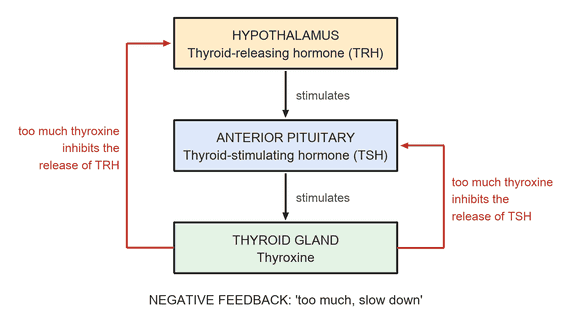
Step 5 — Completed table.
| Gland | Hormone secreted | Effect on body |
|---|
| Thyroid | Thyroxine | Regulates basal metabolism |
| Pancreas (beta cells) | Insulin | Controls blood sugar |
| Adrenal (medulla) | Adrenaline | Increases heart beat |
| Anterior pituitary | Thyroid stimulating hormone | Stimulates the thyroid to secrete thyroxine |
Therefore, the blanks are (1) thyroid, (2) thyroxine, (3) insulin, (4) adrenal medulla, (5) adrenaline, (6) anterior pituitary, (7) stimulates the thyroid to secrete thyroxine.
