Solution:
Concept: Each clue points to one hormone, condition or part of the four endocrine glands in the syllabus.
Step 1 — Part (a).
The adrenal medulla, the central part of the adrenal gland, secretes adrenaline.
Step 2 — Part (b).
Too much insulin removes too much glucose from the blood, giving hypoglycemia (insulin shock); the brain may go into a coma if it lasts.
Step 3 — Part (c).
Beta cells secrete insulin, which checks the rise of blood sugar.
Step 4 — Part (d).
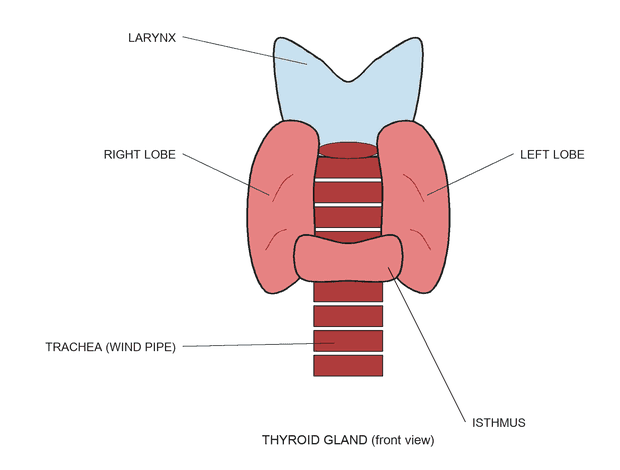
The two lobes of the thyroid are joined by a narrow band called the isthmus.
Step 5 — Part (e).
ADH (vasopressin) makes the kidney tubules reabsorb water. When it is deficient, less water is reabsorbed and much urine is formed (diabetes insipidus).
Step 6 — Part (f).
Adrenaline stimulates the whole sympathetic nervous system in an emergency.
Watch out: (b) asks for the condition, not the hormone: answer hypoglycemia, not insulin.
Therefore, (a) adrenaline, (b) hypoglycemia, (c) insulin, (d) isthmus, (e) ADH (vasopressin), (f) adrenaline.
