Answer: (B) (2) A is False and R is True
Concept: In an assertion–reason item, judge the Assertion (A) and the Reason (R) separately as true or false. Here the four choices only ask whether each statement is true, so we do not have to decide whether R explains A. Here, the passage from the pinna to the tympanum is the auditory canal; the Eustachian tube joins the middle ear to the throat.
Step 1 — Judge the Assertion (A).
False. The canal from the pinna to the tympanum is the (external) auditory canal, not the Eustachian tube.
Step 2 — Judge the Reason (R).
True. The Eustachian tube equalises the air pressure on either side of the ear drum, so it can vibrate freely.
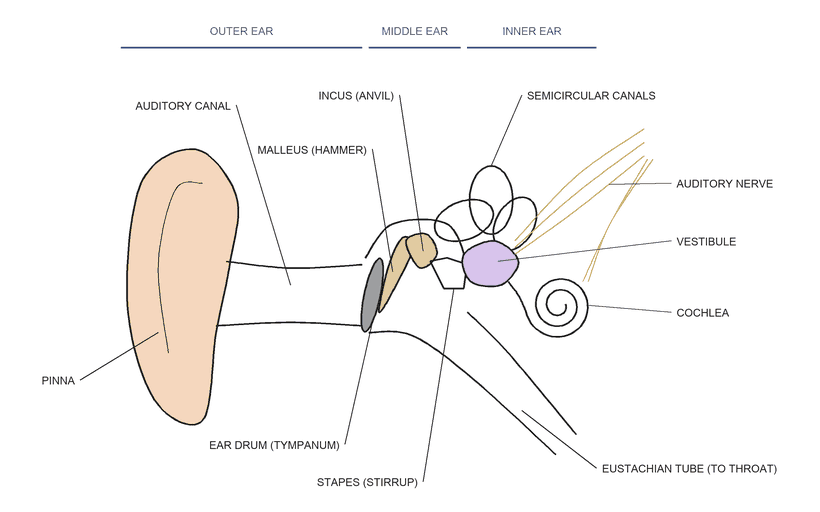
Watch out: The auditory canal is outside the drum; the Eustachian tube is behind it, in the middle ear.
Why the other options are wrong:
- (A) (1) A is True and R is False: It calls the Assertion true, but the Assertion is false; and it calls the Reason false, but the Reason is true.
- (C) (3) Both A and R are True: It calls the Assertion true, but the Assertion is false.
- (D) (4) Both A and R are False: It calls the Reason false, but the Reason is true.
Therefore, A is false and R is true, option (B).
