
Question 108 marksMedium
Distinguish between the following pairs :
(a) Plant cell and animal cell
(b) Cell wall and cell membrane
(c) Centrosome and chromosome
(d) Chloroplast and chromoplast
Confirming your payment
Sign up now and get 250 free tokens.
Cell – The Structural and Functional Unit of Life · Question 10 of 10
Distinguish between the following pairs :
(a) Plant cell and animal cell
(b) Cell wall and cell membrane
(c) Centrosome and chromosome
(d) Chloroplast and chromoplast
Solution:
Concept: To distinguish two things, compare them point against point on the same feature in a table. Two clear differences per pair earn the marks; more are given for revision.
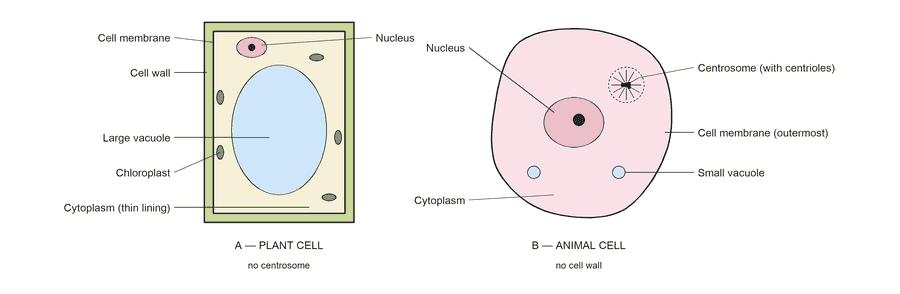
Step 1 — Plant cell and animal cell.
The table compares the two cells feature by feature:
| Feature | Plant cell | Animal cell |
|---|---|---|
| Size | Usually larger. | Usually smaller. |
| Cell wall | Cell wall of cellulose outside the cell membrane. | No cell wall; the cell membrane is outermost. |
| Cytoplasm | A thin lining pushed to the edge by the vacuole. | Denser; fills almost the whole cell. |
| Plastids | Plastids (e.g. chloroplasts) usually present. | No plastids. |
| Centrosome | Absent. | Present. |
| Vacuoles | Large and prominent. | Small and temporary, if any. |
Step 2 — Cell wall and cell membrane.
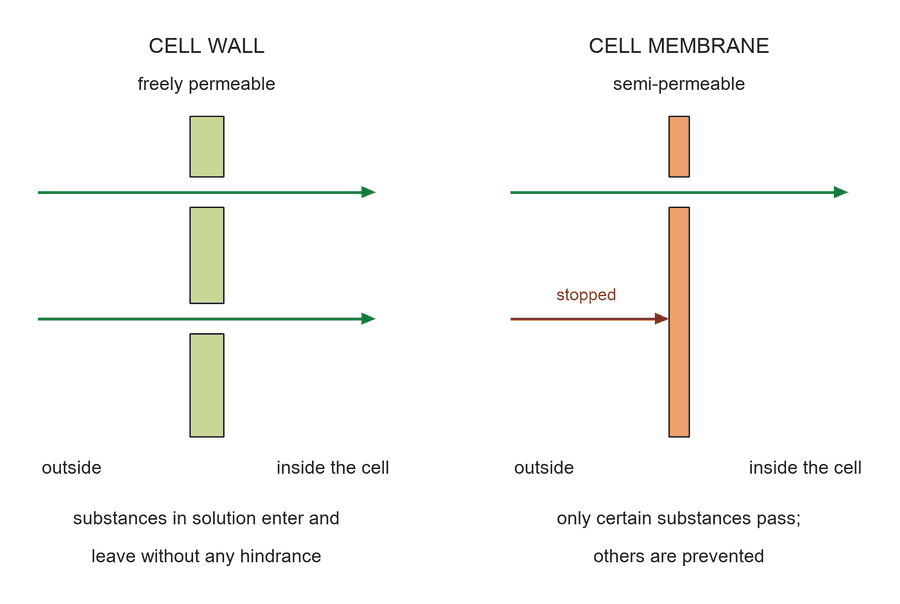
Compare the two outer layers in the same way:
| Feature | Cell wall | Cell membrane |
|---|---|---|
| Nature | Non-living, rigid. | Living, thin and flexible. |
| Made of | Mainly cellulose. | Lipoproteins. |
| Permeability | Freely permeable. | Semi-permeable (selectively permeable). |
| Found in | Plant cells only. | All cells. |
| Function | Gives rigidity and shape. | Controls the entry and exit of substances. |
Step 3 — Centrosome and chromosome.
These two only sound alike; compare where they are and what they do:
| Feature | Centrosome | Chromosome |
|---|---|---|
| Location | In the cytoplasm, near the nucleus. | Inside the nucleus. |
| Found in | Animal cells only; has one or two centrioles. | Plant and animal cells; made of DNA (chromatin) that condenses during division. |
| Function | Starts and regulates cell division; forms the spindle with the asters. | Carries the genes that pass characters from parents to offspring. |
Step 4 — Chloroplast and chromoplast.
Both are plastids of plant cells; compare their colour, place and job:
| Feature | Chloroplast | Chromoplast |
|---|---|---|
| Pigment | Green; contains chlorophyll. | Yellow, orange or red; contains carotene and xanthophyll. |
| Found in | Green parts, mainly leaves. | Flowers and fruits. |
| Function | Traps sunlight for photosynthesis. | Gives colour to flowers and fruits, which attracts pollinating insects and animals. |
Watch out: Write each difference as a matched pair on the same feature; 'plant cell has a cell wall' must be set against 'animal cell has no cell wall'.
Therefore, the four pairs differ as shown in the tables, the key points being: cell wall and plastids (plant cell vs animal cell), non-living and freely permeable vs living and semi-permeable (cell wall vs membrane), cell division vs heredity (centrosome vs chromosome), and photosynthesis vs colour (chloroplast vs chromoplast).