
Question 621 markMCQAsked 2026Easy
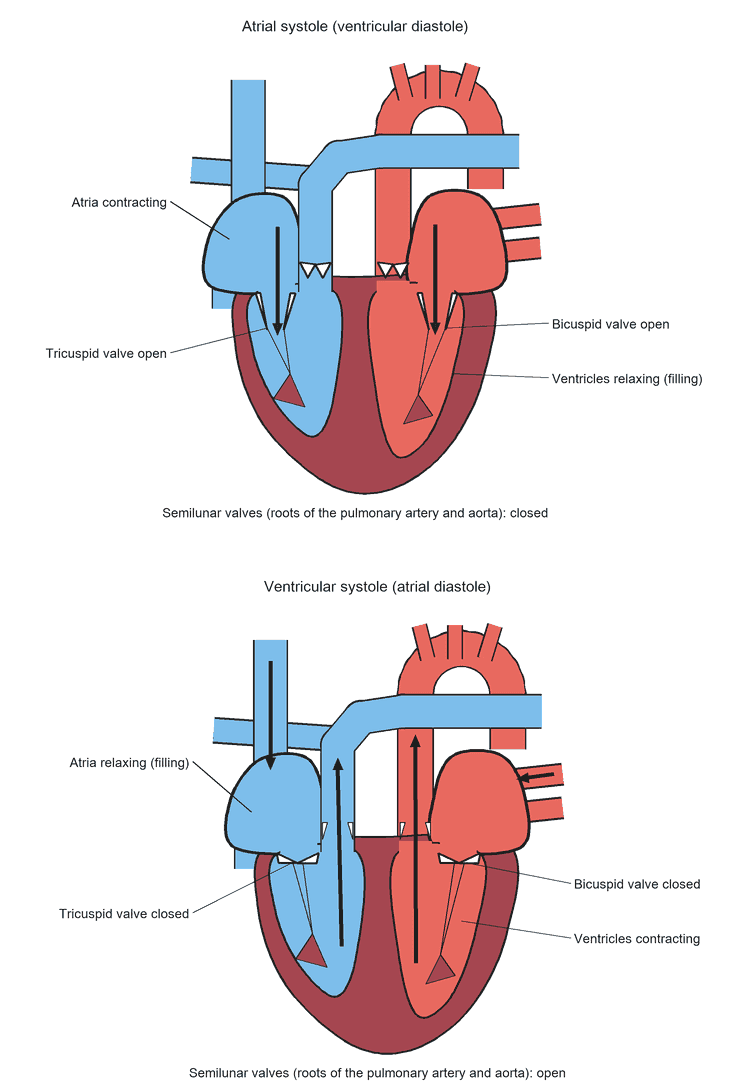
During the ventricular systole, the atrioventricular valves (P) ............... and the semilunar valves (Q) ............... .
Confirming your payment
Sign up now and get 250 free tokens.
Previous Year Questions · Question 62 of 71
During the ventricular systole, the atrioventricular valves (P) ............... and the semilunar valves (Q) ............... .
(A) P-close and Q-open
(B) P-close and Q-close
(C) P-open and Q-close
(D) P-open and Q-open
Answer: (A) P-close and Q-open
Concept: One heart beat has two main phases. In atrial systole the atria contract and push blood through the open tricuspid and bicuspid valves into the relaxed ventricles, while the semilunar valves stay closed. In ventricular systole the ventricles contract: the tricuspid and bicuspid valves close and the semilunar valves open, so blood goes into the pulmonary artery and the aorta while the atria relax and fill.
Step 1 — Atrio-ventricular valves.
The pressure of blood in the contracting ventricles pushes the tricuspid and bicuspid flaps shut, so they close (making LUBB) and blood cannot return to the atria.
Step 2 — Semilunar valves.
The same pressure pushes the pocket-shaped valves flat against the artery walls, so they open and blood flows into the pulmonary artery and the aorta.
Why the other options are wrong:
Therefore, in ventricular systole P closes and Q opens, option (A).