
Question 671 markMCQAsked 2026Easy
During atrial systole, the tricuspid valve (P) ............... and semilunar valve (Q) ................
Confirming your payment
Sign up now and get 250 free tokens.
Previous Year Questions · Question 67 of 71
During atrial systole, the tricuspid valve (P) ............... and semilunar valve (Q) ................
(A) closes, opens
(B) closes, closes
(C) opens, closes
(D) opens, opens
Answer: (C) opens, closes
Concept: One heart beat has two main phases. In atrial systole the atria contract and push blood through the open tricuspid and bicuspid valves into the relaxed ventricles, while the semilunar valves stay closed. In ventricular systole the ventricles contract: the tricuspid and bicuspid valves close and the semilunar valves open, so blood goes into the pulmonary artery and the aorta while the atria relax and fill.
Step 1 — Tricuspid valve.
It lies between the right atrium and the right ventricle. As the atrium contracts, it opens to let blood pass into the ventricle.
Step 2 — Semilunar valve.
The ventricles are relaxed and filling, so no blood is pushed into the arteries. The semilunar valves stay closed, stopping blood in the pulmonary artery and aorta from flowing back.
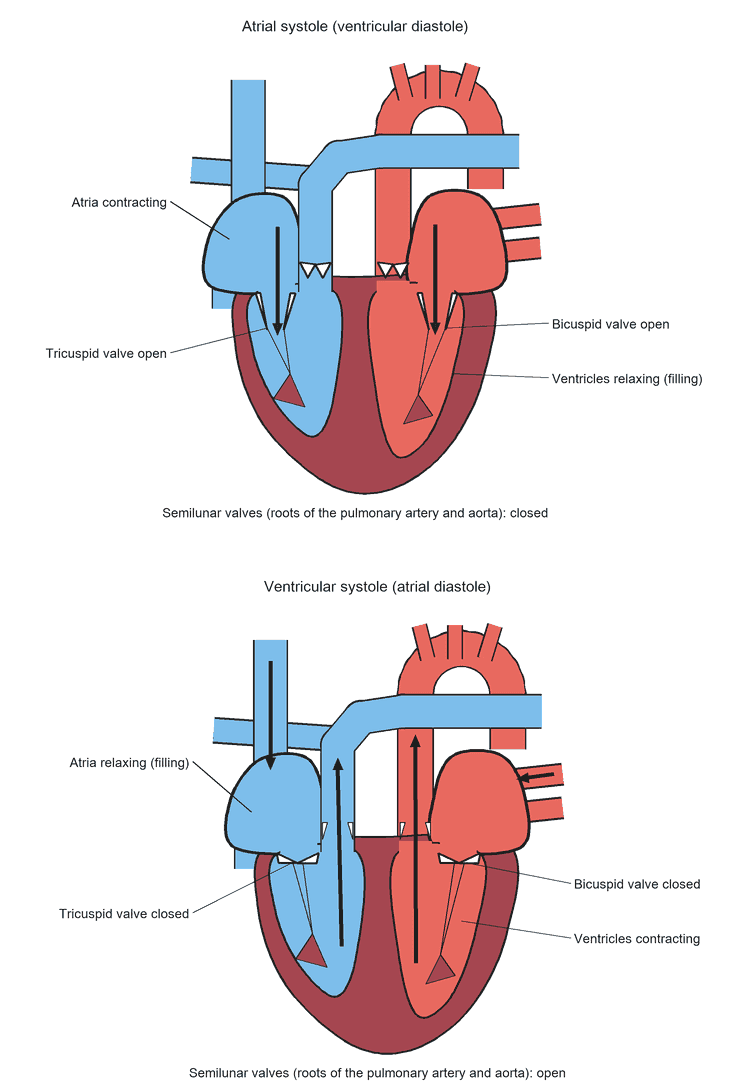
Why the other options are wrong:
Therefore, in atrial systole the tricuspid valve opens and the semilunar valve closes, option (C).