Solution:
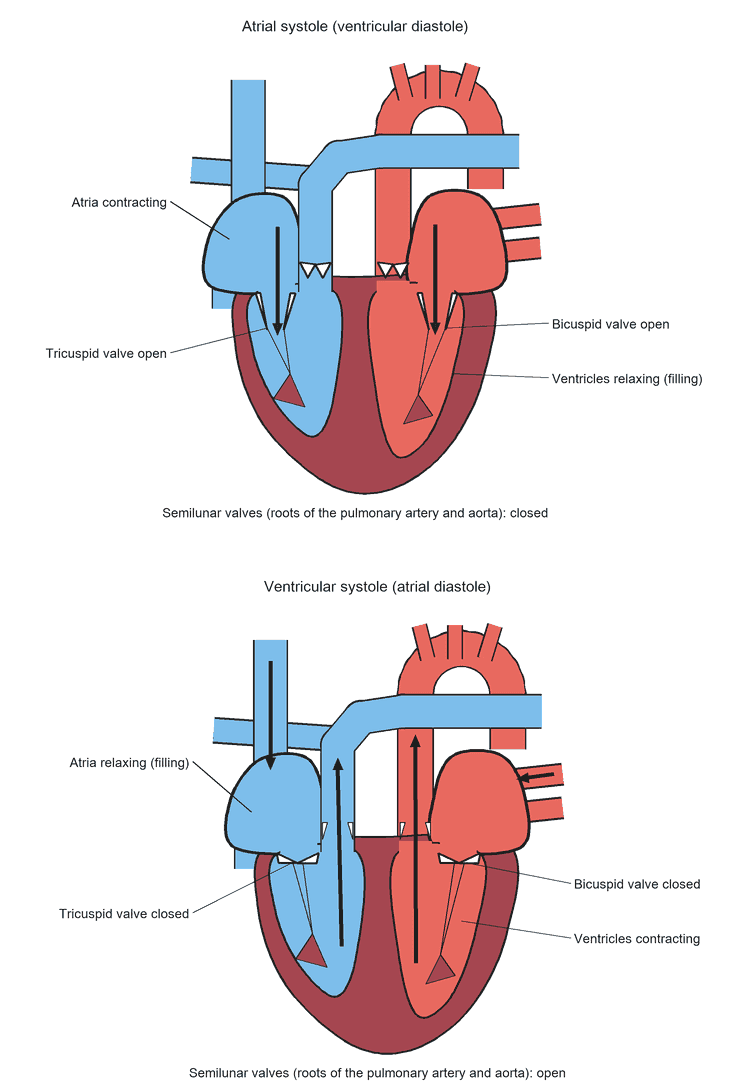
Concept: One heart beat has two main phases. In atrial systole the atria contract and push blood through the open tricuspid and bicuspid valves into the relaxed ventricles, while the semilunar valves stay closed. In ventricular systole the ventricles contract: the tricuspid and bicuspid valves close and the semilunar valves open, so blood goes into the pulmonary artery and the aorta while the atria relax and fill.
Step 1 — Find the part contracting.
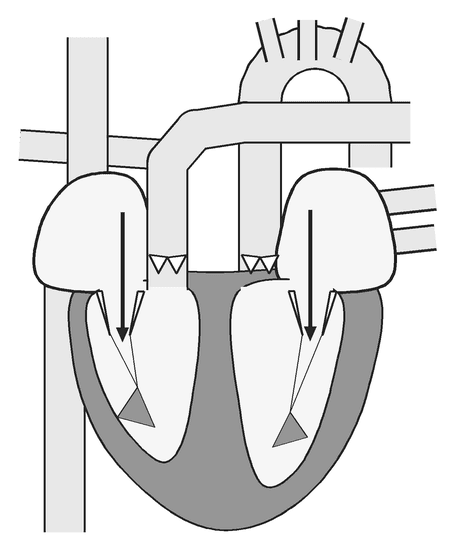
The arrows pass from the atria, through the atrio-ventricular valves, into the ventricles. Blood is pushed through these valves when the atria contract, so the atria (right and left) are in the contraction phase: atrial systole.
Step 2 — Give the reason.
Blood is flowing from the atria into the ventricles through the open tricuspid and bicuspid valves, while the semilunar valves stay closed; the ventricles are relaxed (in diastole) and filling.
Step 3 — Distinguish systole and diastole.
The two words name the two phases of any chamber.
| Systole | Diastole |
|---|
| Contraction phase of a heart chamber | Relaxation phase of a heart chamber |
| The chamber pushes blood out | The chamber fills with blood |
Watch out: The arrows go INTO the ventricles, so the ventricles are filling, not contracting.
Therefore, (a) the atria are contracting; (b) blood is passing from the atria into the ventricles through the open tricuspid and bicuspid valves; (c) systole is contraction, diastole is relaxation.