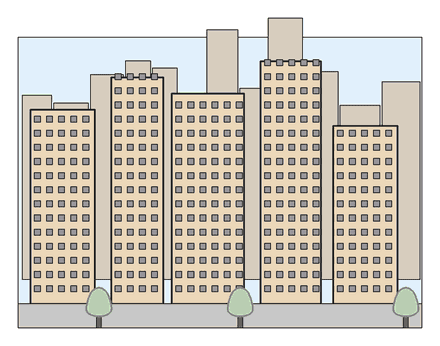
Solution:
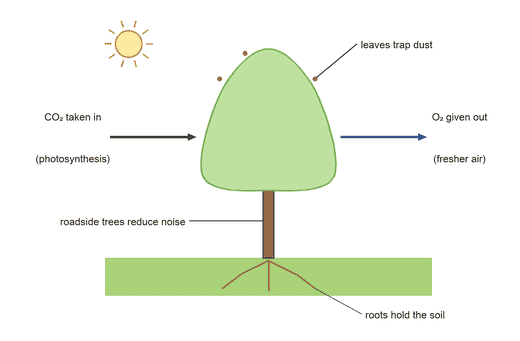
Concept: Green plants take in carbon dioxide and give out oxygen in photosynthesis, their leaves trap dust, and trees reduce noise, shade the ground and hold the soil. Clearing parks and gardens for buildings and roads removes these benefits.
Step 1 — (a) Name one significant problem.
A major problem is poorer air quality: with fewer plants, less carbon dioxide is absorbed and less dust is trapped, so the city air becomes more polluted. Cities also become hotter, noisier and more prone to soil erosion and flooding.
Step 2 — (b) Explain how plants improve air quality.
During photosynthesis green plants absorb carbon dioxide and release oxygen. Their leaves also trap dust and some other pollutants, so roadside trees and parks keep the air cleaner.
Step 3 — (c) Describe a citizen's role.
As a citizen, plant trees and look after them, and join tree-planting drives in the neighbourhood. Do not damage plants in parks, and support efforts to keep green spaces from being cleared.
Watch out: In (b) say what plants take in AND what they give out; 'plants give oxygen' alone is incomplete.
Therefore, (a) poorer air quality (more pollution, hotter cities); (b) plants absorb carbon dioxide, release oxygen and trap dust; (c) plant and protect trees and green spaces.